Designing NextGen AI Factories at the Dutch Fiber Vakdag
On 6 November 2024 the Fiber Carrier Association gathered the Dutch fibre industry in Utrecht, and DKAI Lab took the stage to argue that AI workloads will redraw the network itself.
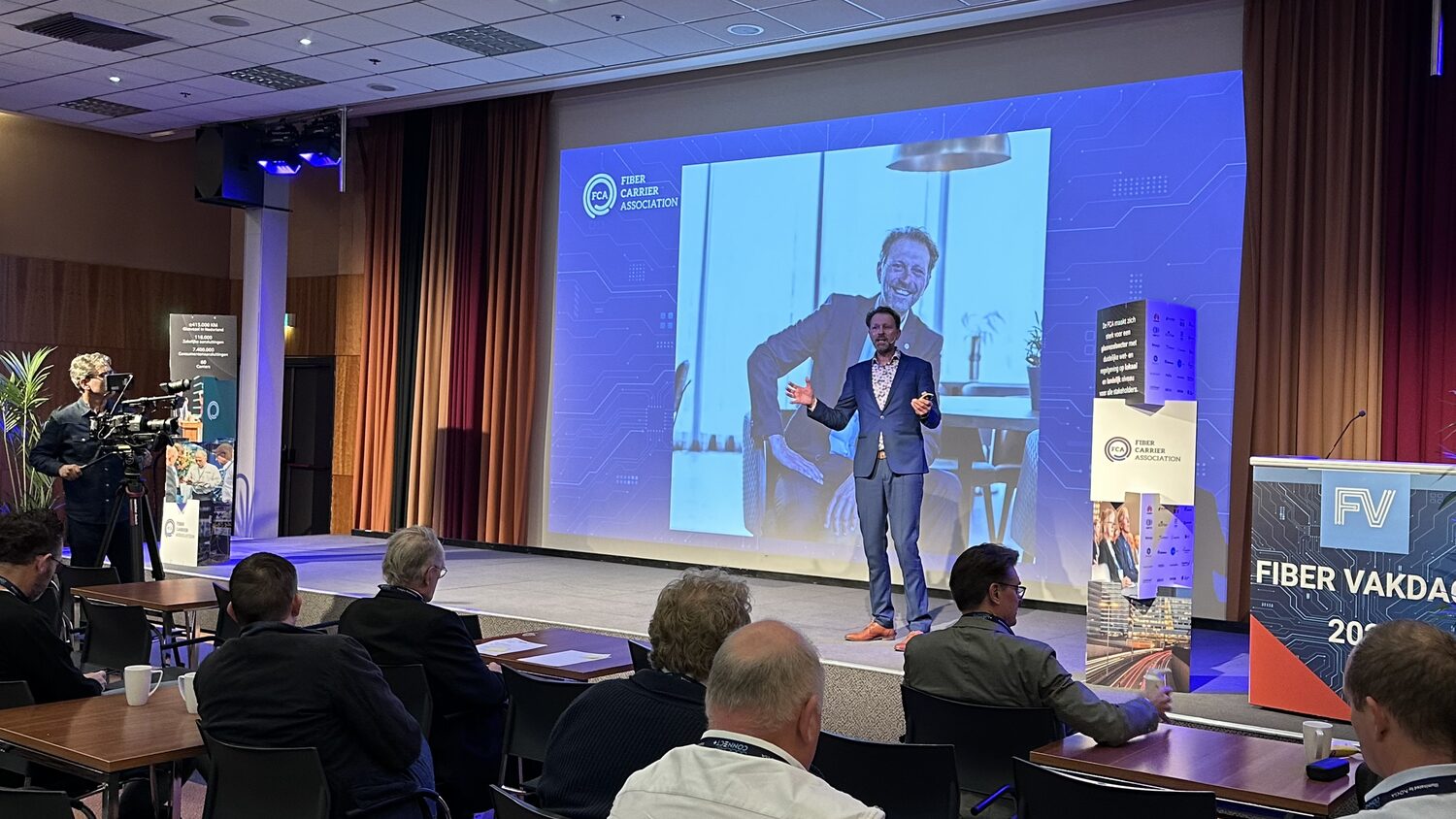
The Fiber Vakdag is the trade day of the Fiber Carrier Association, the body that campaigns for the Dutch fibre sector. Its own display board states the aim plainly: clear law and regulation at local and national level, for every stakeholder. The 2024 edition ran on 6 November in Utrecht. A pillar beside the stage carried the sector's arithmetic: roughly 415,000 km of fibre in the Netherlands, 118,000 business connections, 7.4 million consumer connections, sixty carriers. Delegates sat at tables with coffee rather than in rows. Lanyards read Duocast Connect+. The sponsor wall by the door ran Huawei, Simac, Prysmian and Blue Fiber down its columns.
Tarry Singh's slot was titled Designing NextGen AI Factories, under the question 'Are we prepared for this shift?'. His badge read Real AI bv and DK AI Lab. The talk walked three waves in sequence. Machine learning found patterns inside limited parameters. Deep learning added layered networks and backpropagation. Multimodal large language models then put generation in everybody's hands. That history was only the setup. The subject was infrastructure, and the audience owned it.
Since 1995 the industry had optimised CPU, disk and RAM across on-premise rooms, virtual machines and public cloud, and the deck cited Gartner putting the share of companies running their complete operations in the cloud at three per cent. Accelerators broke the pattern. Connecting GPU clusters calls for a back-end data centre fabric with little in common with the front-end network built for general purpose servers. Three-tier data centre design gives way to spine-leaf. Ethernet backbones head toward 1.6 terabits. Inference spreads out to far-edge, mid-edge and near-edge cell sites, which turns network slicing from a diagram into a commercial decision: hard slices for mission-critical isolated services, soft slices for shared ones.
The closing slide left three lines on screen. General purpose computing is gone and so are data centres. Infrastructure has to be interconnected to win big. Intelligence will be distributed, so fibre intelligence should be distributed too. Behind that sat a timing argument borrowed from electricity, and from a 1989 Warwick paper on the productivity paradox. Value moves away from cheap prediction and toward the systems built around it. A carrier that plans its decoupling early is building for a market that does not exist yet, instead of fighting incumbents in one that already does.
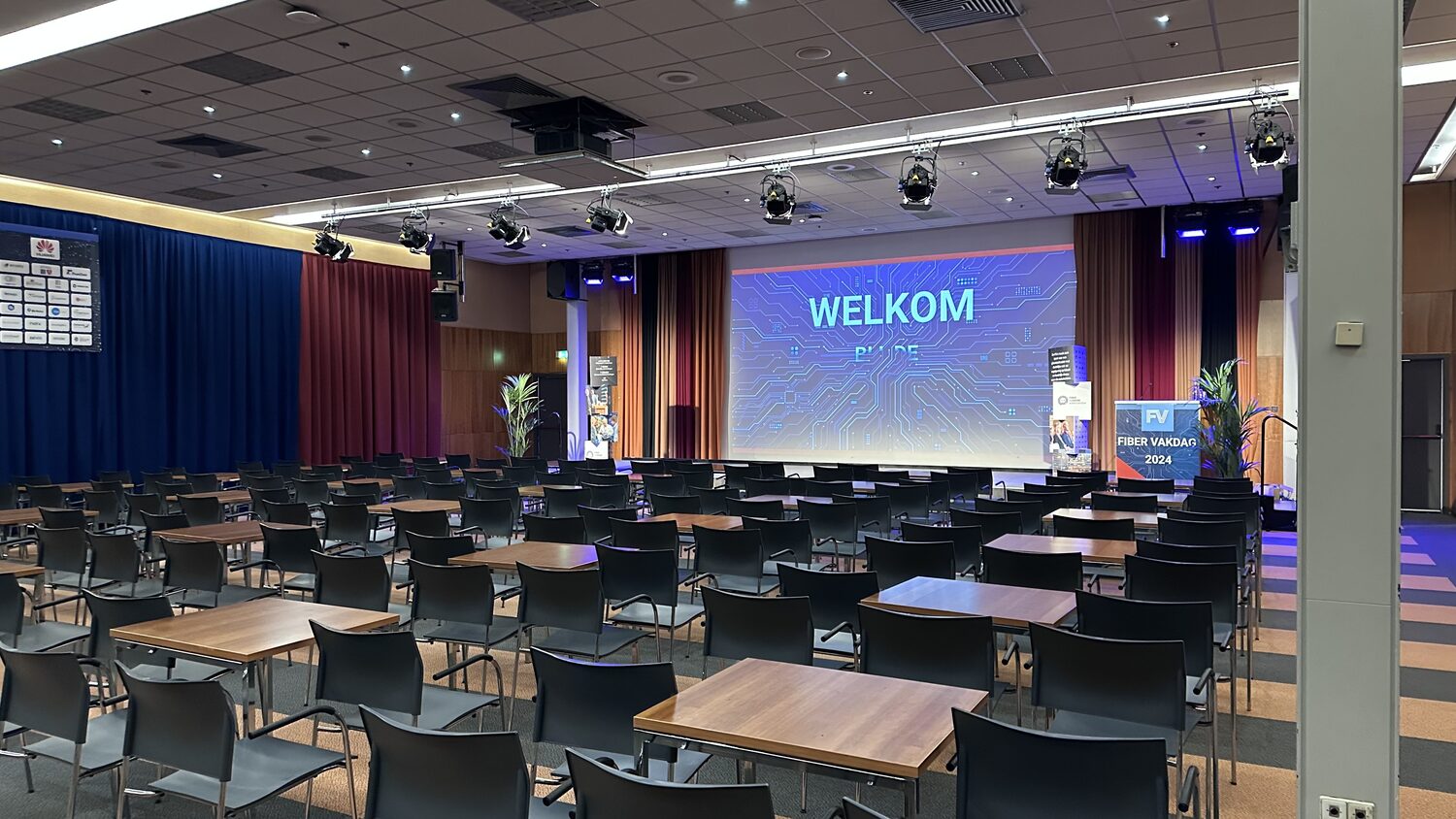
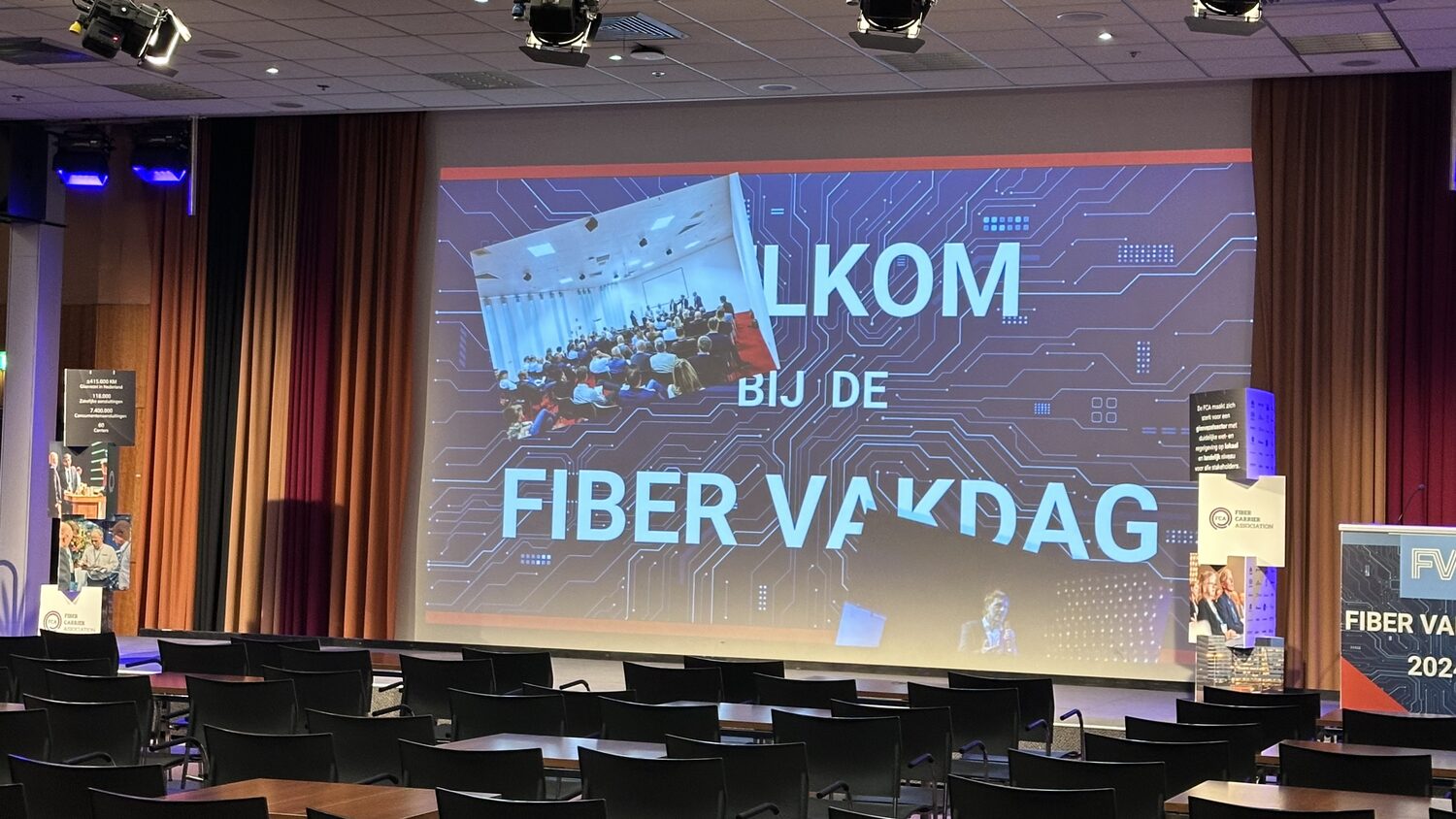
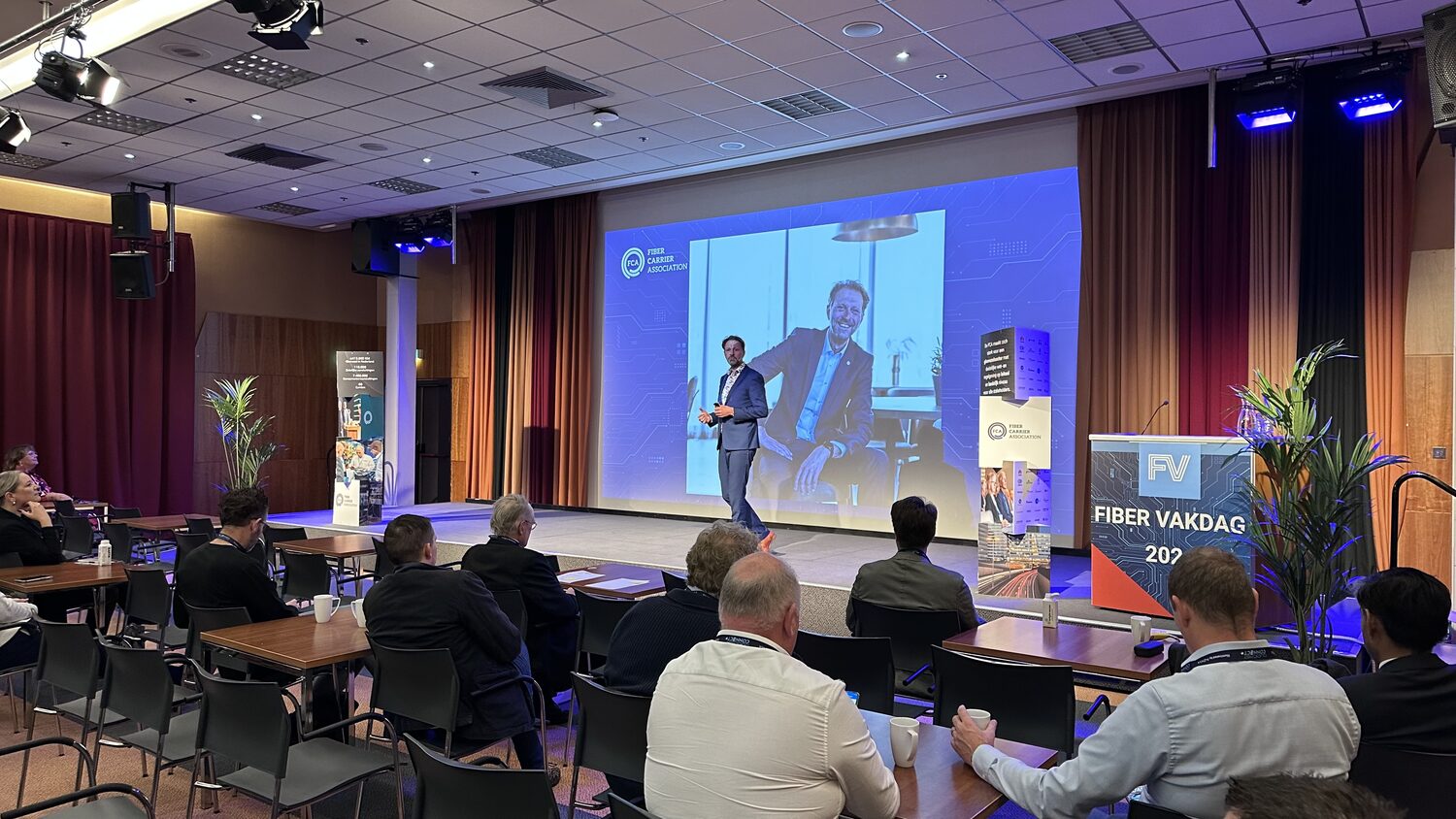
The pictures here are Tarry's own: the hall laid out at 09:52 with nobody in it, and the room at 10:40 with another speaker working the stage and a camera operator rolling from the side. The day's professional coverage was shot by Eva Wittingen.
Designing NextGen AI Factories: Are we prepared for this shift? Thirty-two slides. The deck is not published.
Thirteen frames by Eva Wittingen, 6 November 2024. Not published here: any use needs the photographer's credit and clearance.
Two clips shot on Tarry's phone on the day, IMG_5856 and IMG_5857. Not yet reviewed, and not published.
