RESEARCH

The publication record.

A small lab that publishes with universities rather than instead of them. The work runs from thalamocortical circuitry to seismic facies to the reporting standards that medical AI is now reviewed against.

16 PUBLICATIONS12 PEER-REVIEWED393+ CITATIONS04 AREAS20182026
RESEARCH AREAS — 04
0104
Subsurface & geoscience
Seismic facies under domain shift, raster well-log digitisation, vug detection. The line of work that became EarthScan.
0205
Human-centred AI
Foundation models built for procedural competence rather than scale, and the EU consortium work on teaching and regulating them.
0302
Clinical & scientific standards
How AI research in medicine should be reported so that it can be replicated, reviewed and trusted.
0405
Architectures & priors
What a network is built from, what it is told in advance, and what it costs to run: activations, flows, thalamocortical circuitry, physical law and silicon.
SELECTED WORK
All 16
FIGURE STUDY · VEERNET

A century of well logs, drawn on paper.

Before logging went digital, the tools wrote to paper. Those sheets were later scanned, and the scans are what an operator has: an image of a curve, not the curve. VeerNet classifies the curves in a raster log and turns them back into numbers.

Three scanned Halliburton well logs annotated to show gamma ray, caliper and tension curves, above a diagram of the pipeline from analog signal to paper log to scanned raster to digitised output.
FIG. 1 — THE INPUT. AN ANALOG SIGNAL WRITTEN TO PAPER WHILE DRILLING, SCANNED YEARS LATER, AND STILL THE ONLY RECORD OF THAT WELL.
The transformer-augmented U-Net: an encoder path of four base blocks, an image-to-sequence step through two transformers, and a matching decoder path back to an output image.
FIG. 2 — THE TRANSFORMER-AUGMENTED U-NET. THE SEQUENCE STEP AT THE BOTTOM IS WHAT LETS IT READ A CURVE THAT RUNS THE HEIGHT OF THE SHEET.
Three pairs of panels. In each, a scanned log section sits beside a plot of the caliper curve against depth, with the model's prediction traced over the ground truth.
FIG. 3 — THE OUTPUT, AGAINST GROUND TRUTH, ACROSS THREE DEPTH RANGES. THE CALIPER LOG RECOVERED FROM THE IMAGE, PLOTTED IN METRES.

FIGURES FROM NASIM, PATWARDHAN, MAITI, MARRONE AND SINGH, VEERNET, JOURNAL OF IMAGING 9(7):136, 2023, DOI 10.3390/JIMAGING9070136. PUBLISHED OPEN ACCESS UNDER CC BY 4.0 AND REPRODUCED UNDER THAT LICENCE.

FIGURE STUDY · DYNAMIC LINEAR FLOW

What a flow model looks like from the inside.

Flow-based models are exactly invertible, so the same network runs forwards to sample and backwards to score. That symmetry is the whole design, and it is easier to see than to describe.
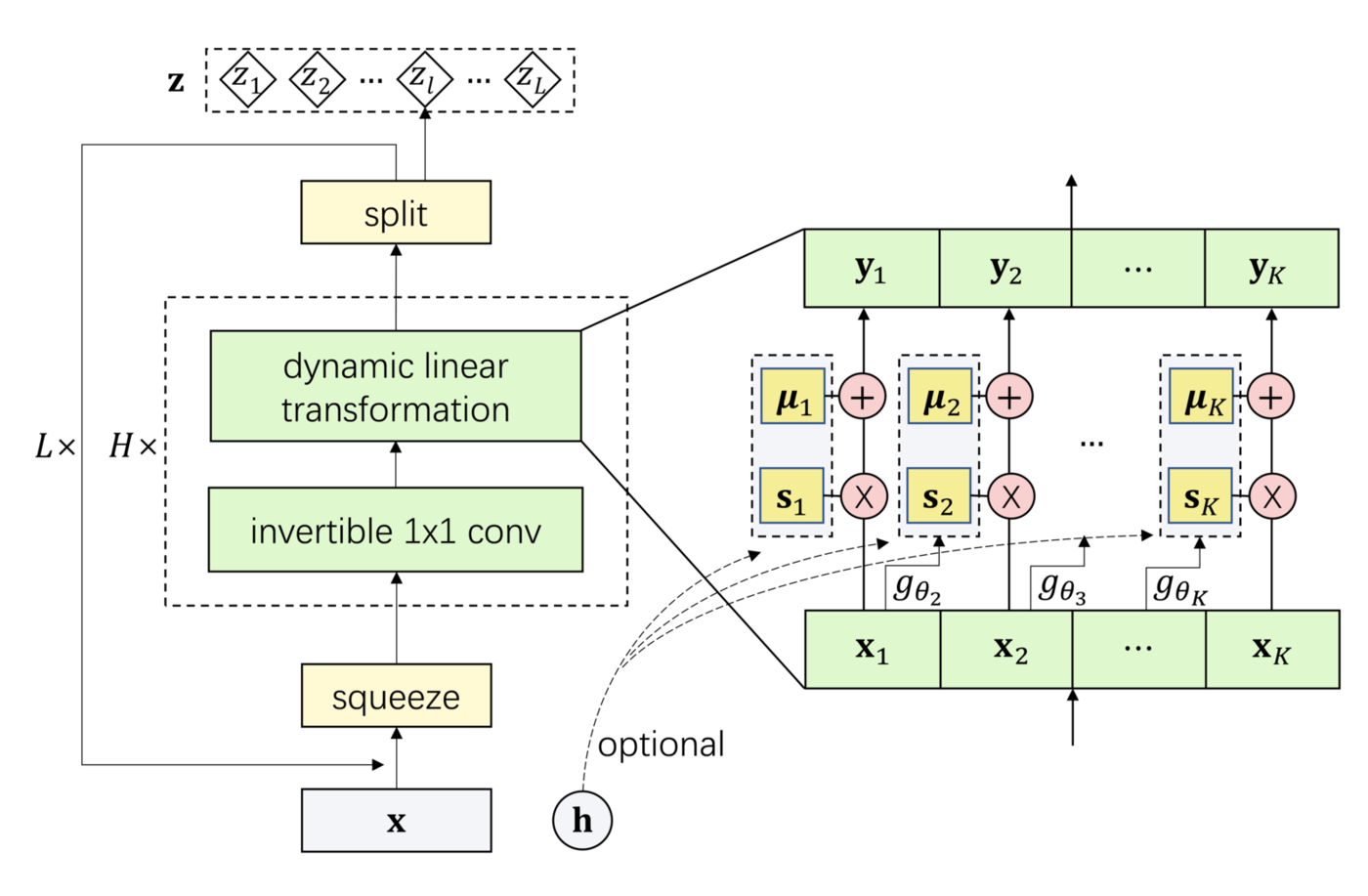
The Dynamic Linear Flow block: an input is squeezed, passed through an invertible 1x1 convolution and a dynamic linear transformation, then split, with the transformation parameters produced per step.
FIG. 1 — SQUEEZE, INVERTIBLE 1×1 CONVOLUTION, DYNAMIC LINEAR TRANSFORMATION, SPLIT. THE PARTIALLY AUTOREGRESSIVE STRUCTURE IS THE PART THAT BUYS THE SPEED.
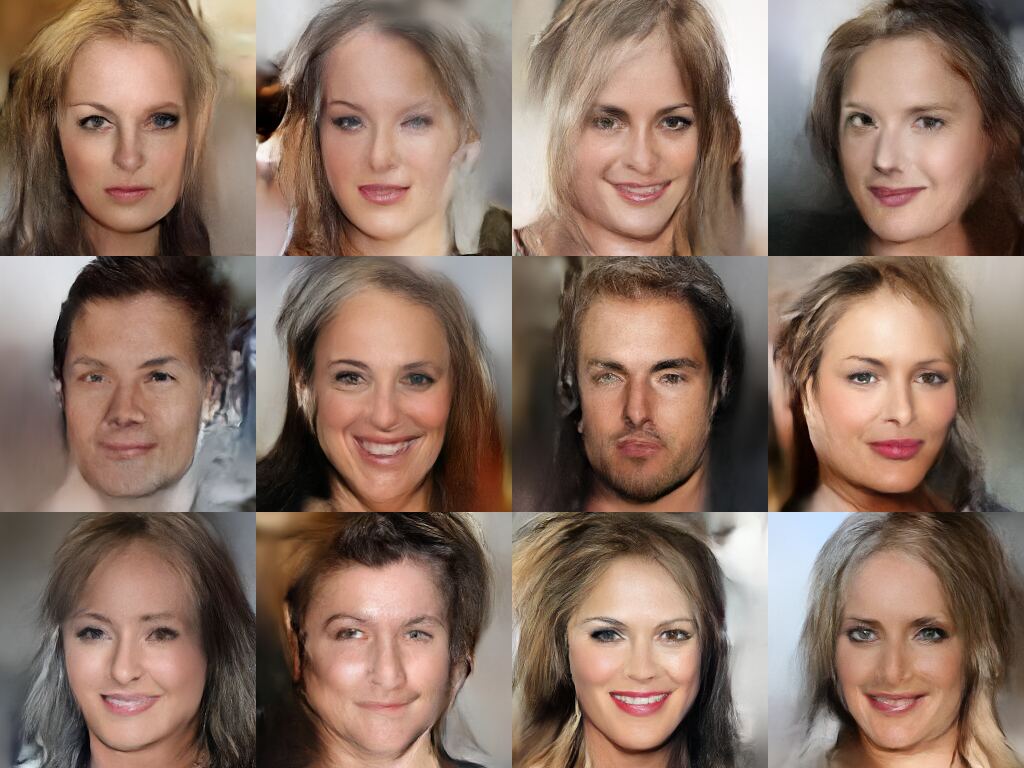
A grid of images sampled from the trained model, showing objects, animals and scenes at low resolution.
FIG. 2 — SAMPLES DRAWN FROM THE TRAINED MODEL. NOTHING HERE WAS PHOTOGRAPHED.

BOTH FIGURES ARE THE LAB'S OWN, PUBLISHED WITH THE PAPER IN 2019. THE WORK REACHED STATE OF THE ART AMONG FLOW-BASED MODELS ON IMAGENET 32×32 AND 64×64, AND CONVERGED AROUND TEN TIMES FASTER THAN GLOW.

PUBLICATIONS
EVERY ENTRY LINKS TO THE PAPER
2026Physics-Informed Diffusion Model for Generating Synthetic Extreme Rare Weather Events DataMarawan Yakout · Tannistha Maiti · Monira Majhabeen · Tarry SingharXiv · PREPRINT2026Data Preprocessing Methods for Automating MLOps Pipelines: A Comparative StudySurya Teja Gowd Ayinavilli · Keith Quille · Tarry SinghACM HCAIep2025From Knowing to Doing: A Principled Architecture for Procedurally Competent AgentsNarendra Patwardhan · Lidia Marassi · M. Quamer Nasim · Giuseppe Fiameni · Stefano Marrone · Tarry Singh · Carlo SansoneSSRN · PREPRINT2025Automated Workflow for the Detection of VugsM. Quamer Nasim · Tannistha Maiti · N. Mosavat · P. V. Grech · Tarry Singh · P. Nath Singha RoyarXiv · PREPRINT2024Digitizer: A Synthetic Dataset for Well-Log AnalysisM. Quamer Nasim · Narendra Patwardhan · Javed Ali · Tannistha Maiti · Stefano Marrone · Tarry Singh · Carlo SansoneSpringer LNCS2023The European AI Tango: Balancing Regulation Innovation and CompetitivenessChristina Todorova · George Sharkov · Huib Aldewereld · and thirteen others, incl. Tarry SinghACM HCAIep2023Designing Human-Centric Foundation ModelsNarendra Patwardhan · Shreya Shetye · Lidia Marassi · Monica Zuccarini · Tannistha Maiti · Tarry SinghCEUR2023VeerNet: Using Deep Neural Networks for Curve Classification and Digitization of Raster Well-Log ImagesM. Quamer Nasim · Narendra Patwardhan · Tannistha Maiti · Stefano Marrone · Tarry SinghJ. Imaging2023Responsible and Reliable AI at PICUS LabNarendra Patwardhan · Lidia Marassi · Michela Gravina · Antonio Galli · Monica Zuccarini · Tannistha Maiti · Tarry Singh · Stefano Marrone · Carlo SansoneCEUR2022Developing a Human Centred AI Masters: the Good, the Bad and the UglyBarry Feeney · Monica Zuccarini · Tarry Singh · Huib Aldewereld · Stefano Marrone · Keith QuilleACM ITiCSE2022Seismic Facies Analysis: A Deep Domain Adaptation ApproachM. Quamer Nasim · Tannistha Maiti · Ayush Srivastava · Tarry Singh · Jie MeiIEEE TGRS2021Artificial intelligence in dental research: Checklist for authors, reviewers, readersFalk Schwendicke · Tarry Singh · Jae-Hong Lee · Robert Gaudin · Akhilanand Chaurasia · Thomas Wiegand · Sergio Uribe · Joachim KroisJ. Dentistry2020An energy efficient time-mode digit classification neural network implementationO. C. Akgun · Jie MeiPhil. Trans. R. Soc. A2019Generative Model with Dynamic Linear FlowHuadong Liao · Jiawei He · Kunxian ShuIEEE Access2018Intra-Thalamic and Thalamocortical Connectivity: Potential Implication for Deep LearningJie Mei · Tarry SinghIEEE/ACM SE4COG2018ARiA: Utilizing Richard's Curve for Controlling the Non-monotonicity of the Activation Function in Deep Neural NetsNarendra Patwardhan · Madhura Ingalhalikar · Rahee WalambearXiv · PREPRINT
WHO WROTE IT

The papers carry names, not a logo.

A neuroscientist in Berlin, a geophysicist in Calgary, a generative-models researcher in Chongqing, a machine-learning researcher who moved from Michigan to Naples. The lab has always been a handful of people in different countries who publish together, several of them under a university affiliation as well as ours.