Criminal forecasting and body cams at Hogeschool Utrecht
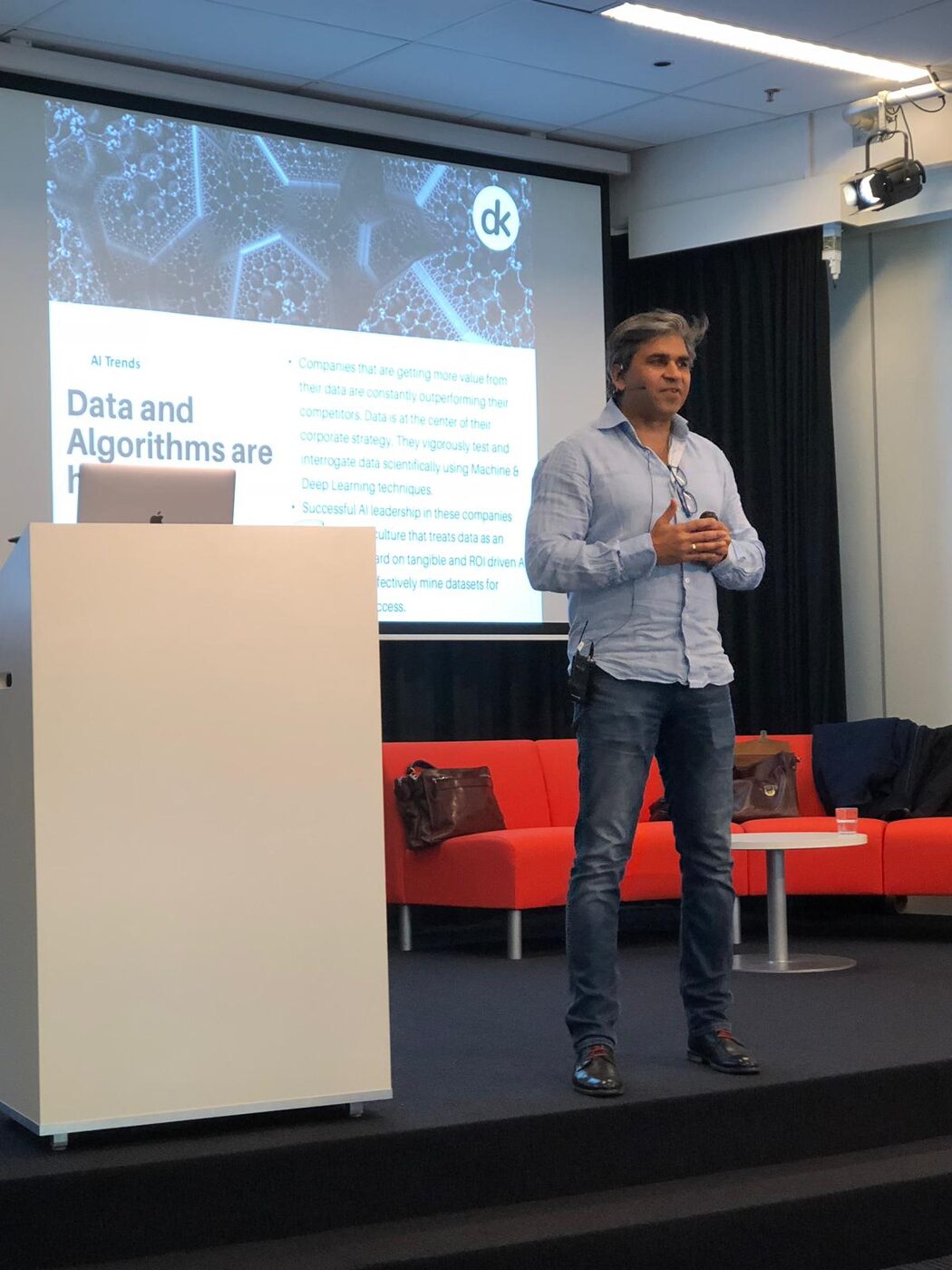
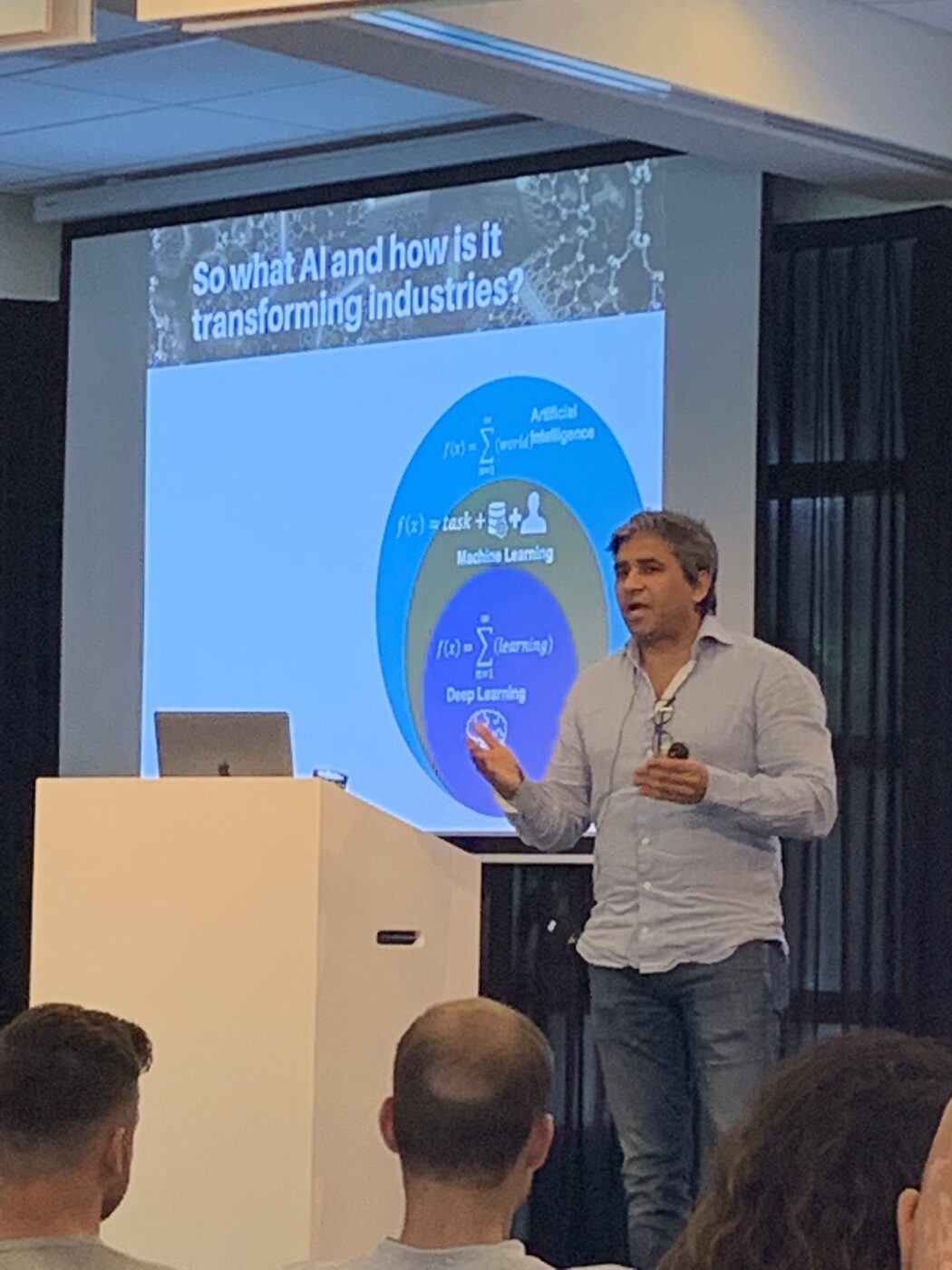
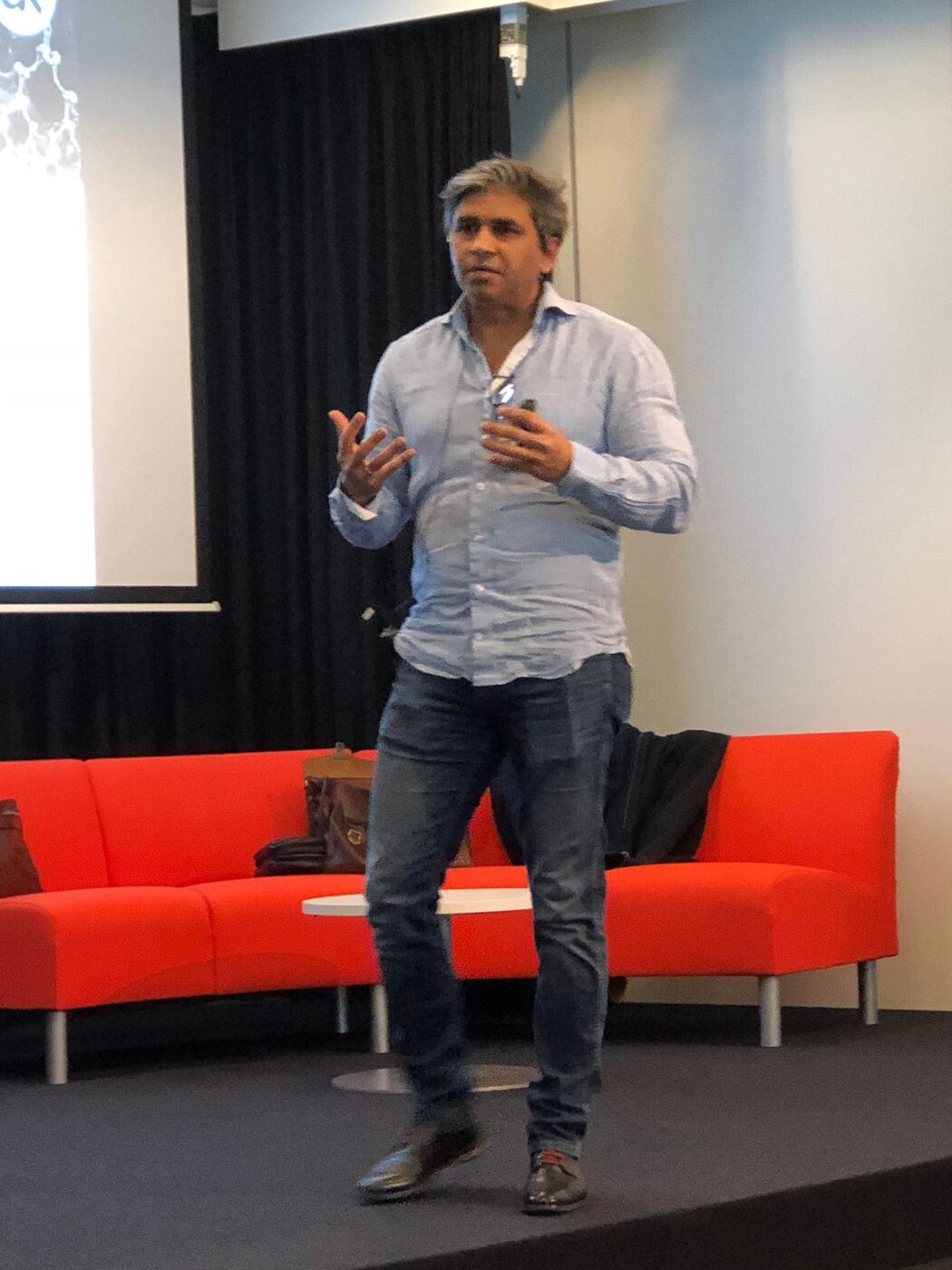
On 10 May 2019 Tarry Singh spoke to the Master Informatics audience at Hogeschool Utrecht about AI transformation, then gave the second half to criminal forecasting and body cameras.
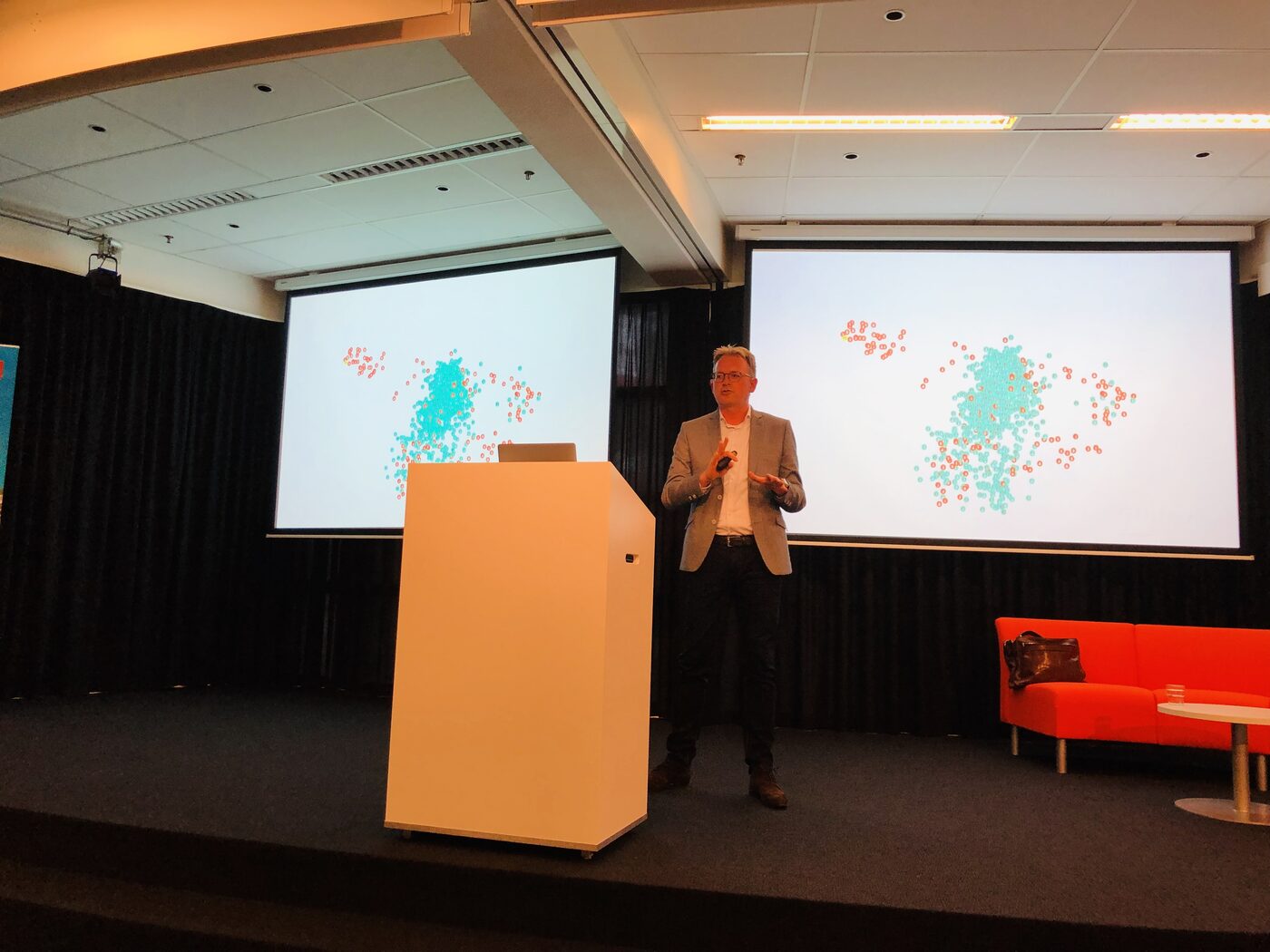
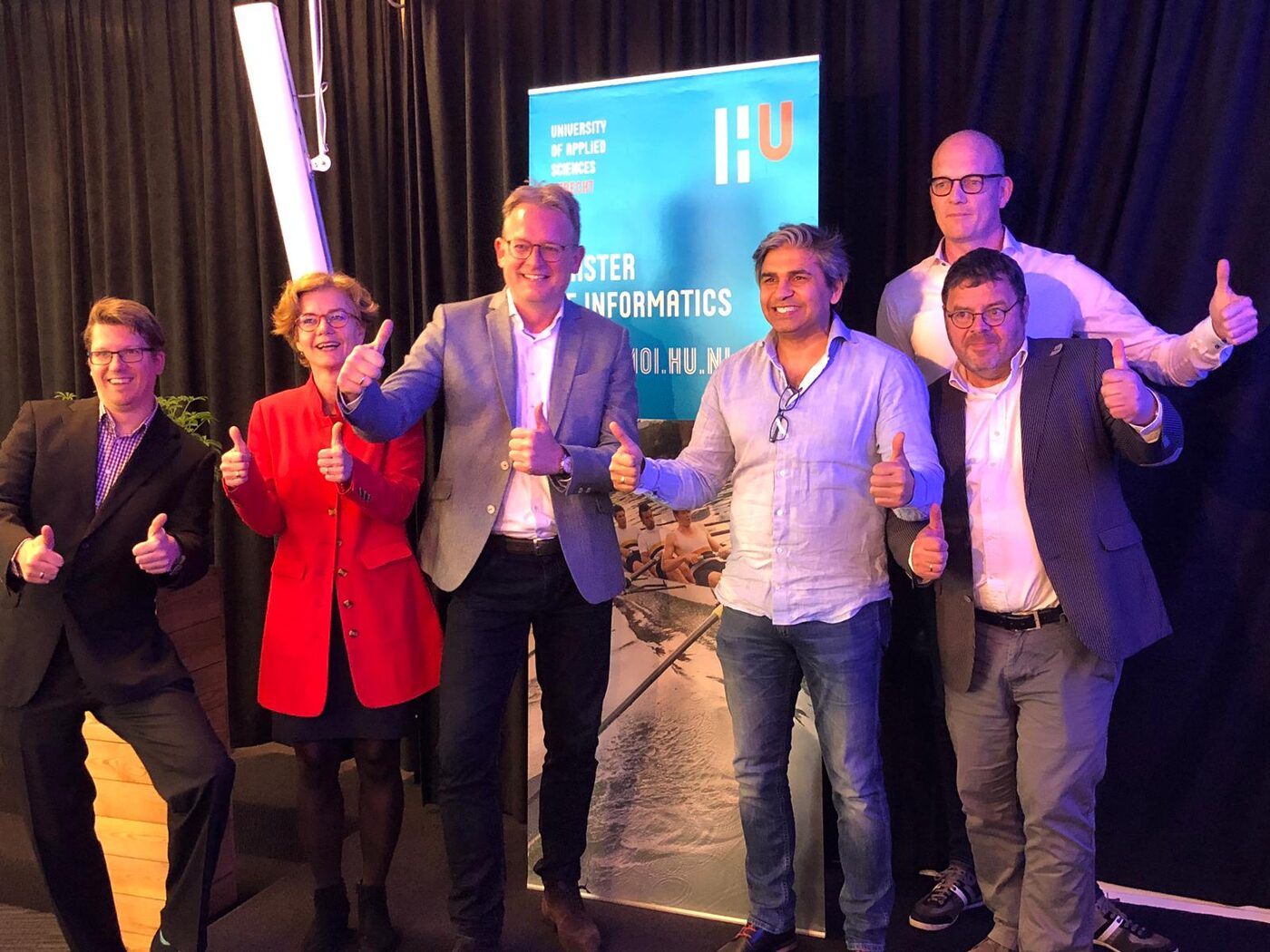
Hogeschool Utrecht, the University of Applied Sciences Utrecht, runs a Master Informatics programme. On Friday 10 May 2019 it put an evening of talks on a stage in Utrecht, with the programme's roll-up banner standing beside the lectern. Photographs from the room are timestamped 15:22 that afternoon. More than one speaker was on the bill, and six of them lined up in front of the banner when it was over.
The deck opened wide. AI transformation, data treated as a corporate asset, and one slide carrying a single question about where your company will be by 2025. It then narrowed to three things a company has to get right: an honest measure of its own AI maturity, AI skills held by its staff rather than rented from consultants, and projects chosen for return on investment.
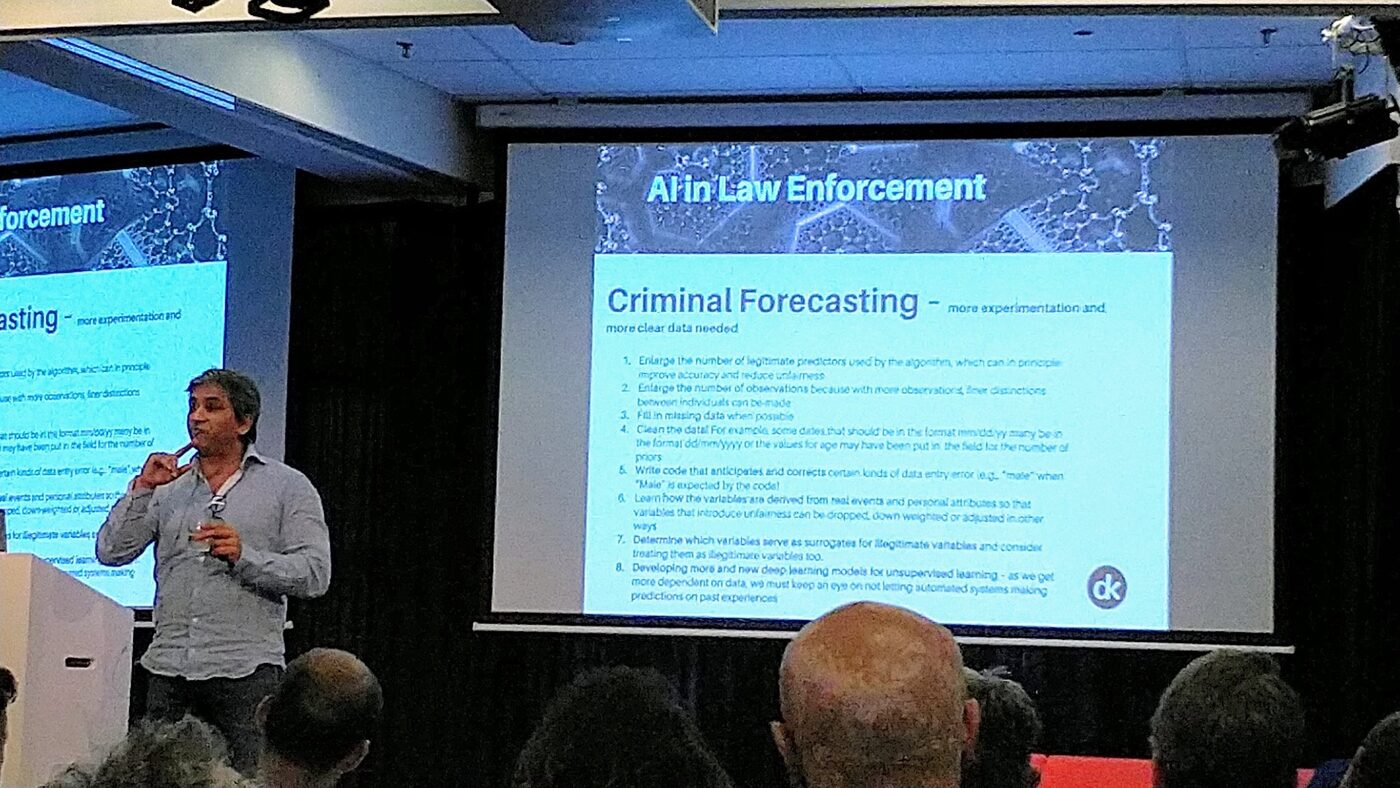
The middle of the talk went to law enforcement, and by slide count it was the longest section. Random forests and confusion tables on probation data. One worked example produced 1,535 false positives against 99 false negatives, a ratio of about 15.5 to one, and the slide stated that gender was the strongest single predictor in that model. Shuffle its values and classification accuracy for a failure falls by more than thirty points. Fairness and accuracy pull against each other, and the room was left holding that.
Neural networks came next, built up one hidden layer at a time on four inputs and 500 observations, with the audience asked whether the extra node actually improved the fit. Then body cameras. Then a low-light imaging pipeline using a 23-layer U-Net to turn near-darkness into a readable picture. The failure modes were on the slides too: automated video interpretation goes wrong in ways that are hard to detect, and offenders adapt faster than models trained on what already happened.
Three client stories closed the talk. An eight-month programme with a global telecoms operator that trained staff and produced business plans for more than twenty AI solutions. A four-month pilot in healthcare whose breast cancer prototype scored about 82 per cent accuracy on a small dataset. A third story covered the AI maturity assessment work that preceded both.