One student to a desk, the rest on the link
A hybrid afternoon at Hanze University in Groningen, where student teams walked an AI data canvas from the decision through to live monitoring while the rest of the group watched on Blackboard Collaborate.
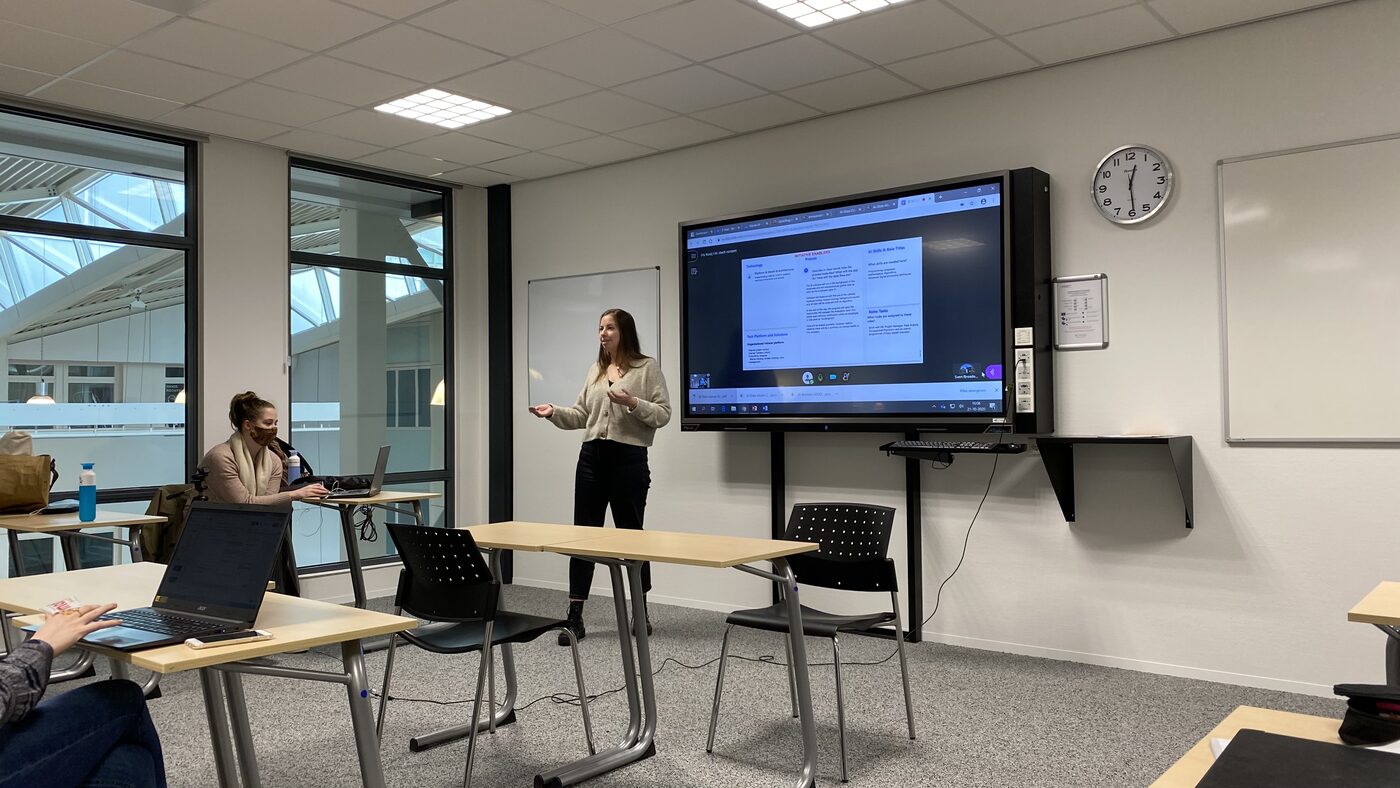
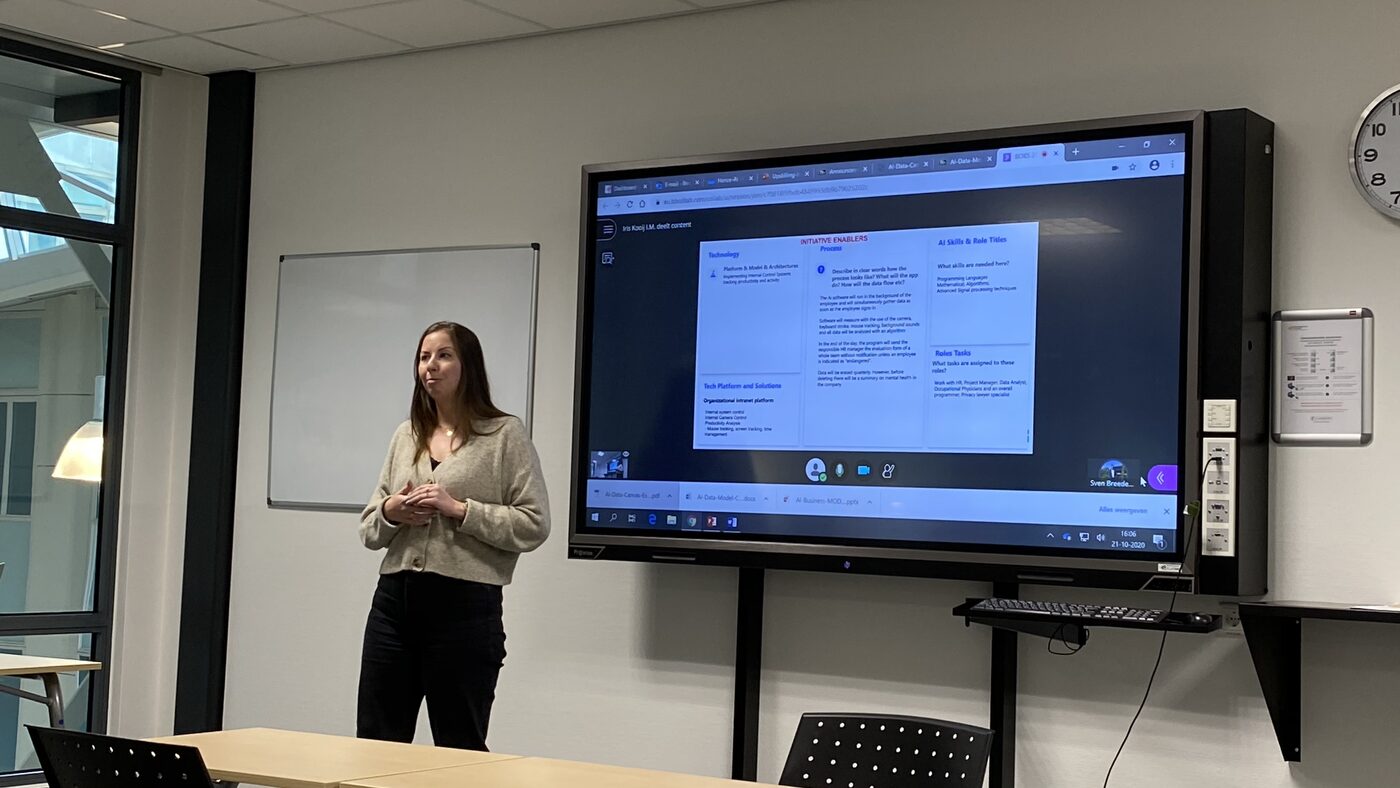
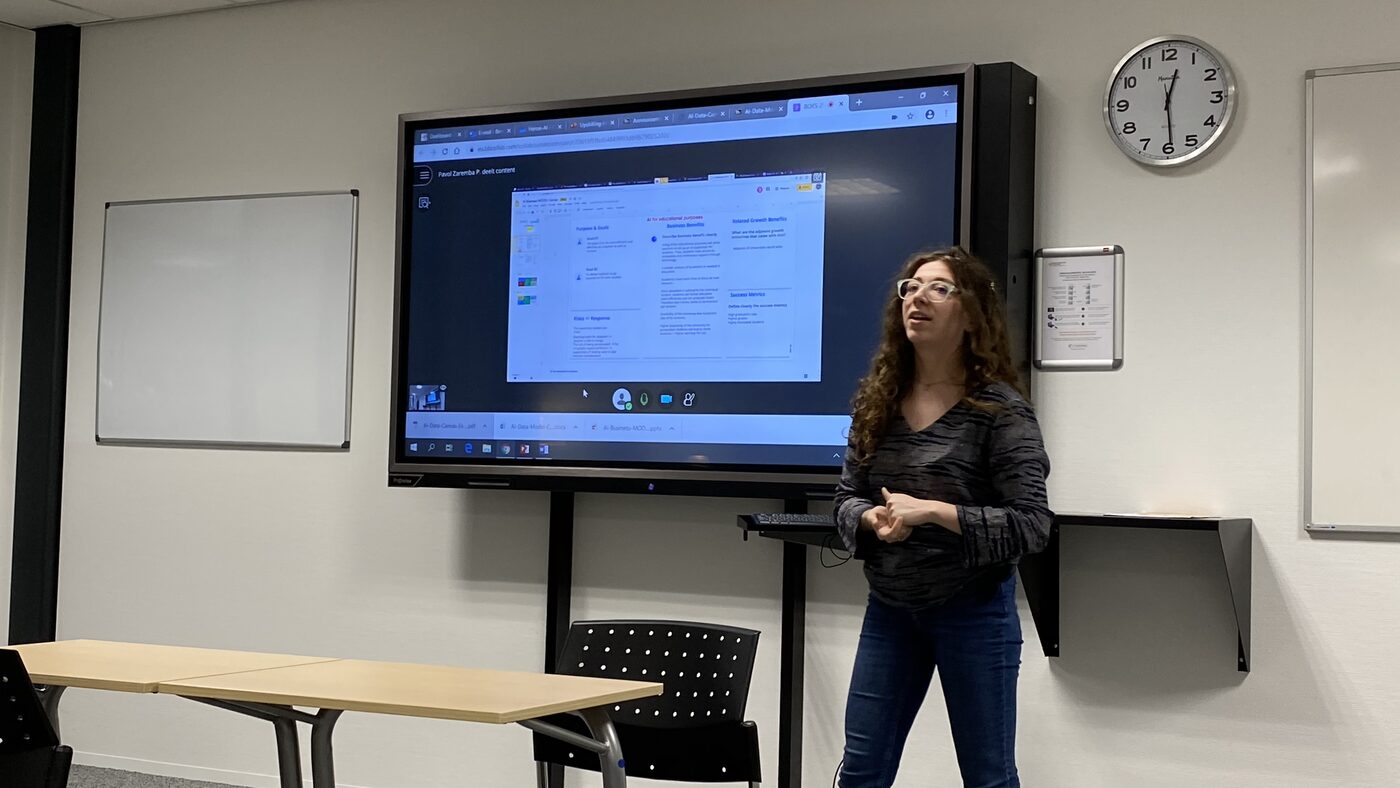
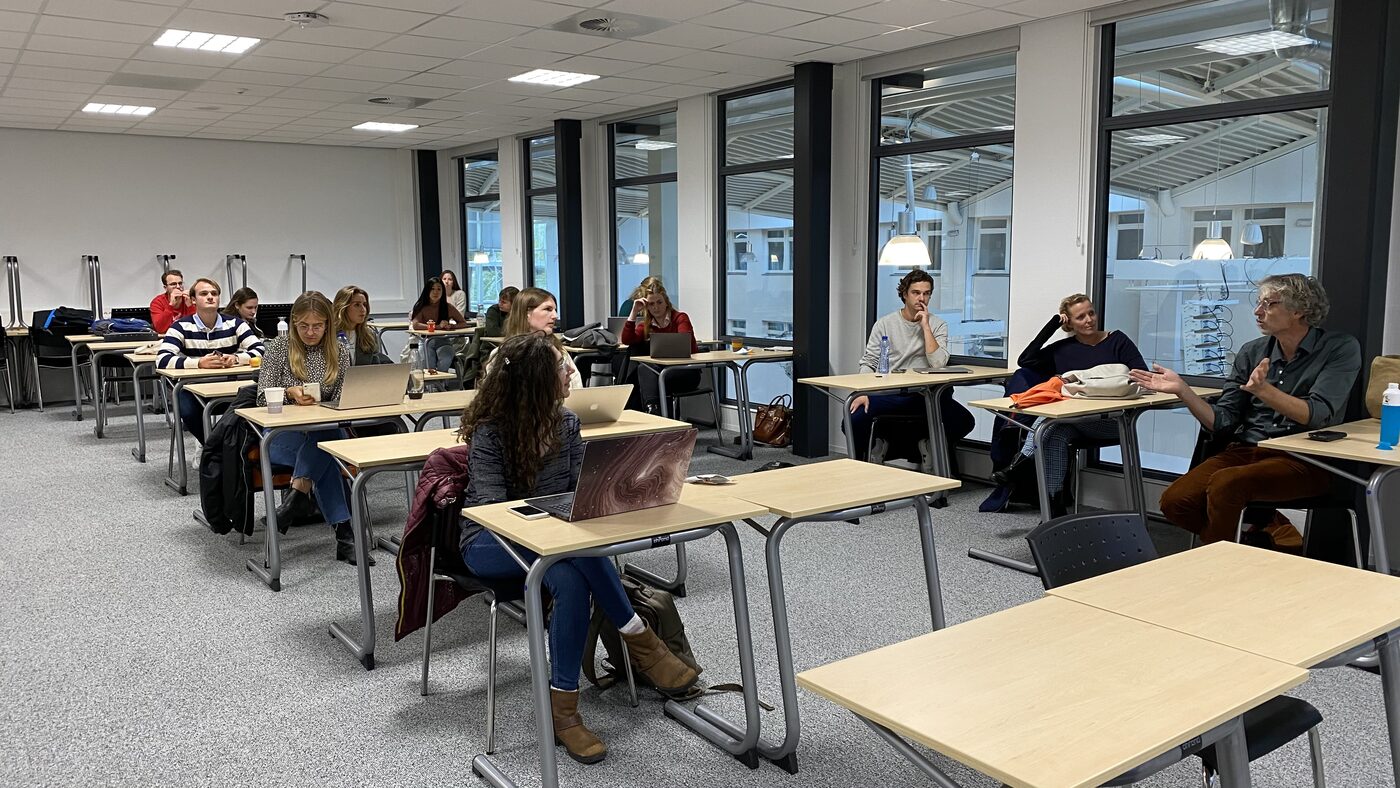
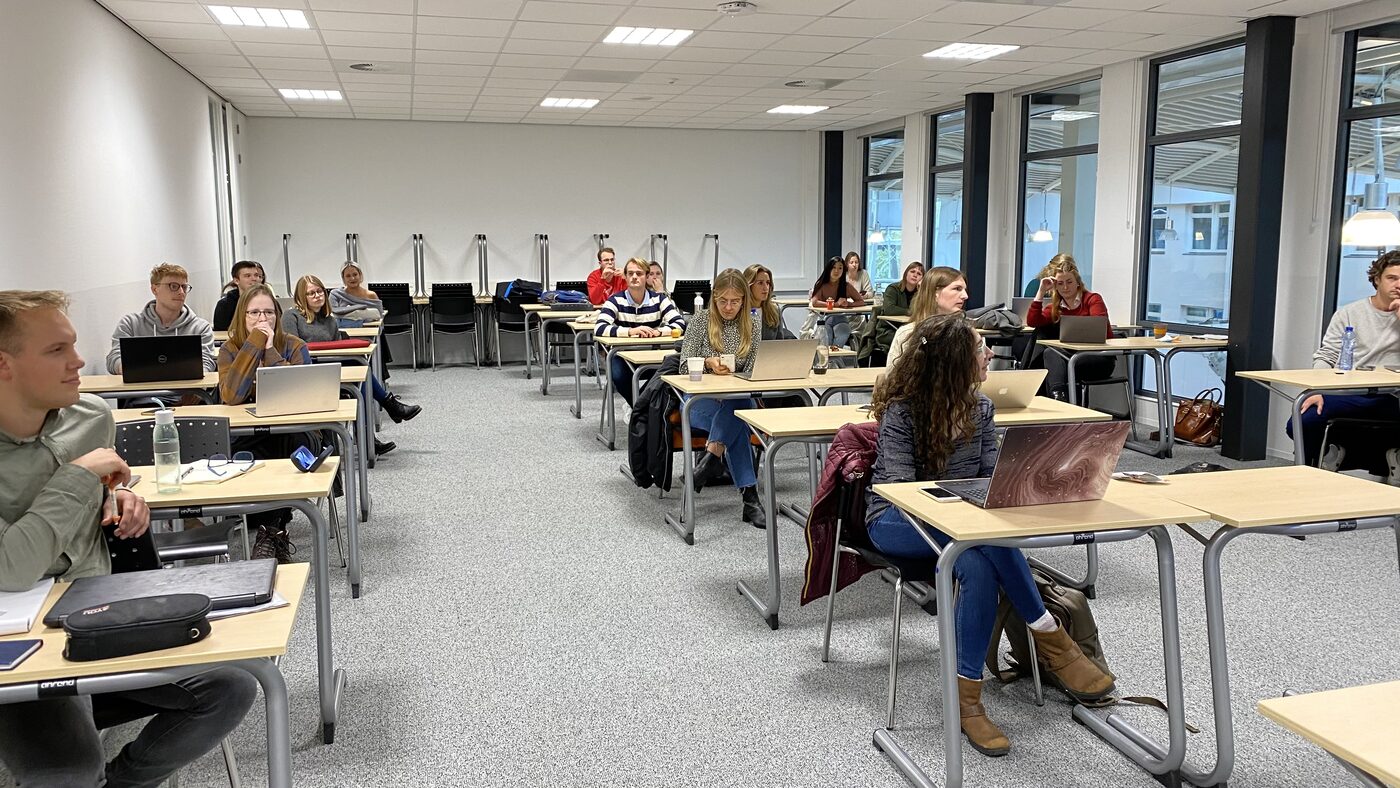
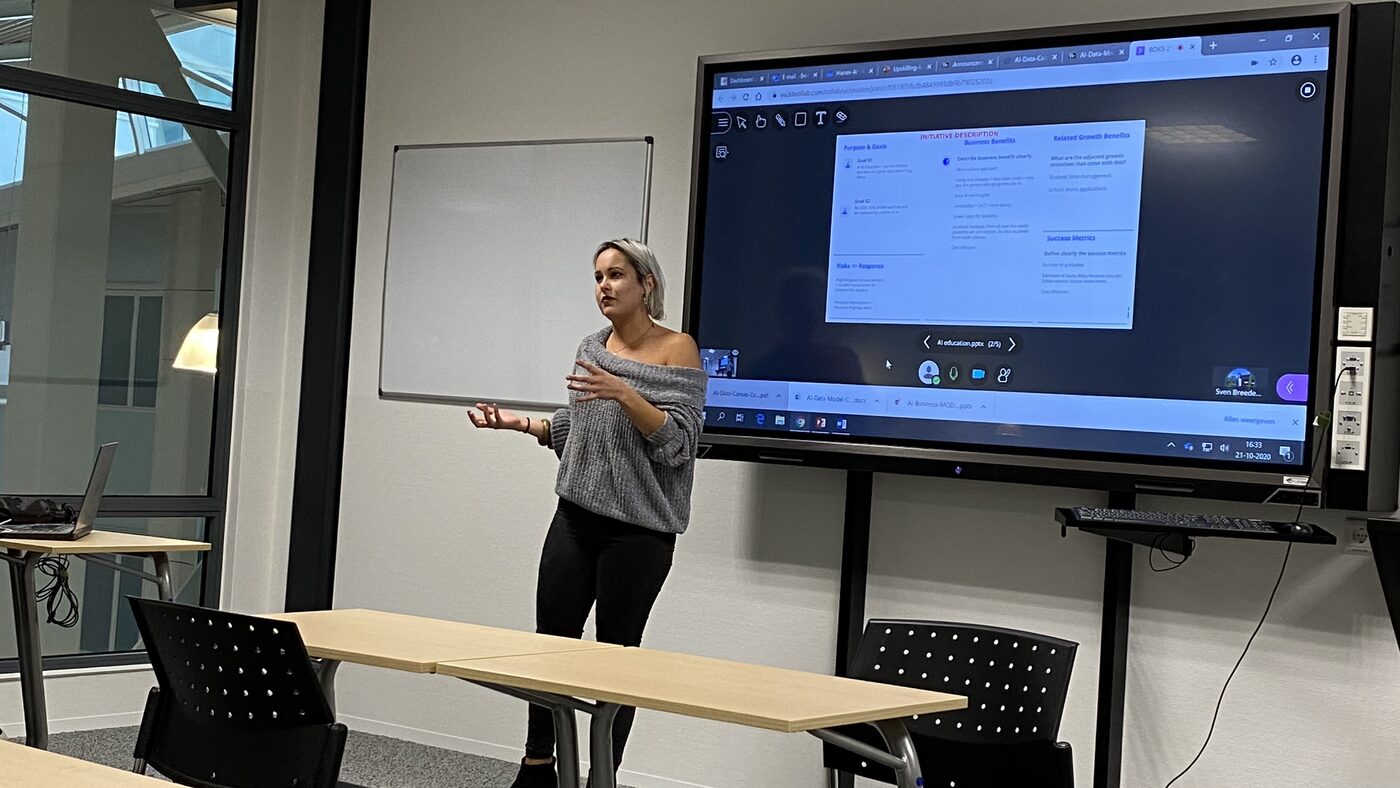
On 21 October 2020 a classroom at Hanze University of Applied Sciences in Groningen held a spread-out group of students, one to a desk, empty desks in between. A few wore masks. The rest of the group was on Blackboard Collaborate, and the browser tab holding that session carried a recording dot all afternoon. The wall display ran a plain Chrome window with eight tabs open, one of them labelled Hanze-AI, and every team shared into it in turn.
The format did not bend to suit the medium. Teams presented five slides each, sharing their screen so that the people in the room and the people at home read the same thing off the same surface. Two sheets carried the session. The AI data canvas asks for the decision first, then the problem task, the value proposition, the data sources, how new data gets collected, the features, and only after all of that how you evaluate the model offline and monitor it once it is live. The second sheet asks for purpose and goals, business benefits, adjacent growth benefits, risks and response, and success metrics. Both start blank.
One team took sustainable plastic packaging. Predict a bottle design that stays durable on the least plastic possible, train on past production numbers and industry benchmarks, and compare the output against the production manager's own benchmark before accepting it. If the model cannot match the benchmark, drop the model. Their live metrics were production cost, percentage of plastic reduced, and position against competitors. Another team worked up employee monitoring software that reads the camera, keystrokes, mouse movement and background sound from sign-in onward, sends the HR manager a whole-team evaluation with no individual named unless someone is flagged at risk, then wipes the data quarterly after writing a summary on mental health in the company. Their own roles list put a privacy lawyer next to the HR lead, the data analyst and the occupational physician. The canvas is what made them write that down.
The worked examples the teams had been given were revised two days before the session: fake hotel review detection, spotting under-priced property, and predicting which subscribers churn. Each one runs all the way to approval thresholds, retraining cadence, and what a false positive costs. That is the standard the student sheets were held to. Team after team, one canvas at a time, through the late afternoon.
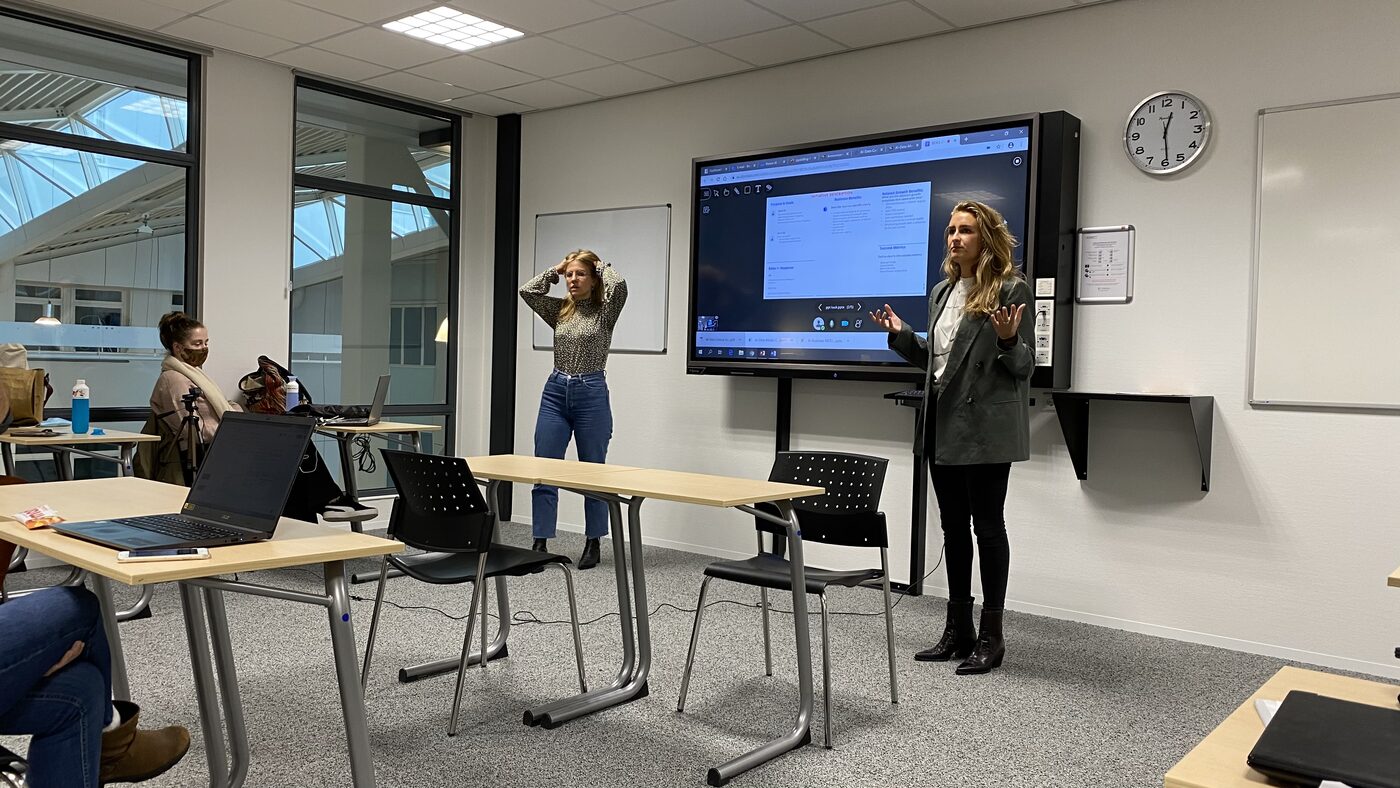
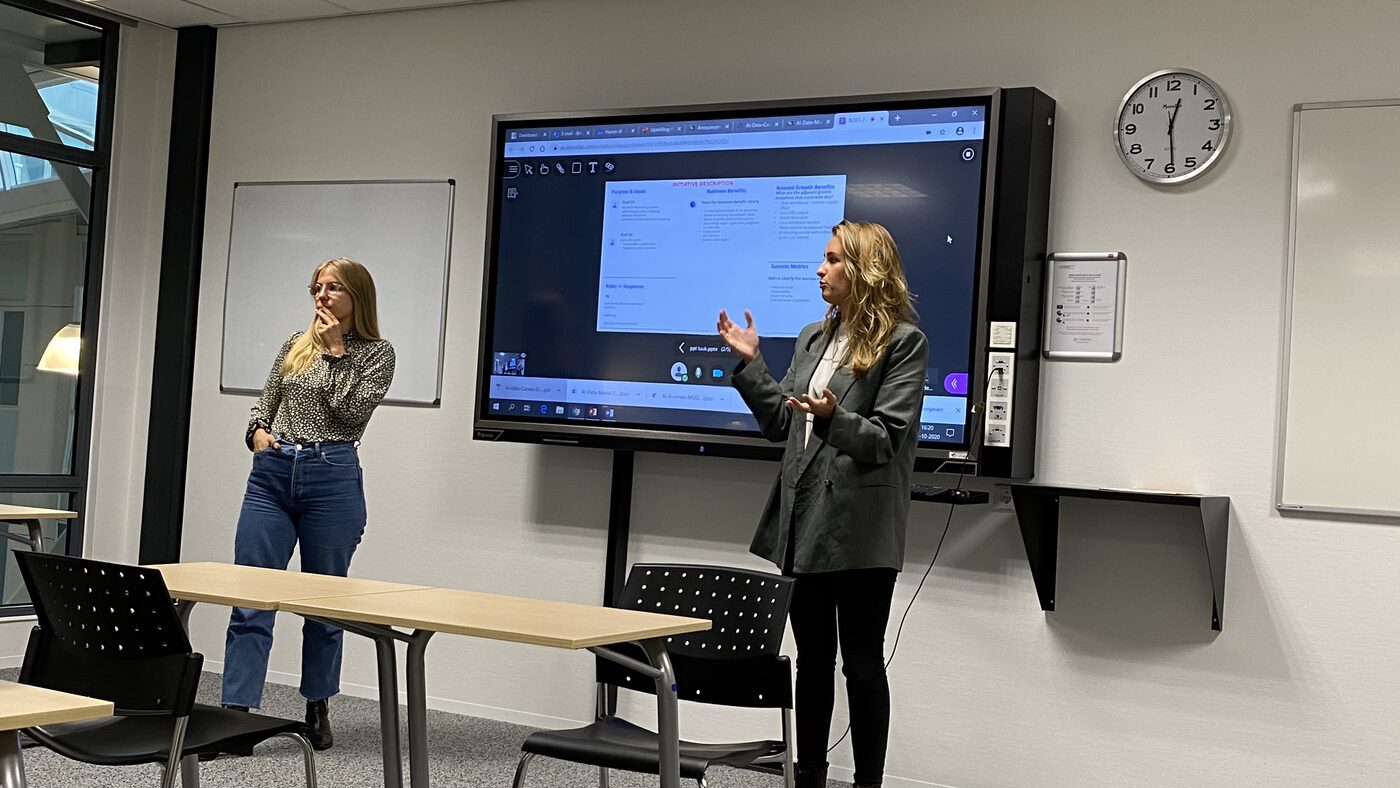
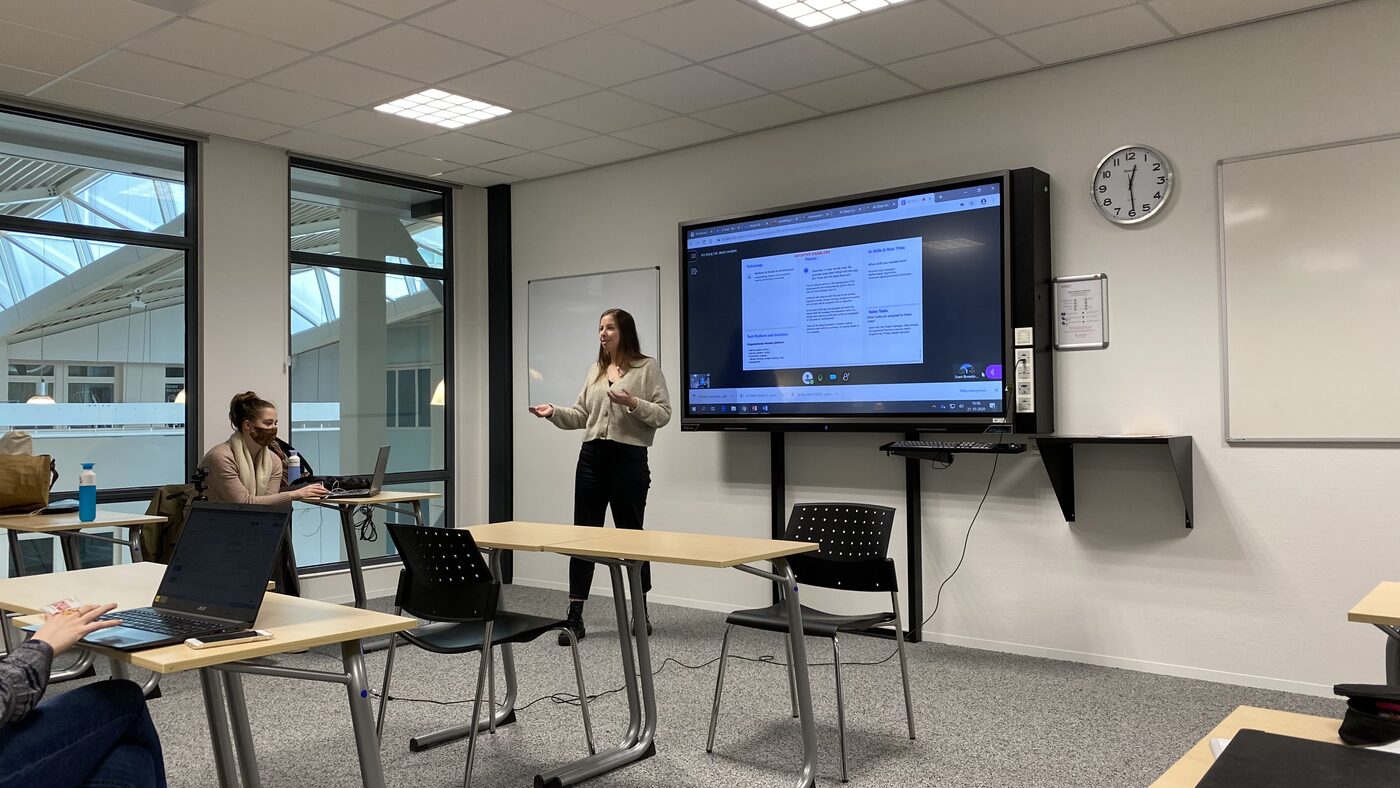
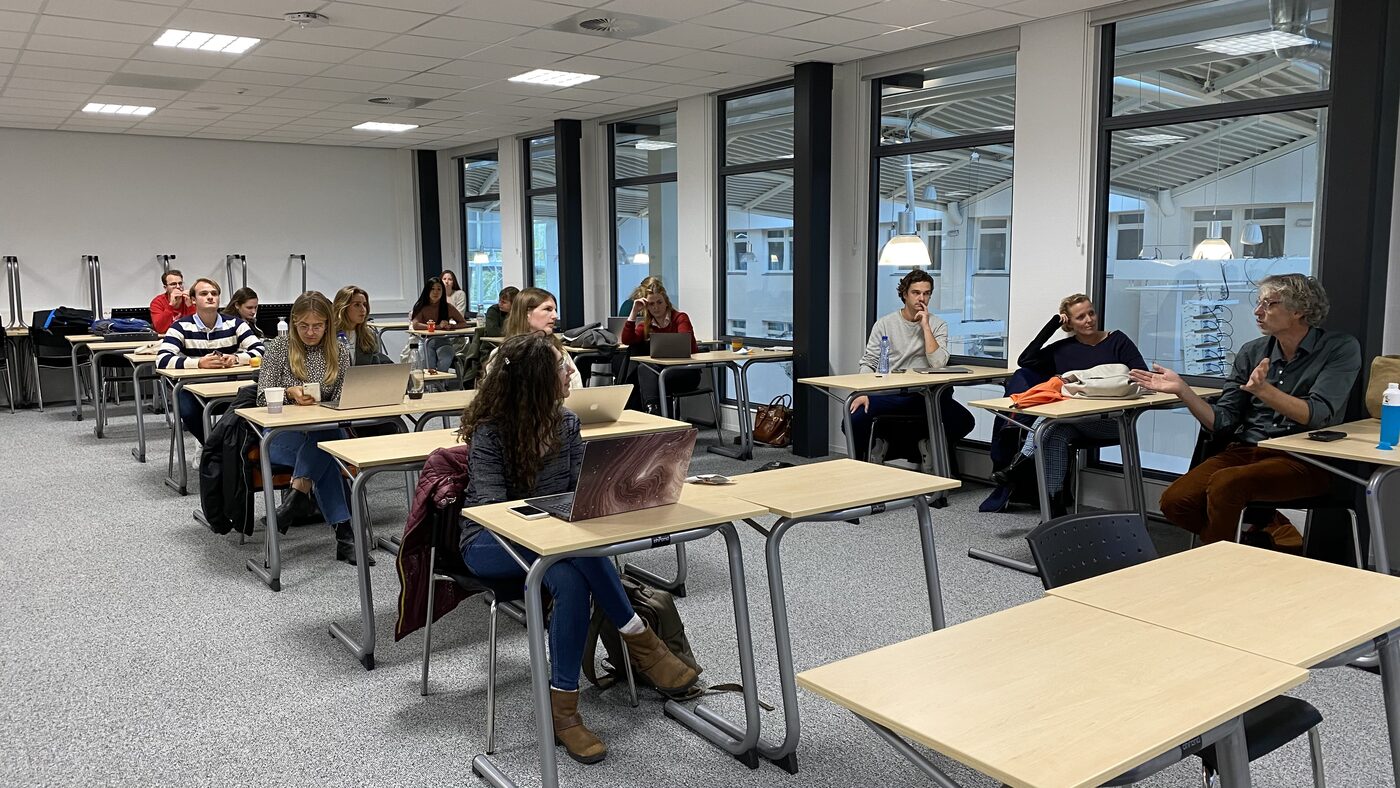
Eleven frames from the Hanze classroom, 21 October 2020, between 16:06 and 16:43 local, on an iPhone 11 Pro Max.
Three canvases carried through to thresholds, retraining cadence and cost of error: fake hotel review detection, real-estate deal spotting, customer retention. Revised 19 October 2020, two days before the session.
The session tab showed a recording indicator throughout the afternoon. The recording itself is not available here.
Sustainable plastic packaging and employee monitoring software, as presented on the room display. The teams' own files are not included here.
