Becoming an AI Company
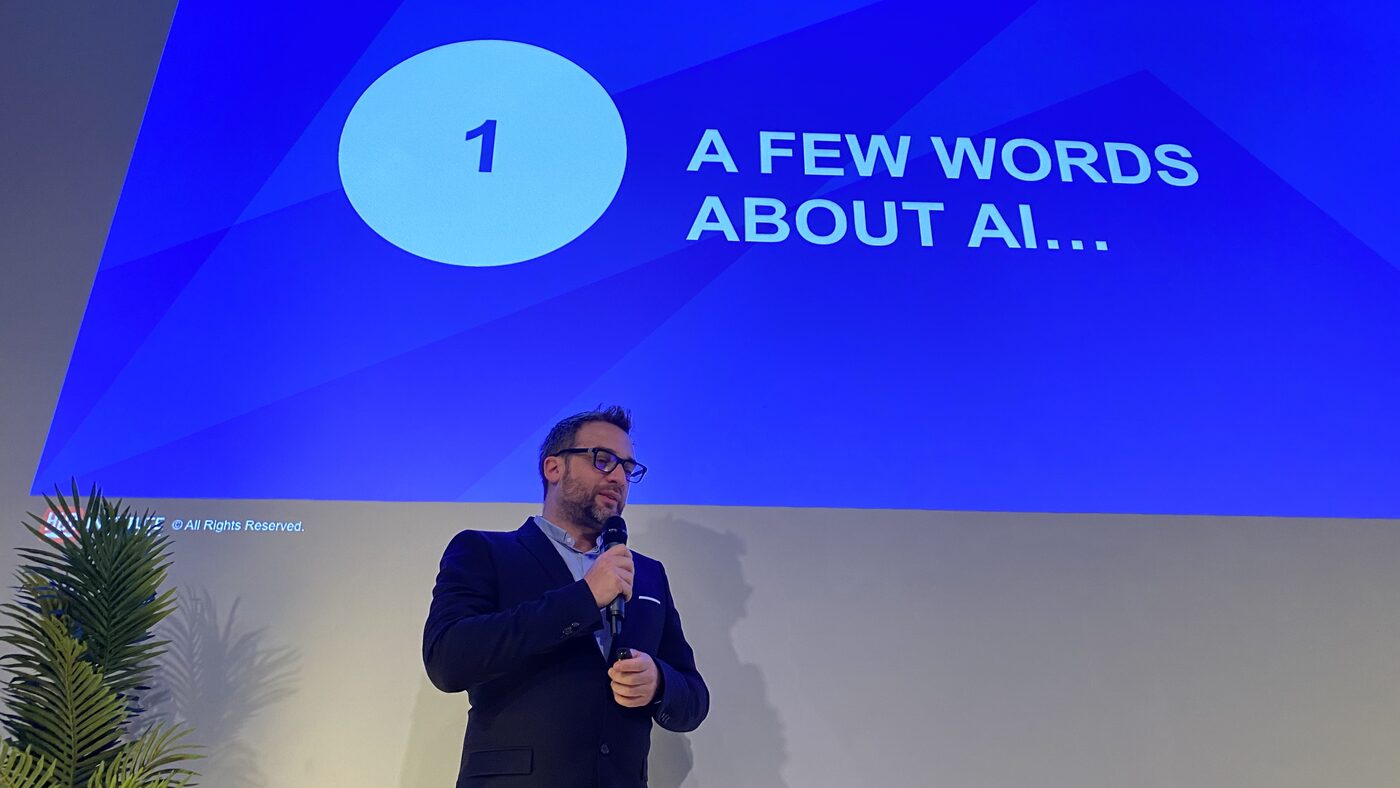
Six slides at the HUB Institute in Paris argued that becoming an AI company is an operating model problem, and the same evening a four-way founding team stepped on stage.
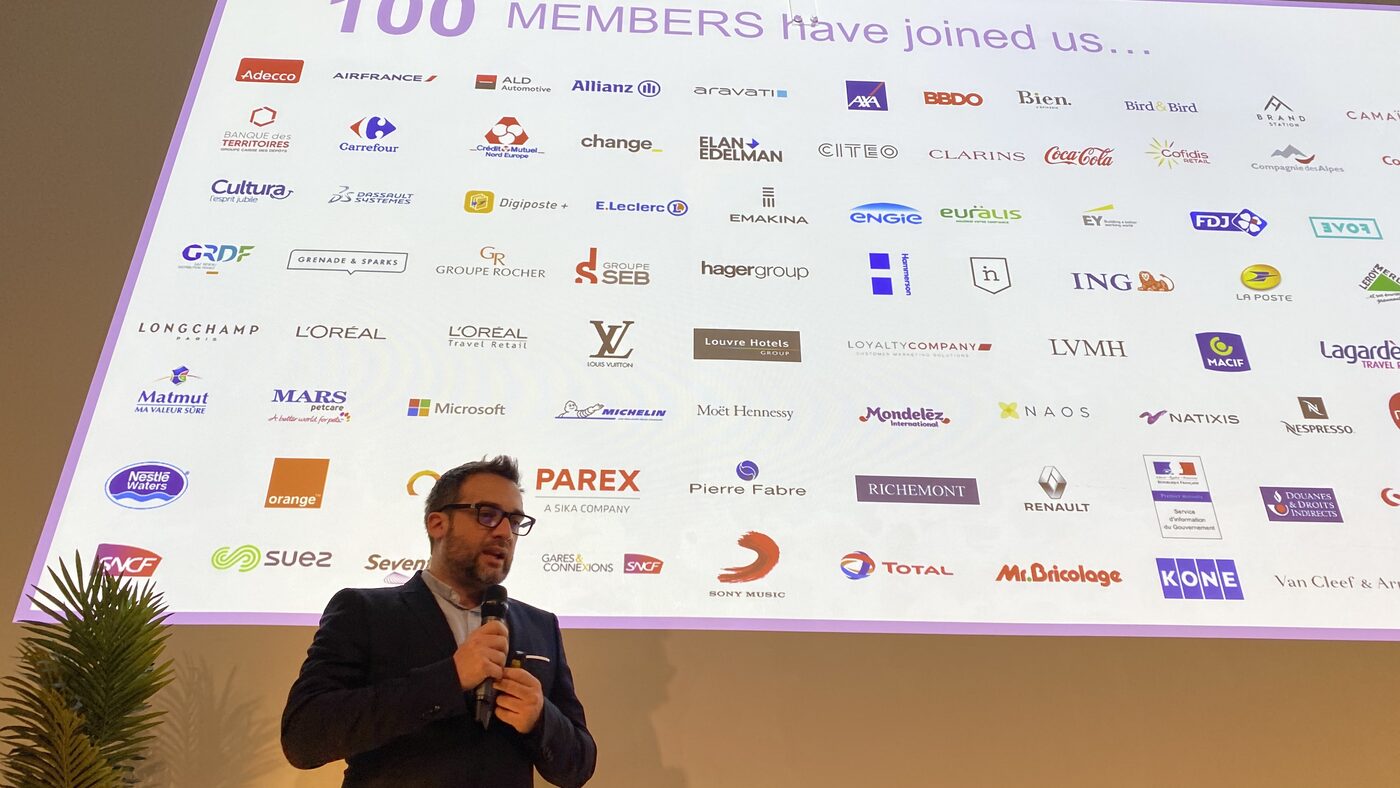
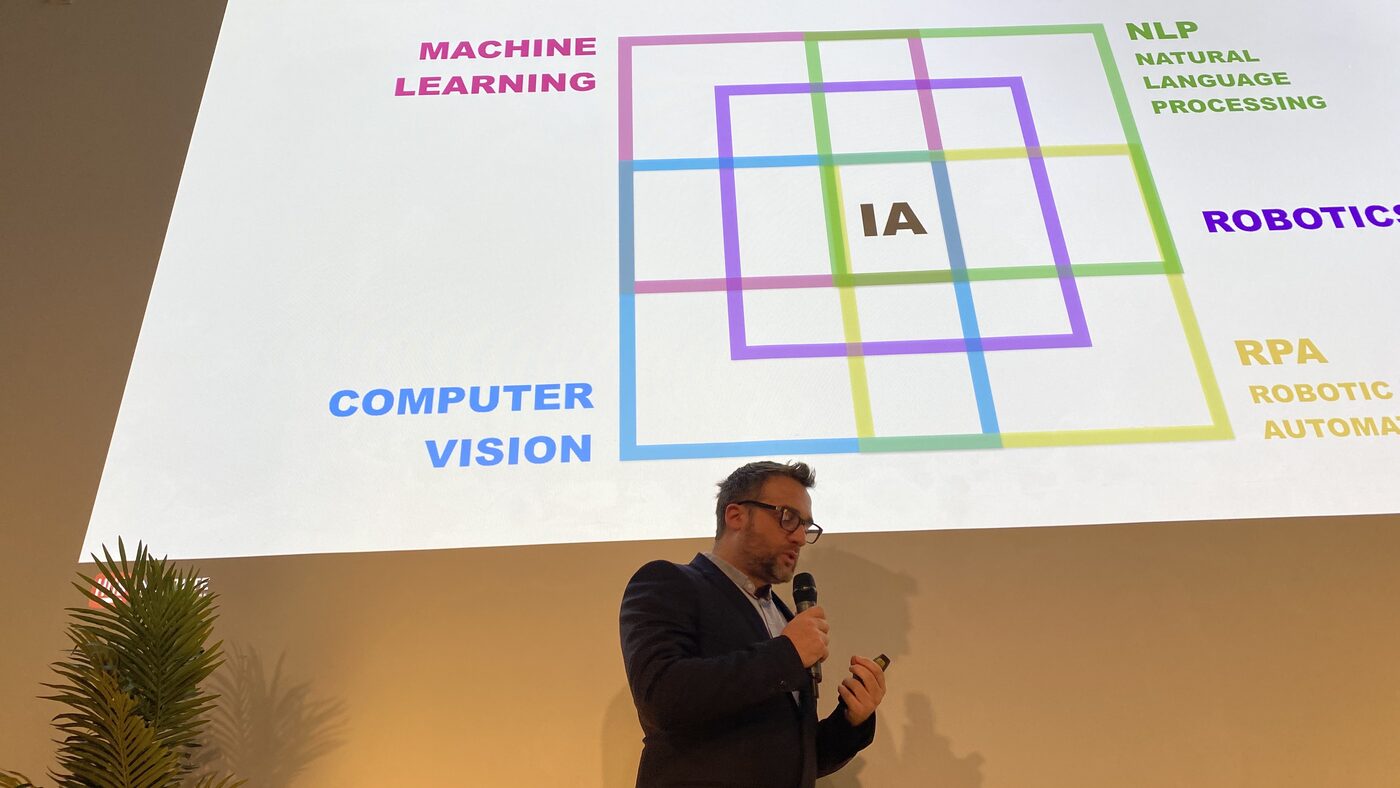
The host was the HUB Institute, a Paris membership body for large French companies, and one of the first slides of the evening was a wall of its members. Adecco, Air France, Allianz, AXA, Carrefour, Coca-Cola, Dassault Systemes, Engie, La Poste, L'Oreal, Louis Vuitton, LVMH, Michelin, Microsoft, Orange, Renault, SNCF, Total. A hundred of them, the slide said. A second slide, in French, drew artificial intelligence as four overlapping squares around the letters IA: machine learning, natural language processing, computer vision, and RPA robotic automation. That was the opening definition for the room.
The DKAI deck started somewhere else. Its title slide reads AI Transformation, Becoming an AI Company, Paris, The Hub Institute, 23rd Jan 2020. Six pages, finished that afternoon, an hour and a half or so before the first photograph of the session. The opening working slide is titled AI Capability, an operating model overview: a wheel with data at the centre and nine parts around it. Leadership and culture. AI governance. Org structure and location. People, talent and skills. AI tech and apps. Information and data flow. Process flow. Infrastructure and facility. Sourcing.
The rest of the deck sorts risk, then people. One page plots what AI leaders are building against technological uncertainty, market uncertainty and context dynamism, adapted from S. Floricel on innovation project lifecycles; an incremental service like a smartphone app sits in one corner and new market creation in another. The next sets old school leadership beside the new age kind across five rows: control, administration, management style, procedures and policies, purpose. A third splits machine learning capability into three groups that have to exist side by side, scientific ML for the niche models, operational ML to carry them from development into production, and core engineering to ship software in every form factor the company sells into. The last page names five organisational shapes for AI, mapped from decentral to central and competitive to cooperative, after Gassmann and von Zedtwitz on international R&D organisation, 1999.
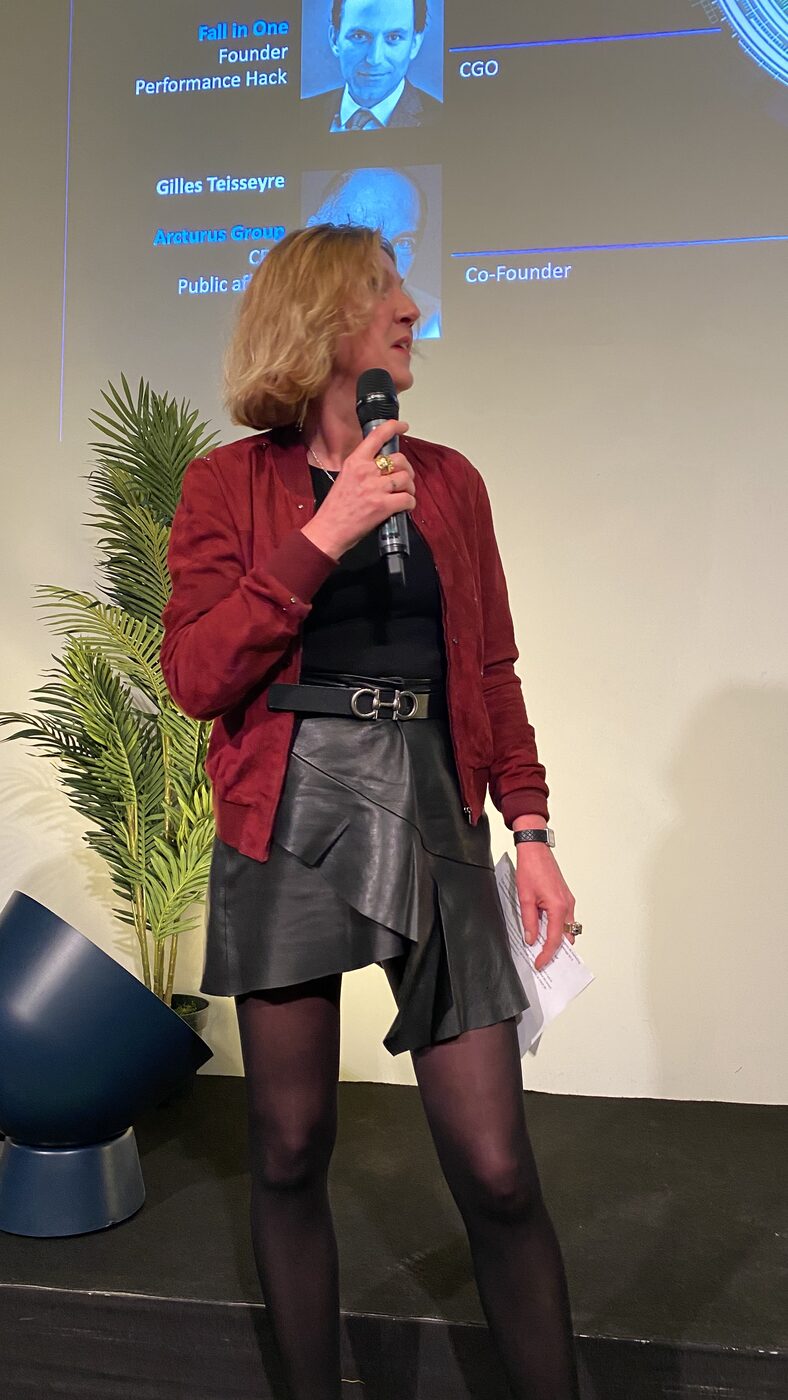
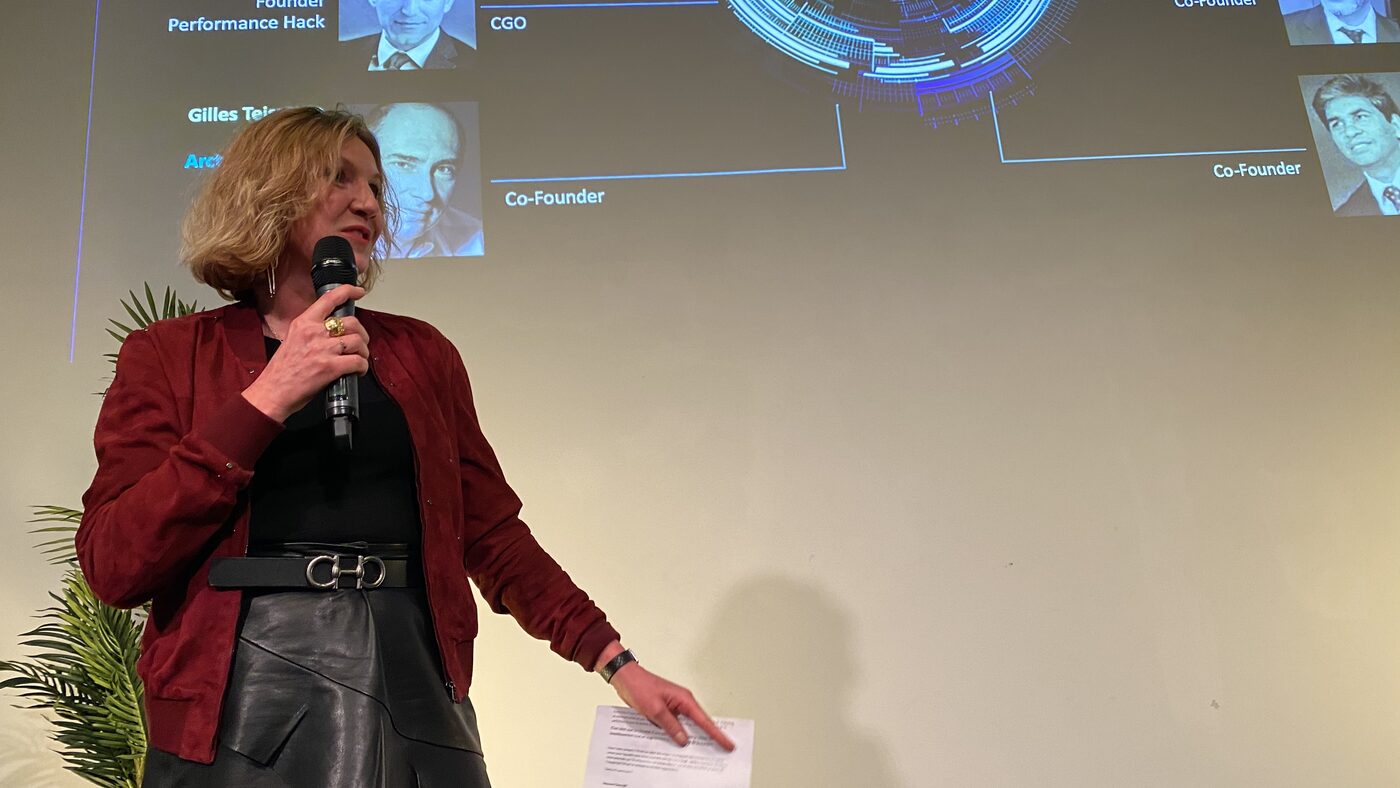
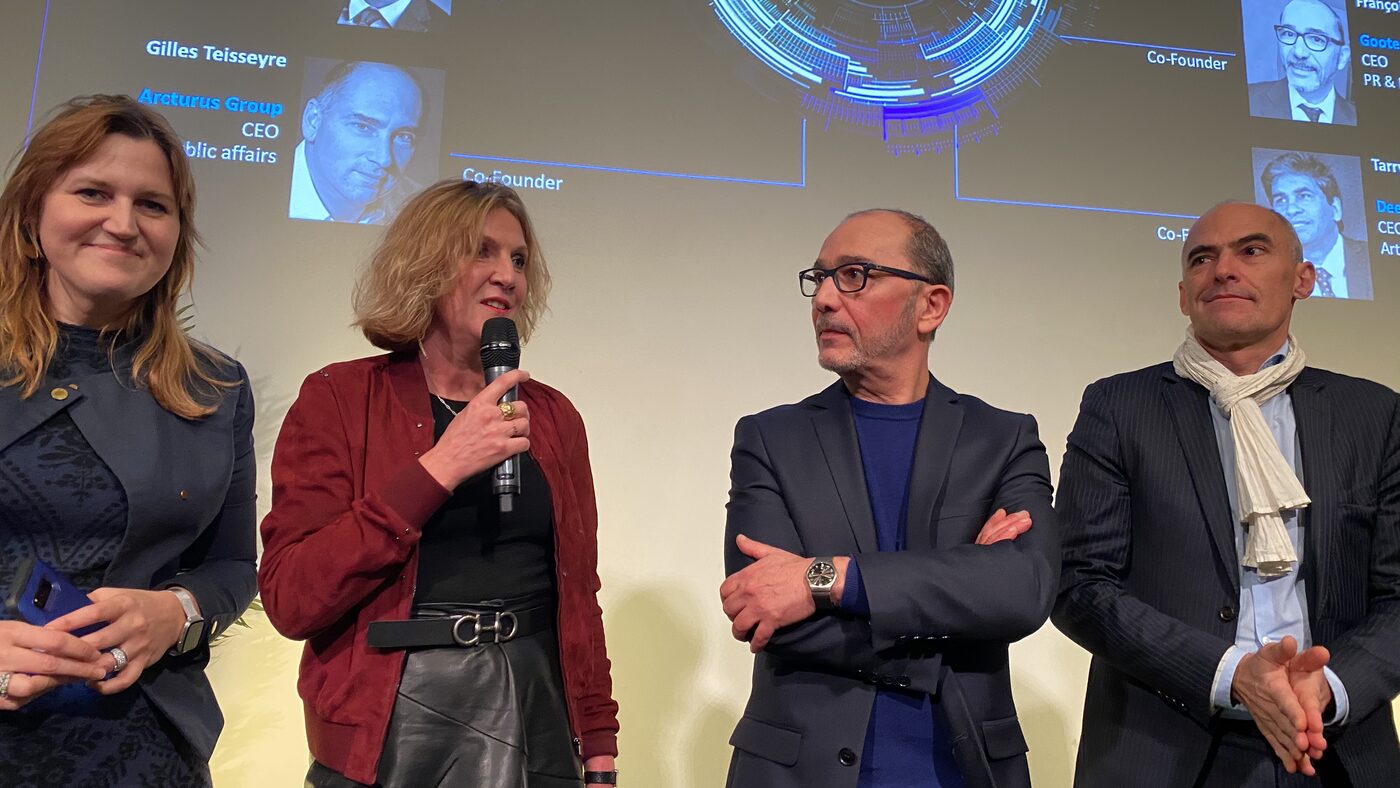
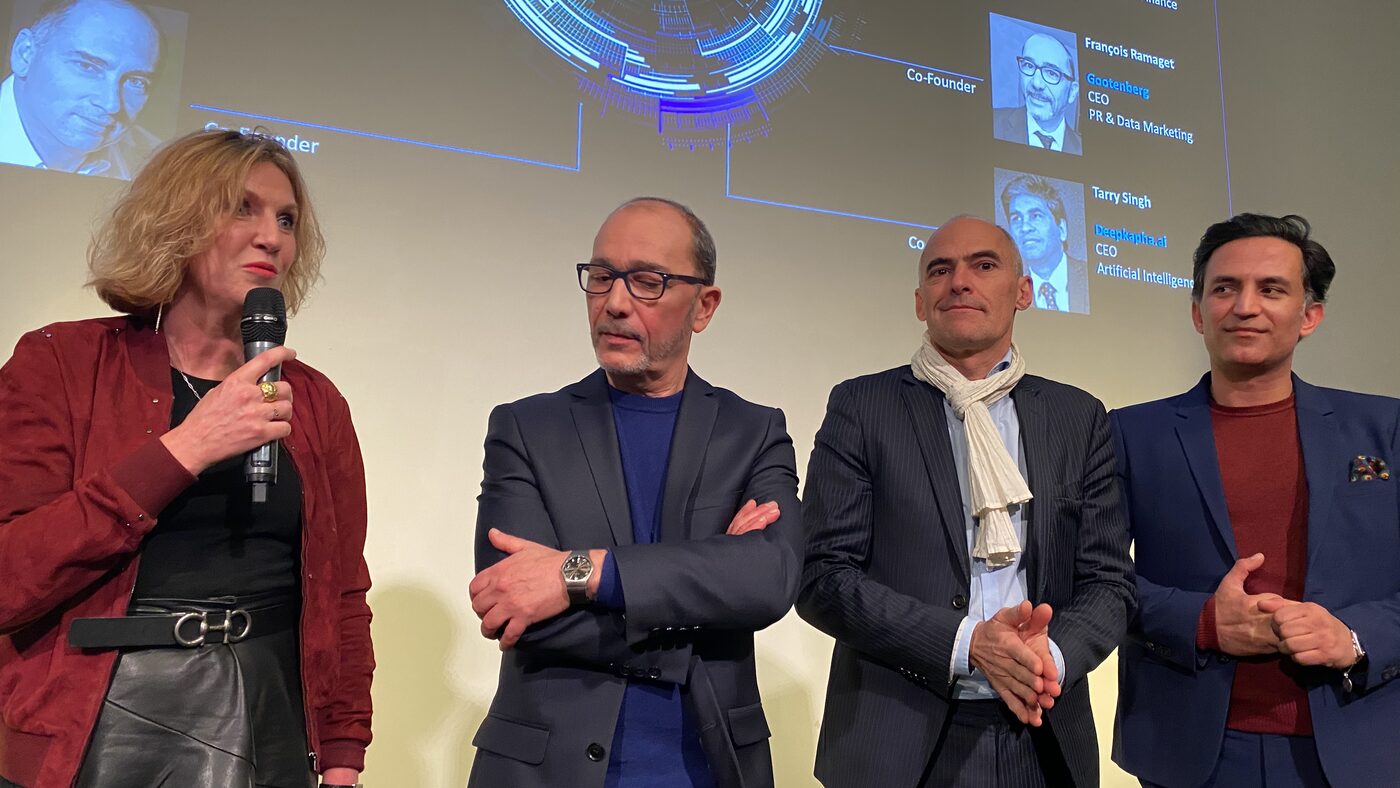
The evening finished with a panel. Behind it, a slide laid out a founding team as an org chart, each face tagged with a company and a remit. Francois Ramaget of Gootenberg, PR and data marketing. Gilles Teisseyre of Arcturus Group, public affairs. Tarry Singh of deepkapha.ai, artificial intelligence. Four people stood in a line on the low stage while the introductions were read out.
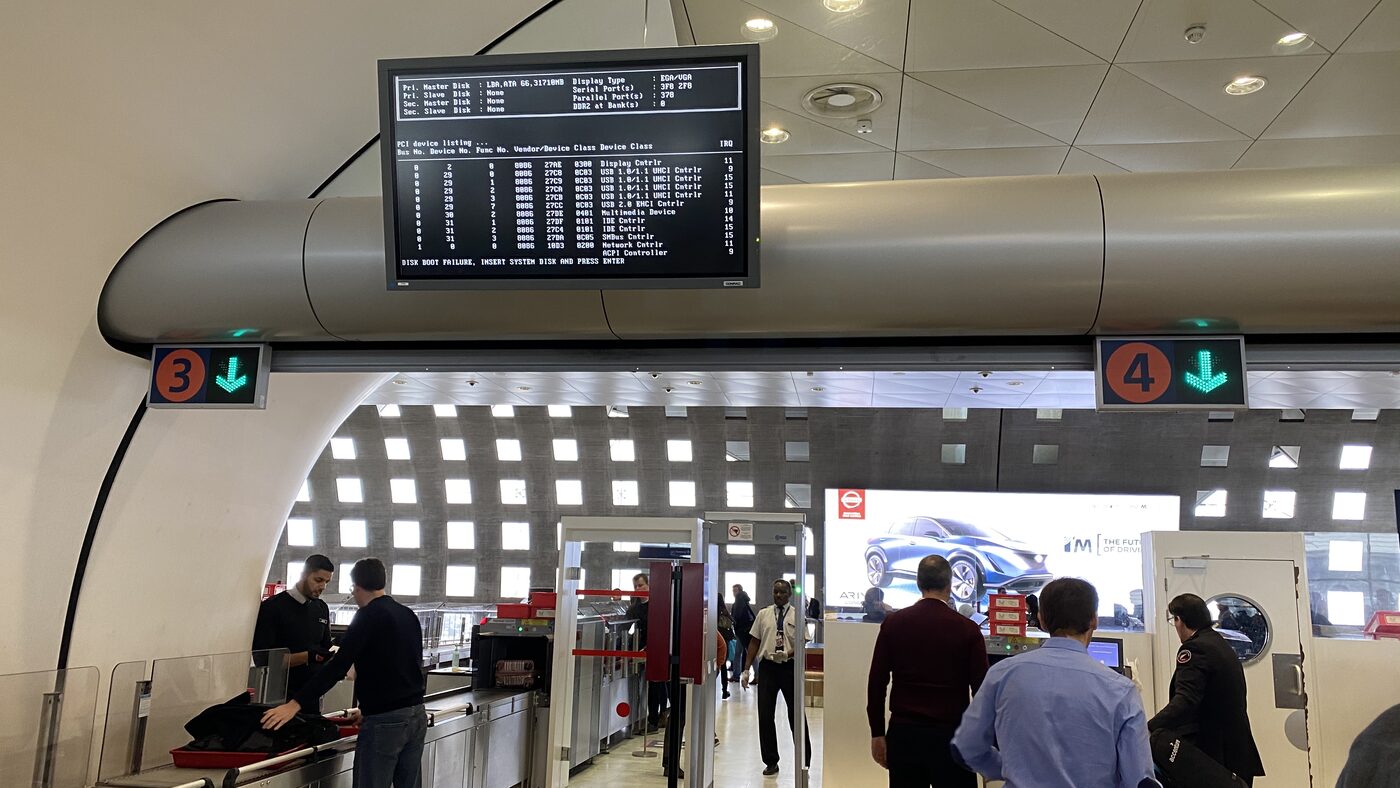
The next morning at Charles de Gaulle, the display mounted above security lanes three and four had given up. It was showing a BIOS device listing, PCI addresses and IRQ numbers, and one line at the bottom: DISK BOOT FAILURE, INSERT SYSTEM DISK AND PRESS ENTER. The time was 11:21, less than a day after the talk about becoming an AI company.