ML is the new orange
Two days at the Machine Learning Innovation Summit, arguing that invention has to come before innovation, with TRIZ as the working method.
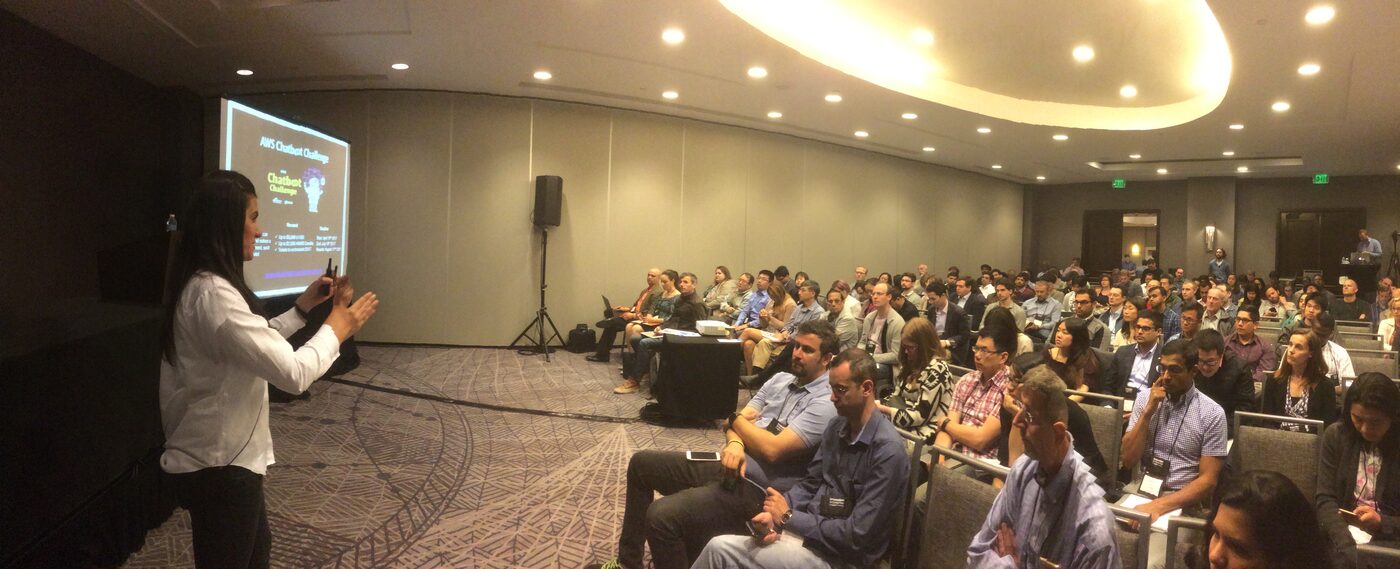
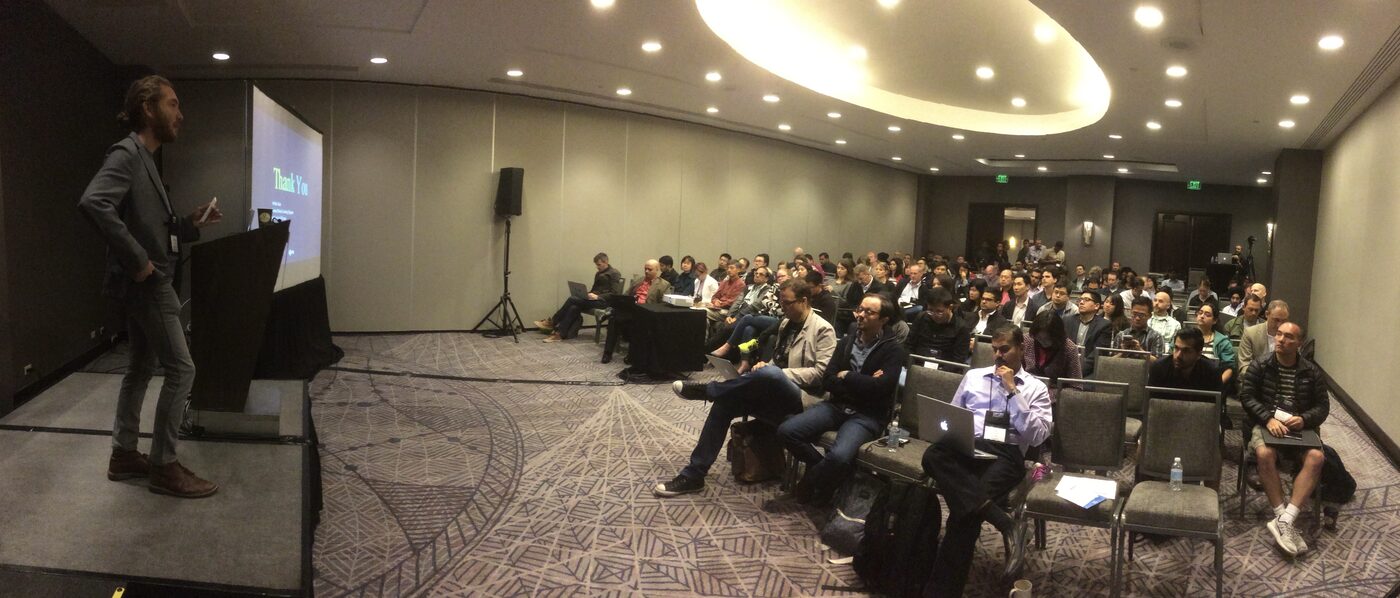
This is the earliest engagement in the field record, predating the lab's first workshop by a year. On 5 and 6 June 2017 Tarry Singh spoke at the Machine Learning Innovation Summit in San Francisco. The talk was called "ML is the new orange". The room was a hotel ballroom laid out in rows and filled front to back, laptops open and lanyards on.
The deck opens with two promises and keeps to them. Replace the word innovation with the word invention. Then ask what a future in a machine learning world actually looks like.
The first half is a working session on TRIZ, the Theory of Inventive Problem Solving developed by Genrikh Altshuller and colleagues in the USSR between 1946 and 1985. The method rests on pattern rather than inspiration; by 1961 Altshuller had already worked through 10,000 inventions across 43 patent classes. The talk walks the audience through technical and physical contradictions using problems they already live with. A phone gets stronger glass and gets heavier. Software gets every feature and stops being simple. Then the room is handed one to solve: a long-distance swimmer needs to train ten kilometres in a pool, but every wall forces a turn that breaks the stroke. The answer arrived at that day was to move the water instead of the swimmer, in a round pool.
The second half turns to machine learning itself. One slide sorts the large operators by how they organise for it: central at Apple and Microsoft, decentralised and local at Amazon, Google, Netflix and Facebook, networked and partner-led at Dell and Cisco. An appendix goes to a Cell paper by Doris Tsao and Steven Le Chang at Caltech, which found that roughly 200 cells across two of the six face patches were enough to code a face from combined features rather than as a whole. The closing position was human-centric ML: bring the meta algorithm of invention back into the work, so creativity is not the first thing automation takes. The sketches were drawn in matplotlib, xkcd style, rather than pulled from stock.
Neither surviving photograph is of this session.