A morning of medical AI at Tel Aviv Sourasky Medical Center
On 21 August 2019 deepkapha.ai took a talk on applied medical AI into the conference hall of Tel Aviv Sourasky Medical Center, in front of clinicians, engineers and students.
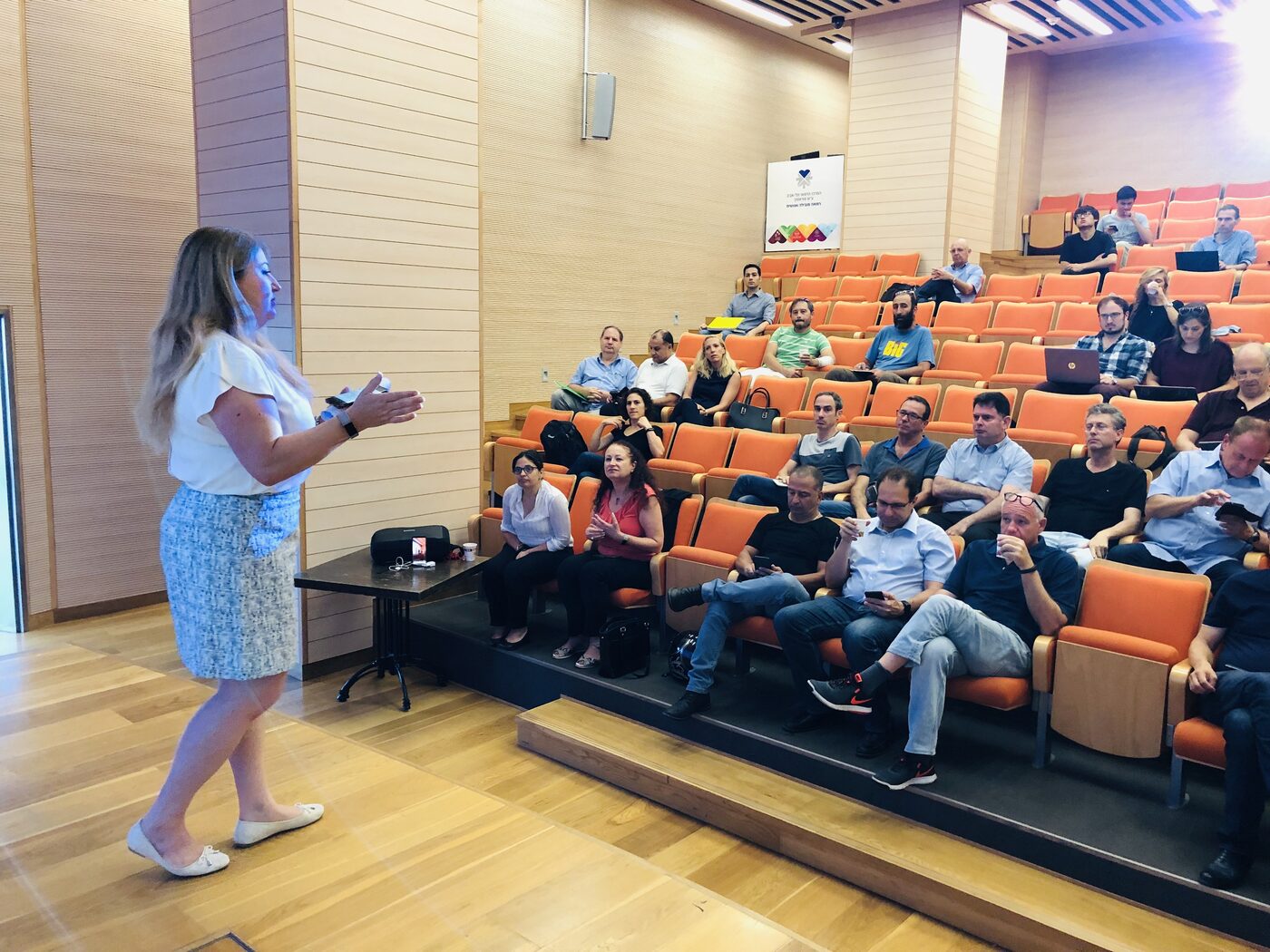
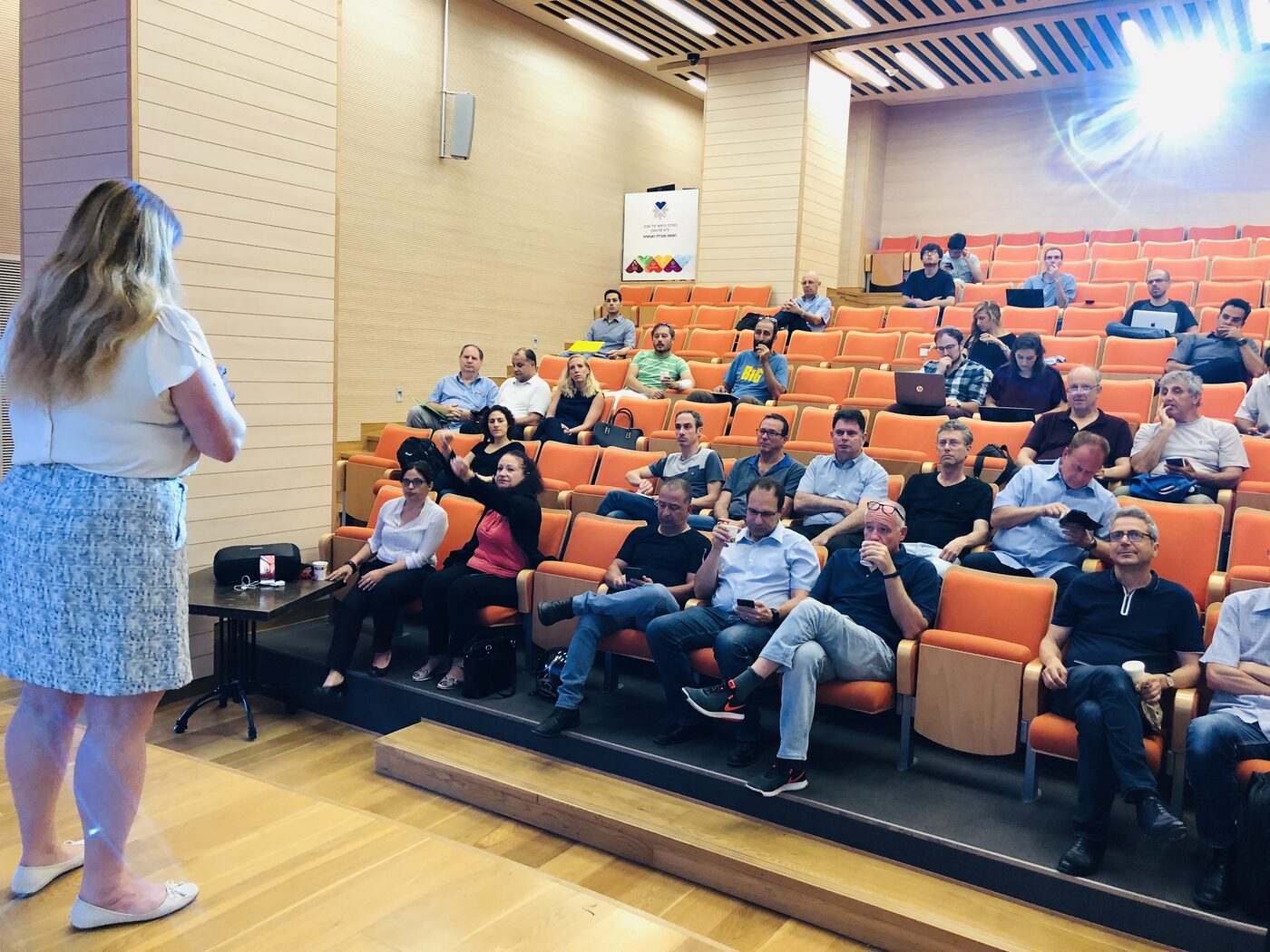
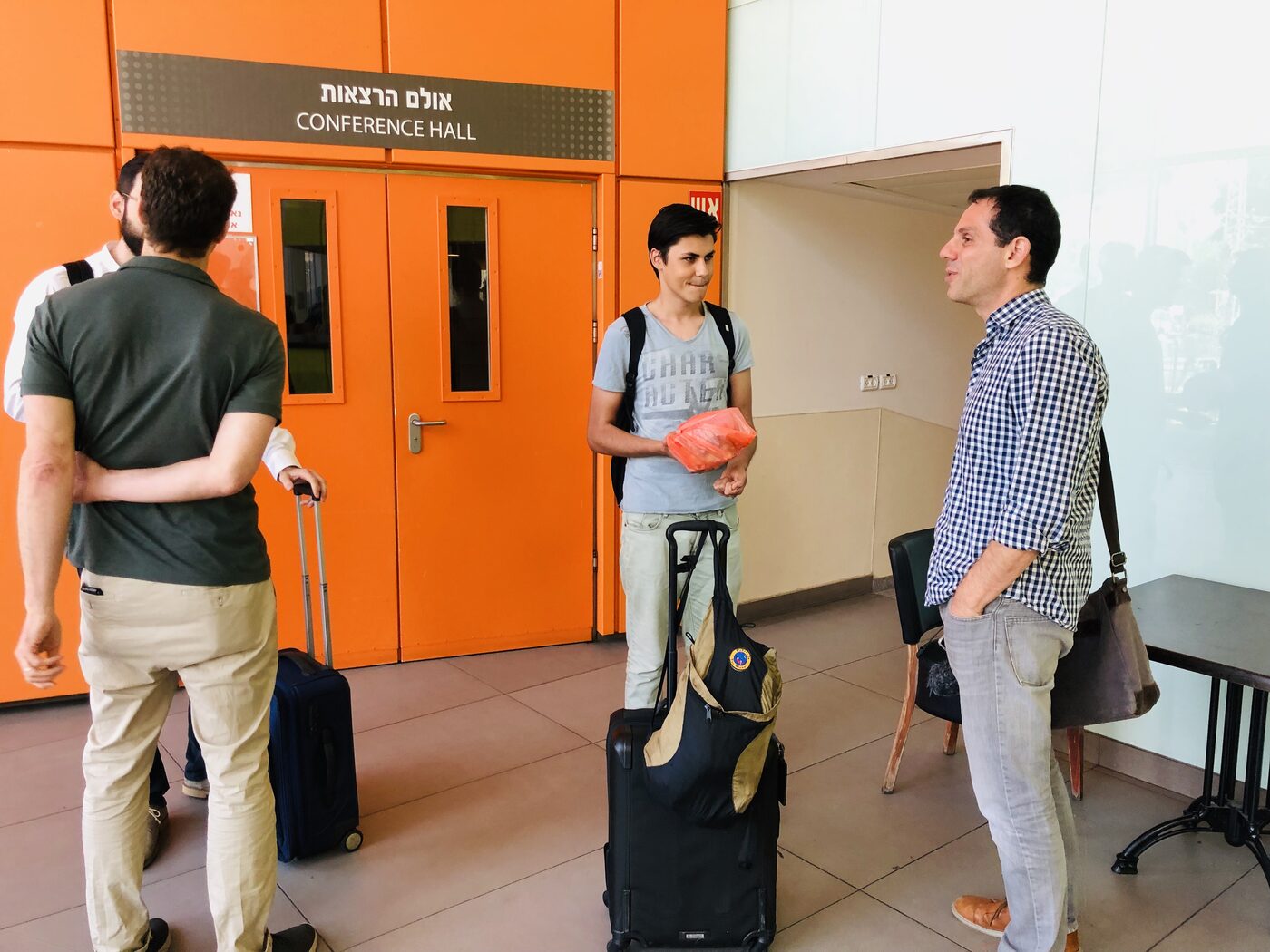
The session ran on the morning of Wednesday 21 August 2019, in the tiered conference hall at Tel Aviv Sourasky Medical Center. The hospital's own sign hangs on the wall behind the back rows, and the doors to the room are labelled in Hebrew and English. A few dozen people took the orange seats. Laptops were open across the middle rows and coffee cups were still in hands at quarter past ten.
The deck had been finished the evening before. It opened with a short introduction to deepkapha.ai, then separated artificial intelligence, machine learning and deep learning, and laid out the order in which a company has to build the layers: fundamentals first, then data visualisation, then machine learning, then deep learning, then applied AI on top.
The middle of the talk turned to politics. It covered the race between states for AI leadership, surveillance capitalism, and the argument that countries which regulate themselves risk falling behind countries that do not. Then the counterweight. AI is not the Manhattan Project. It needs no national programme, any researcher can pick up open source tools and join a global effort, and in the long run the work does better in open societies.
Two clinical stories carried the second half. The first was breast cancer diagnostics for the healthcare division of GOPA, built on pathology images annotated by German pathologists and framed against the Camelyon17 challenge, with a working prototype at about 82% accuracy on a very small dataset and 98.5% reached in the month before the talk. The room also met Dr Sohaila Niazi, the first oncologist in Afghanistan, who left a comfortable practice to go back and pay out of her own pocket for women to reach hospital. The second story was diabetic retinopathy in China, where a self-service fundus examination system at Zhongda Ophthalmology reported 95% accuracy, graded 70,000 colour fundus photographs against the British diabetes screening classification, and had already cleared SFDA approval.
The closing slides made a plain claim. AI is already solving problems at scale in medicine, it is open to anyone willing to take a shot at it, and the last question put to the room before the thank-you slide was what its own goal would be.