Deep learning lectures at Hackasuly in Sulaymaniyah
In September 2019 Tarry Singh taught deep learning at Hackasuly in Sulaymaniyah, then spent the hackathon weekend at the whiteboards while Iraqi teams worked through their models.
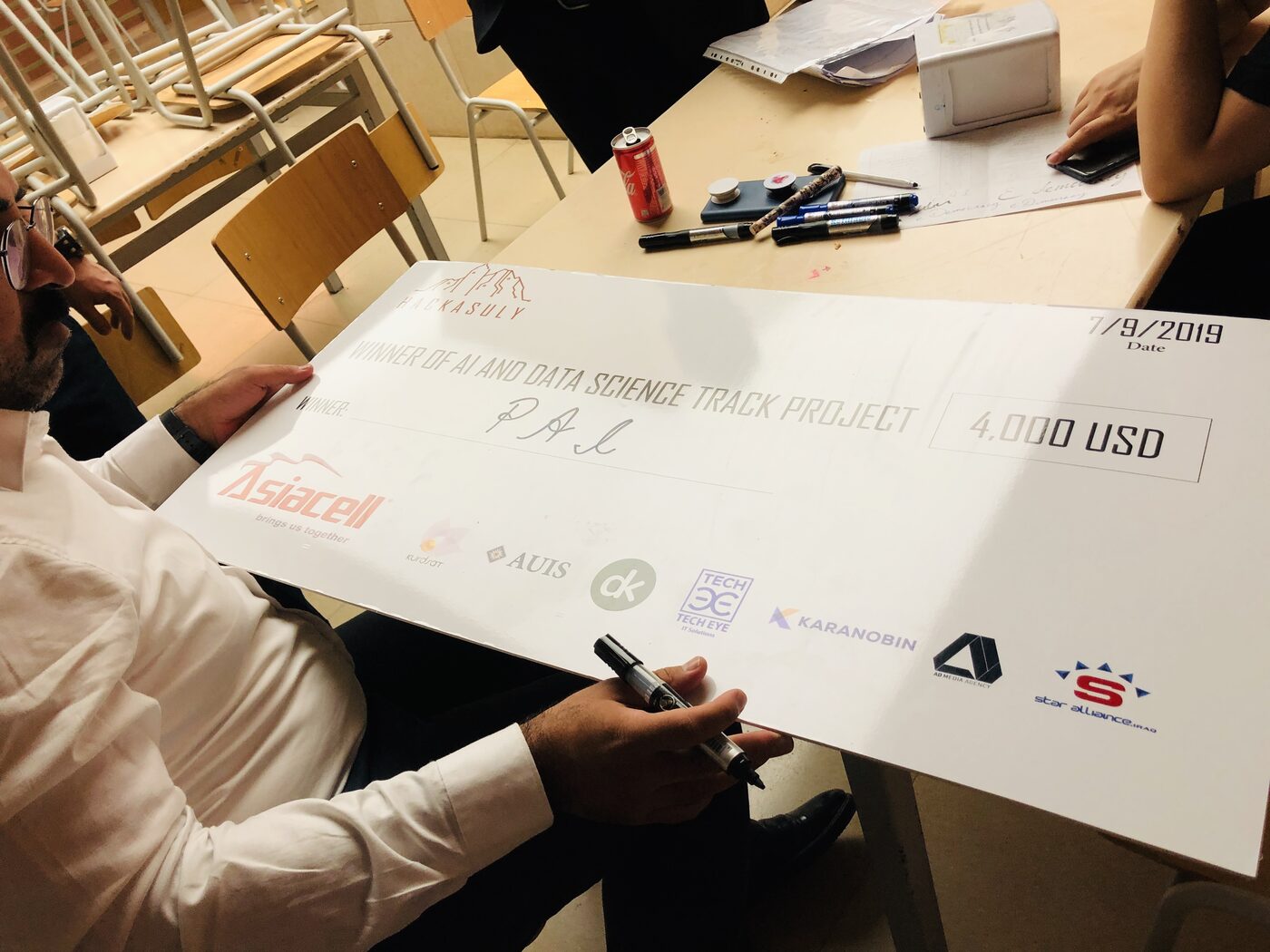
Hackasuly was the host. The lecture deck carries its own date line: deep learning lectures, American University of Iraq, Sulaimani, 6th September 2019. Tarry Singh gave the lectures, and the deepkapha.ai mark was printed in the sponsor row along the bottom of the prize cheques, beside Asiacell, AUIS, Tech Eye, Karanobin and star alliance iraq. The work was unpaid, filed under the same #deepPhil line as the Re:coded workshops in Istanbul and Sanliurfa and the Think.iT cohort in Tunis.
The lectures opened with history rather than code. Aristotle on association, Alexander Bain's neural grouping in 1873, the McCulloch and Pitts model in 1943, Hebb in 1949, the Harmonium and restricted Boltzmann machines, Hinton on backpropagation, LeCun and LeNet in 1990, Hochreiter and Schmidhuber on LSTM in 1997. Tensors got a slide of their own, with a stress tensor from physics to make the point that the mathematics was borrowed rather than new. From there the deck moved through convolutional networks, data normalisation, framework choice, and computer vision put to medical use: tuberculosis on chest radiographs, skin cancer from histology slides, diabetic retinopathy. The last stretch was deepkapha's own research, on intra-thalamic and thalamocortical connectivity and on an activation function called ARiA.
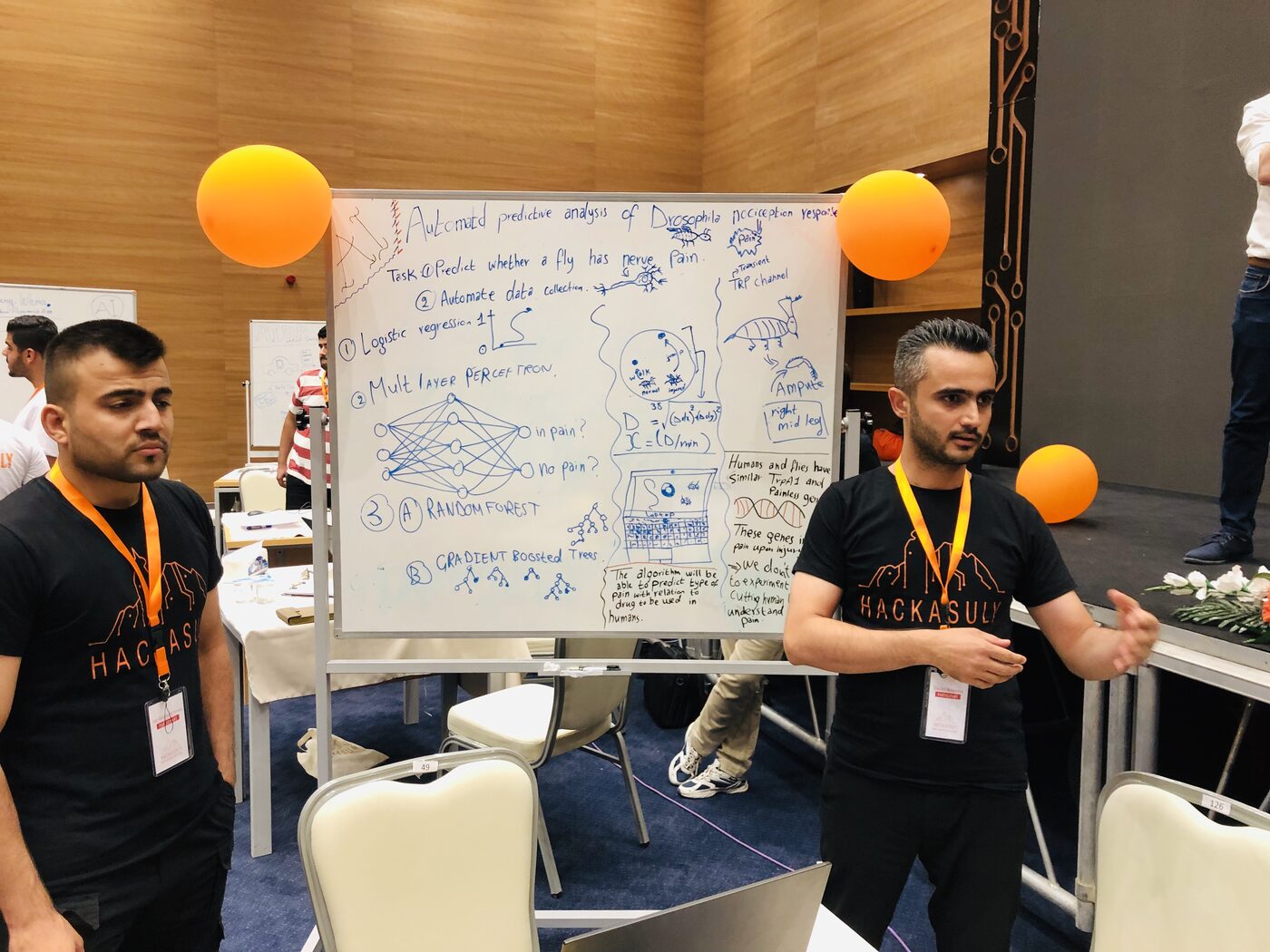
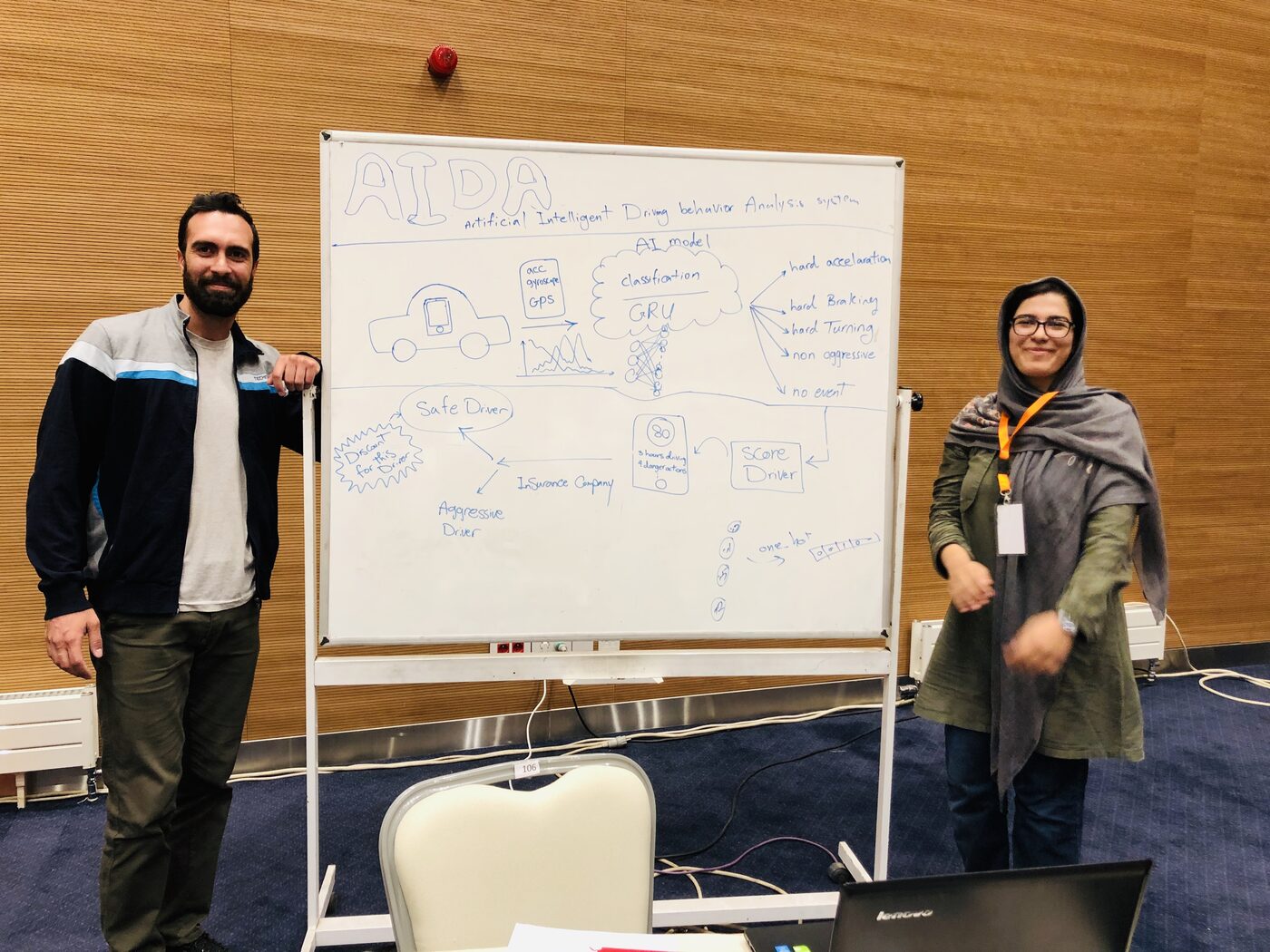
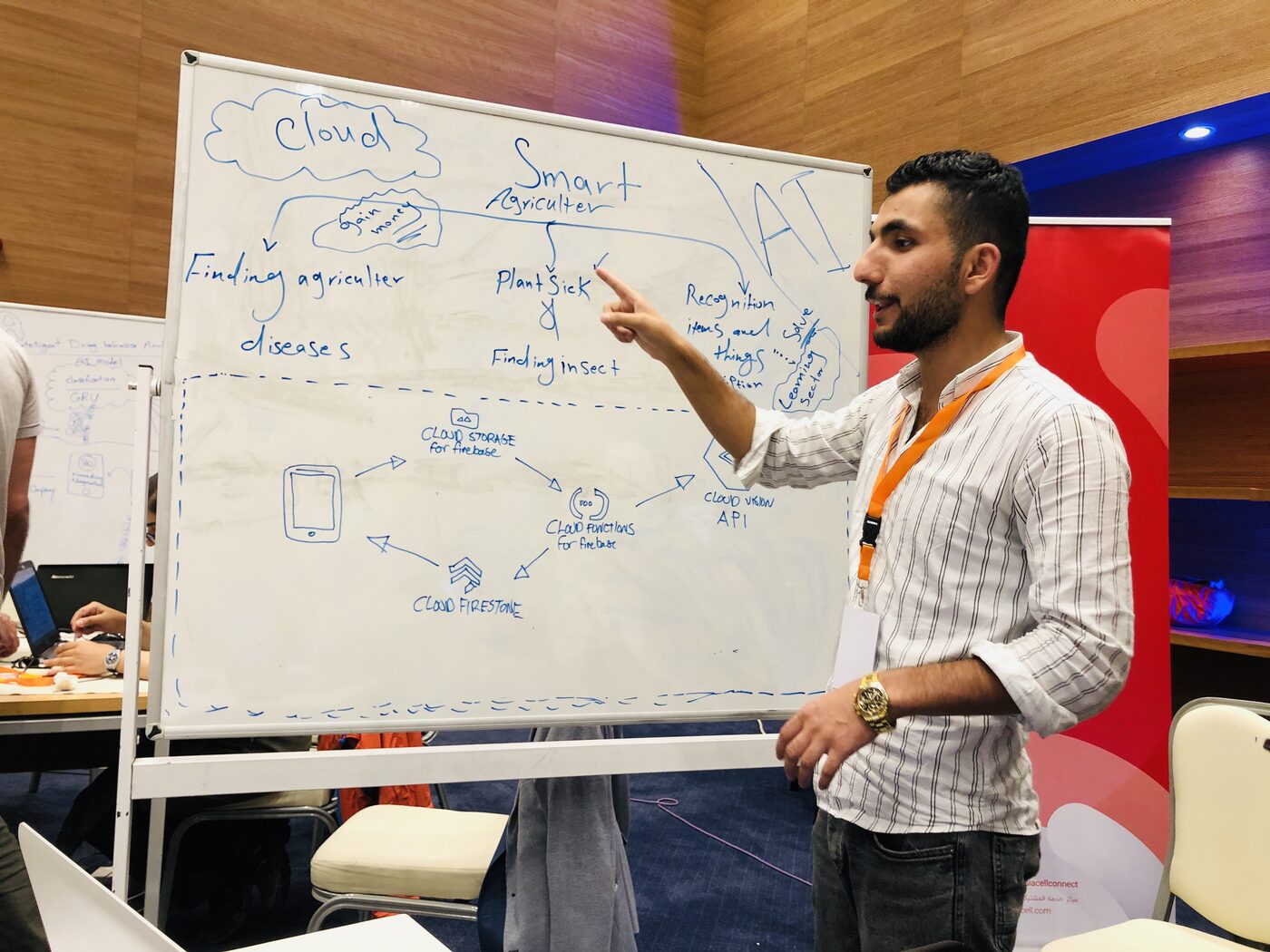
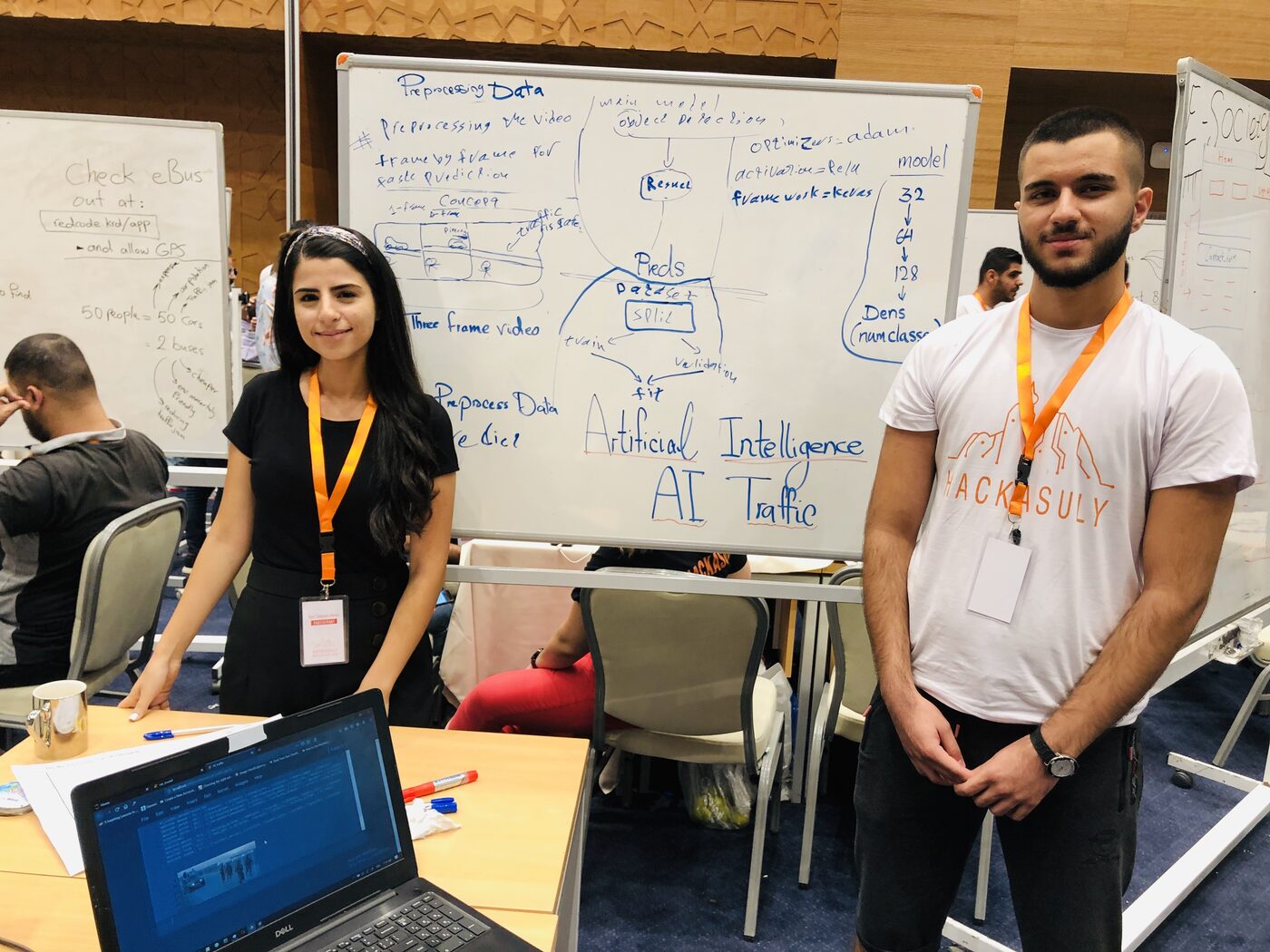
By the weekend the teaching had moved onto the hackathon floor, where teams argued at whiteboards instead of slides. One board set out an automated predictive analysis of Drosophila nociception, with logistic regression, a multilayer perceptron, random forest and gradient boosted trees written up as the four things the team would try, and a note that humans and flies share similar pain genes. Another was headed AIDA, an artificial intelligent driving behaviour analysis system that read accelerometer, gyroscope and GPS data, classified hard acceleration, hard braking and hard turning through a GRU, then scored the driver for an insurance company. A third pushed three-frame video into a ResNet for traffic recognition, with Keras and the Adam optimiser written beside the layer sizes. A fourth drew a smart agriculture pipeline on Firebase and the Cloud Vision API, for finding plant disease and insects from photographs.
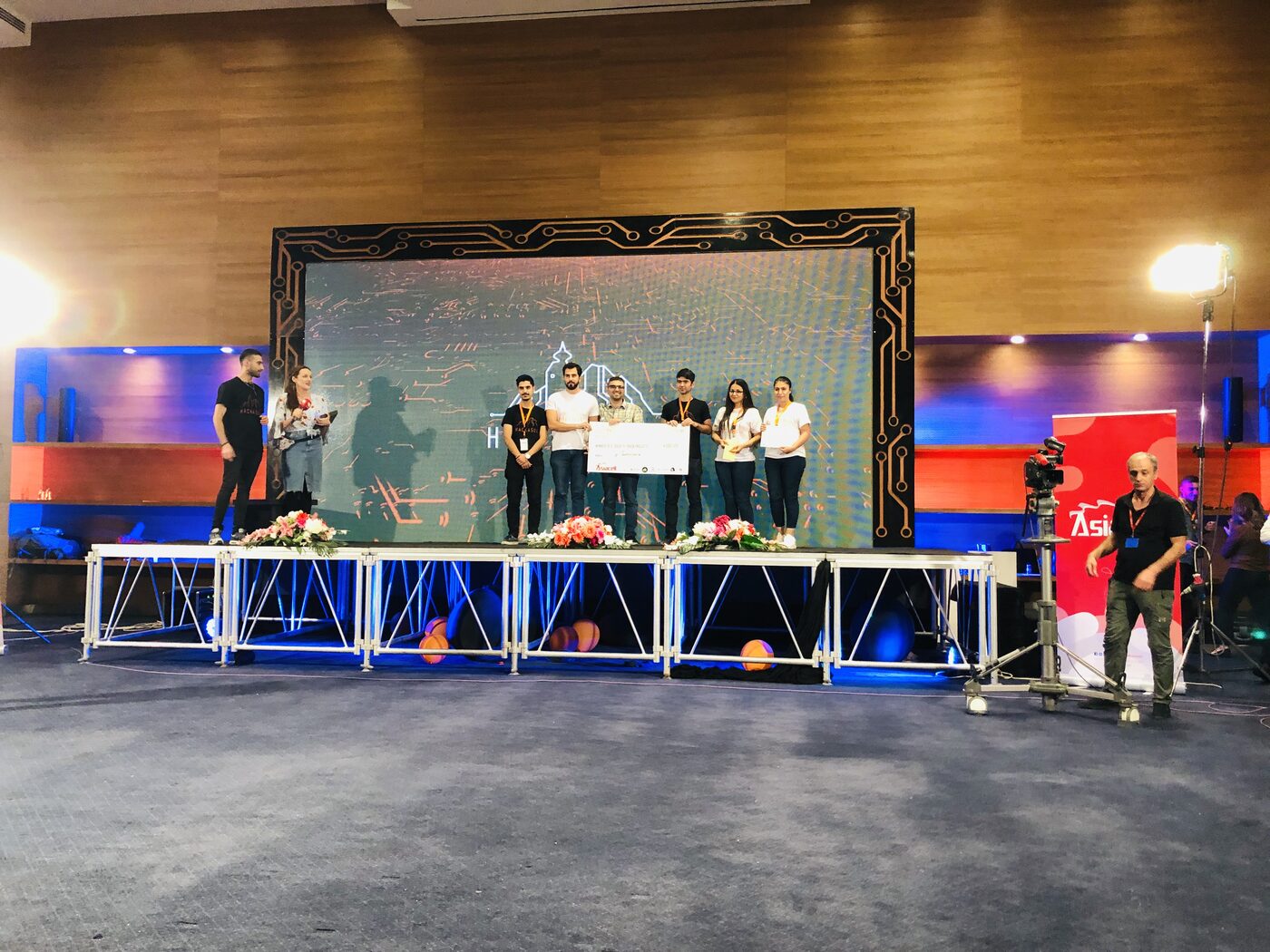
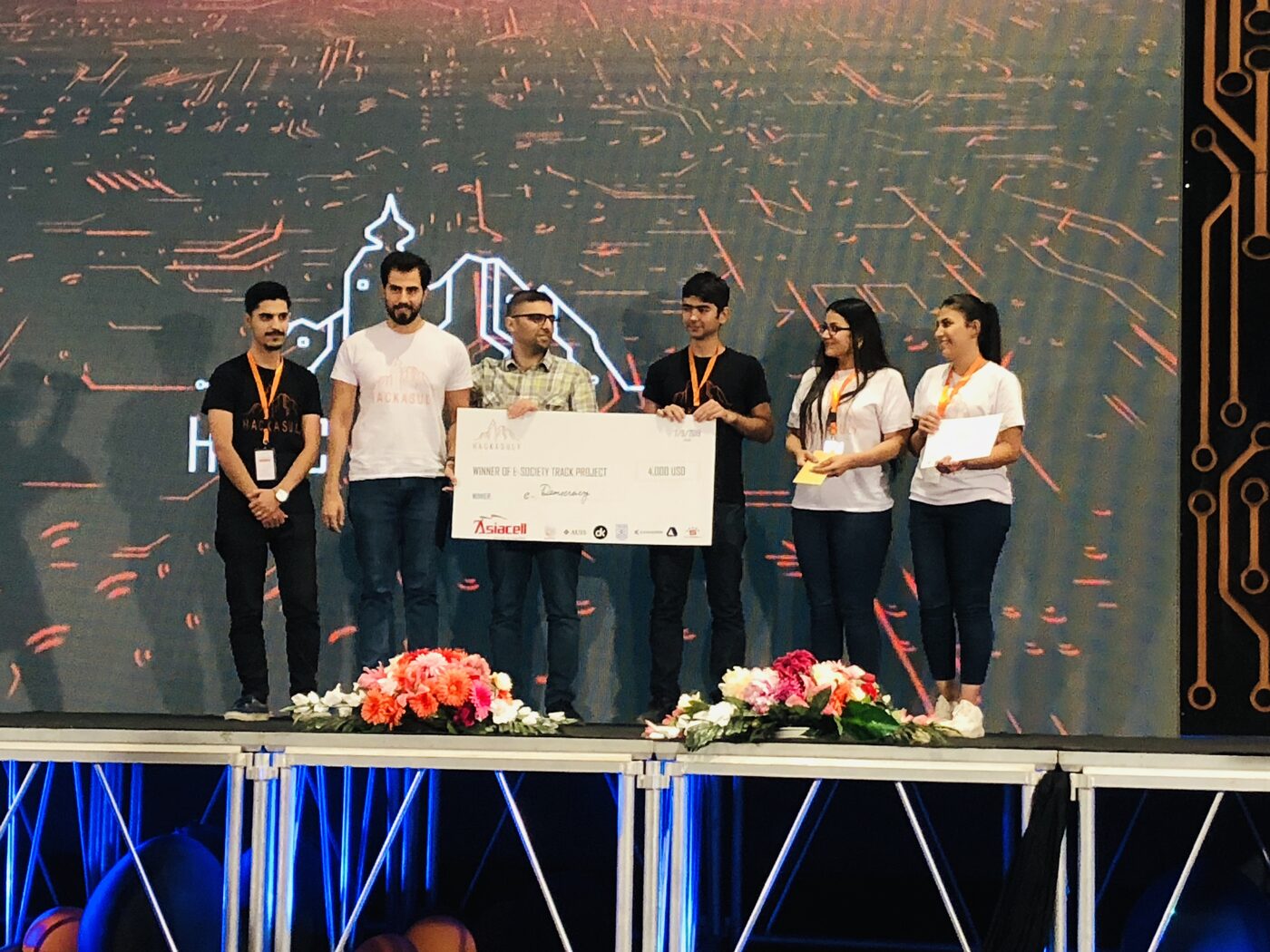
Prizes went out on the evening of 7 September, on a low stage backed by a Hackasuly LED wall. Two cheques were written for 4,000 USD each and dated 7/9/2019. One went to the winner of the e-Society track. The other went to a team called PAL, for the AI and data science track.