Six teams, chest X-rays and a hackathon at UT Dallas
deepkapha.ai and curae.ai ran a three-day bootcamp with the UT Dallas computer science department in September 2019: two days of teaching on CNNs and GANs, then a medical imaging hackathon.
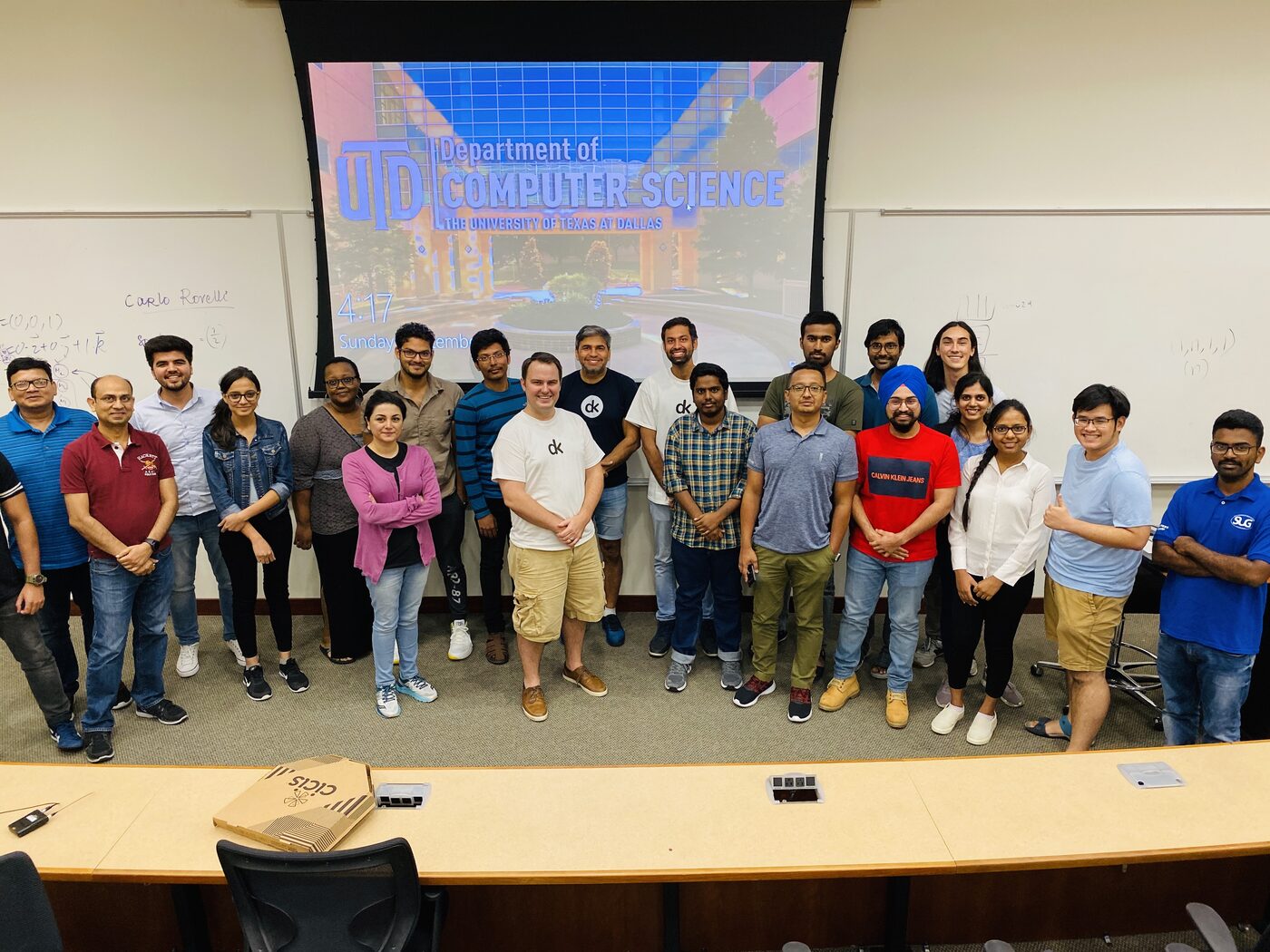
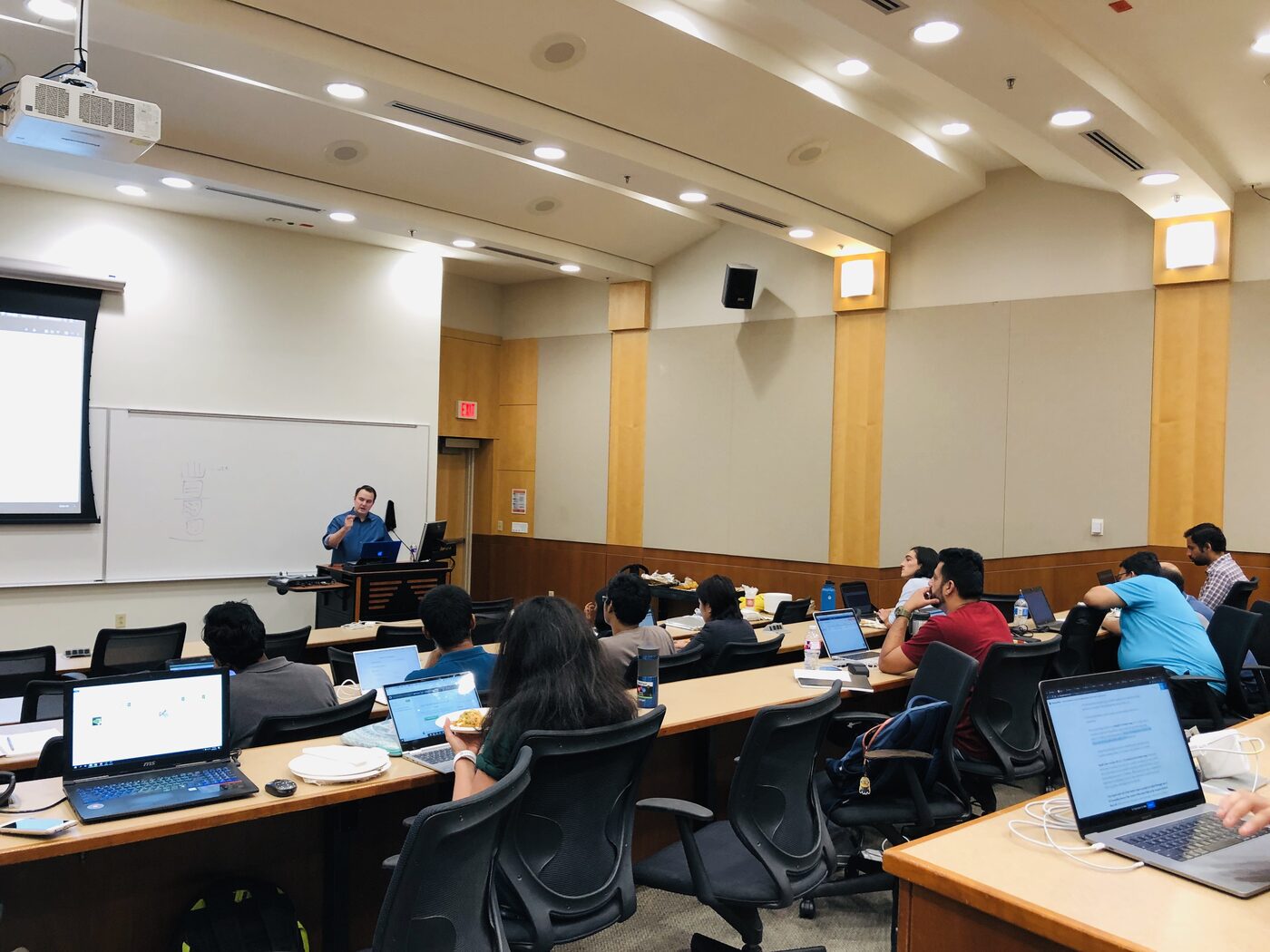
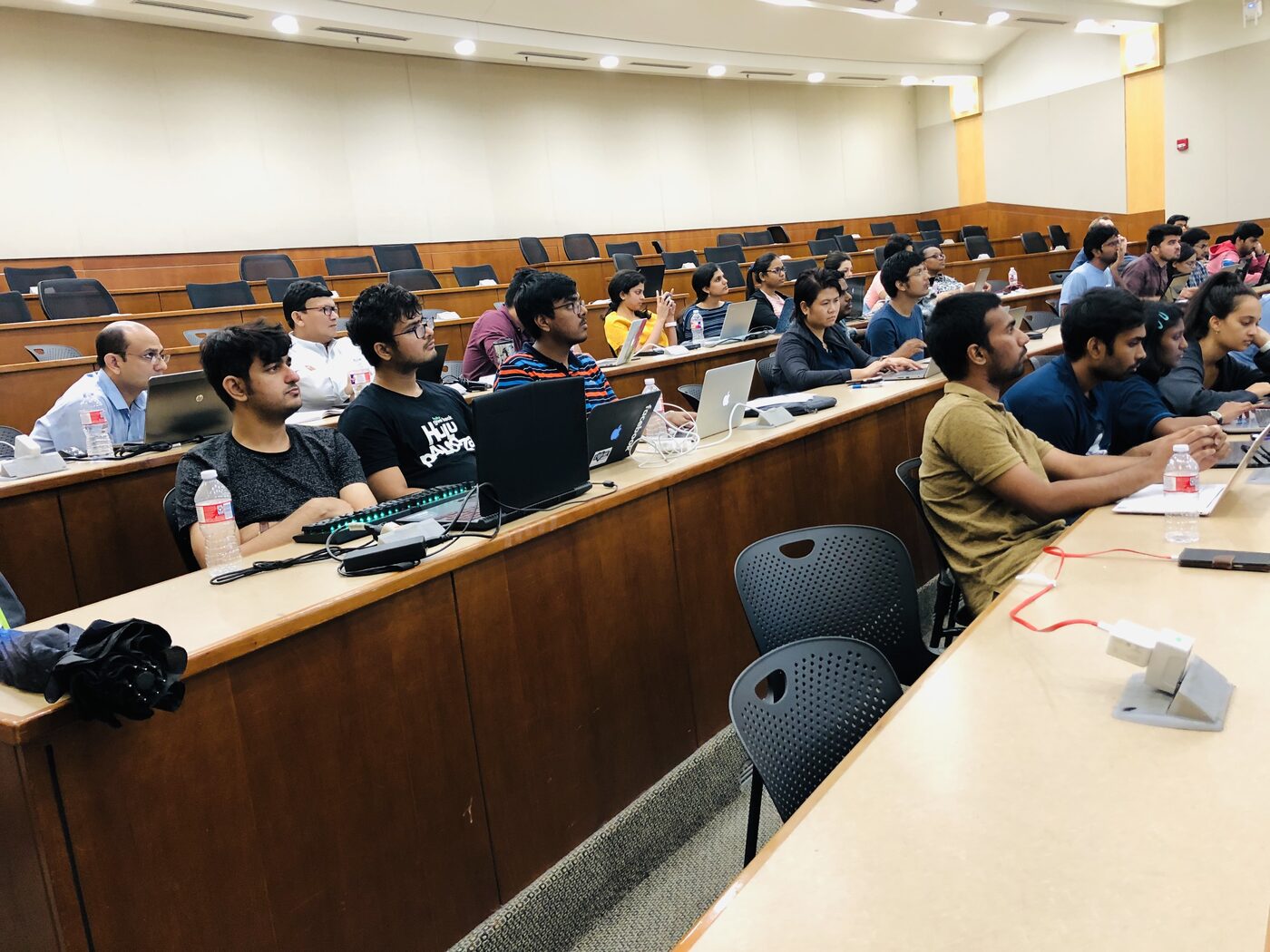
The programme ran across three days at the University of Texas at Dallas, from Friday 20 to Sunday 22 September 2019, in a tiered computer science lecture hall. deepkapha.ai and curae.ai ran it with the university's Department of Computer Science, under the title Deep Learning in Healthcare. The schedule gave the first morning to a crash course on machine learning and deep learning, taking in CNNs, GANs and RNNs, with time on BERT and GPT. Afternoons were codathons, four or five hours of coding each.
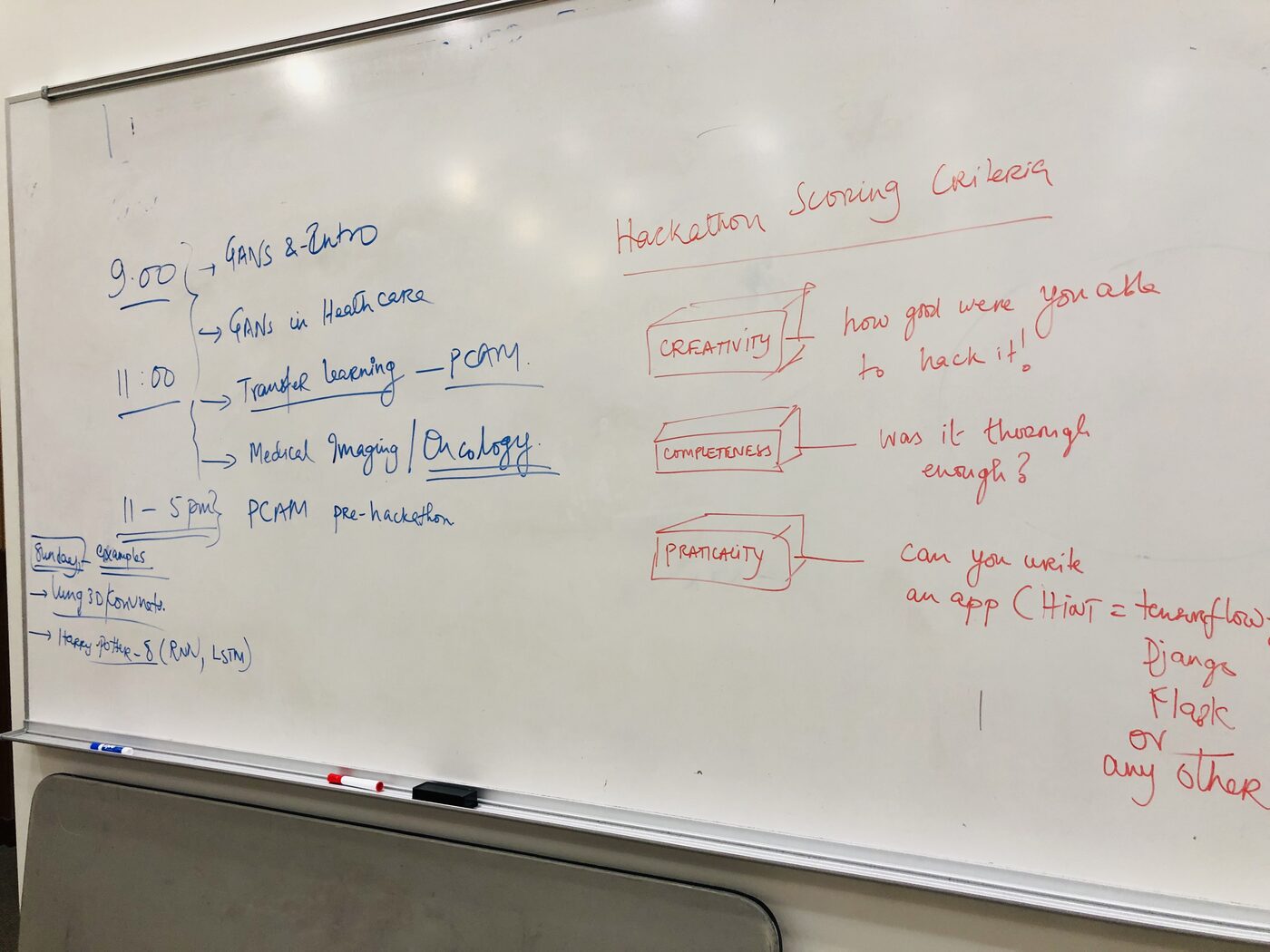
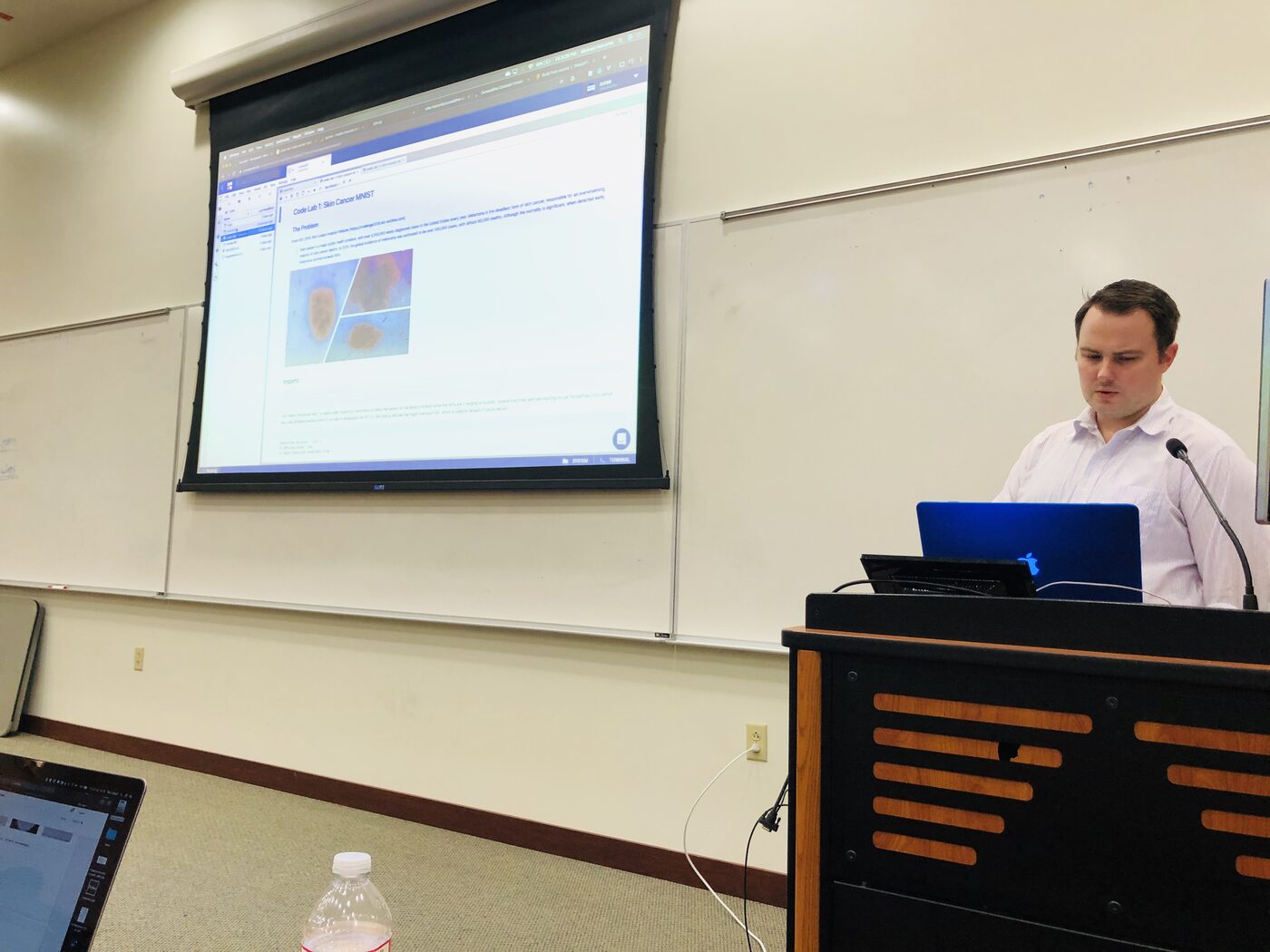
The first lab was a skin cancer classifier, projected on the room screen as Code Lab 1: Skin Cancer MNIST. Day two moved to image classification in medicine. A whiteboard on the first evening carried the running order for it: GANs and intro at nine, transfer learning on PCAM at eleven, then medical imaging and oncology, then PCAM work through to five as pre-hackathon practice.
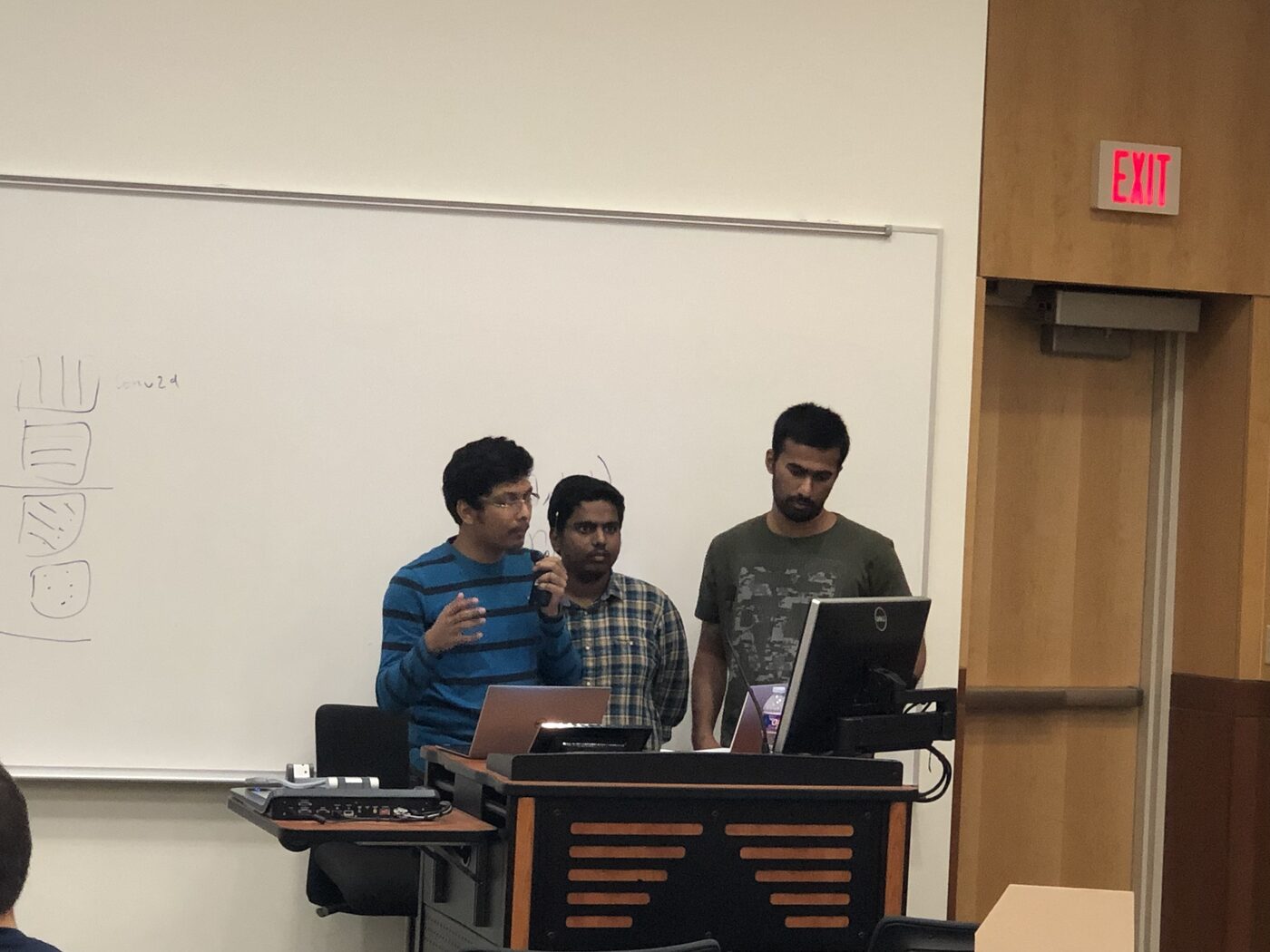
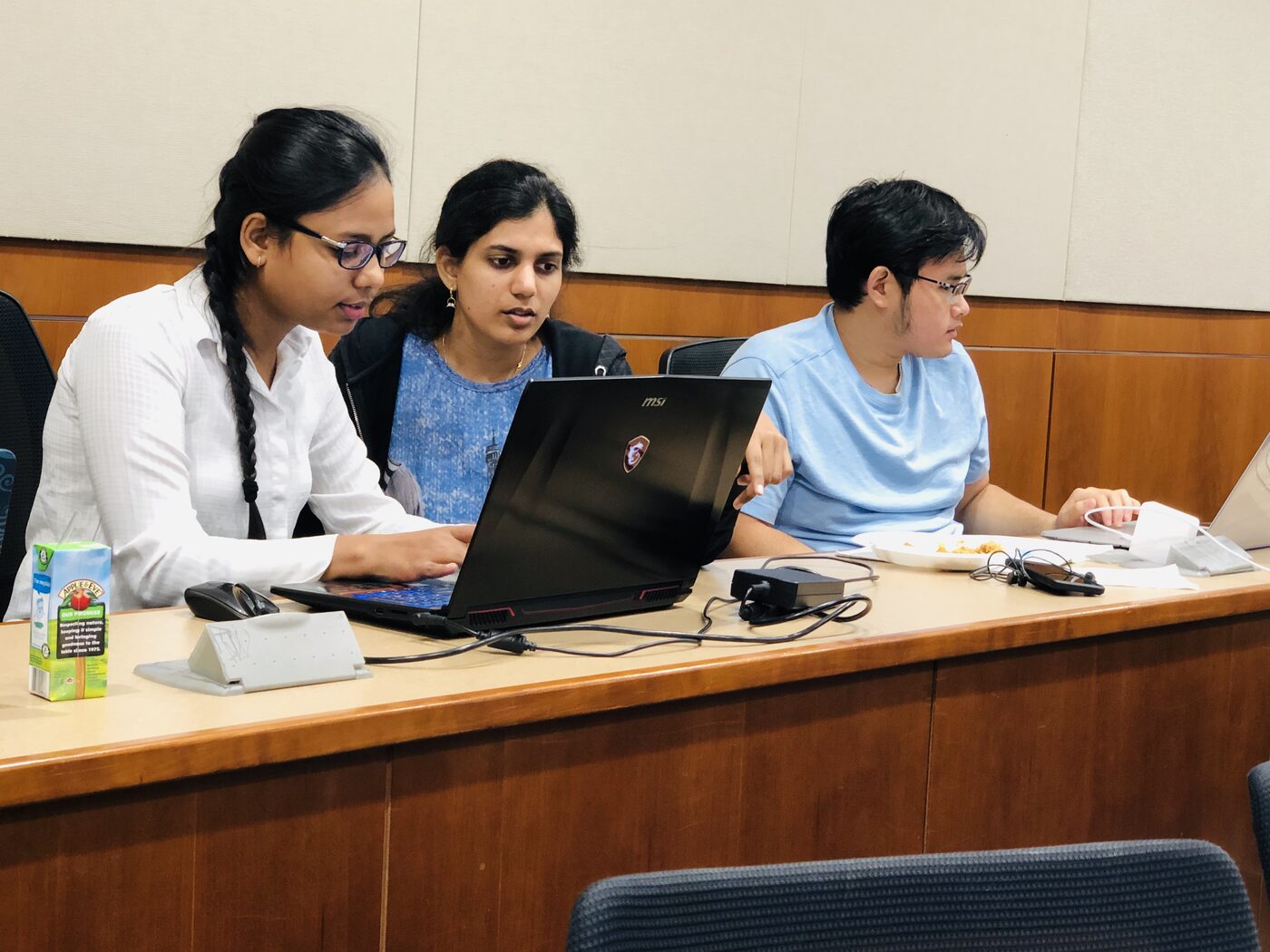
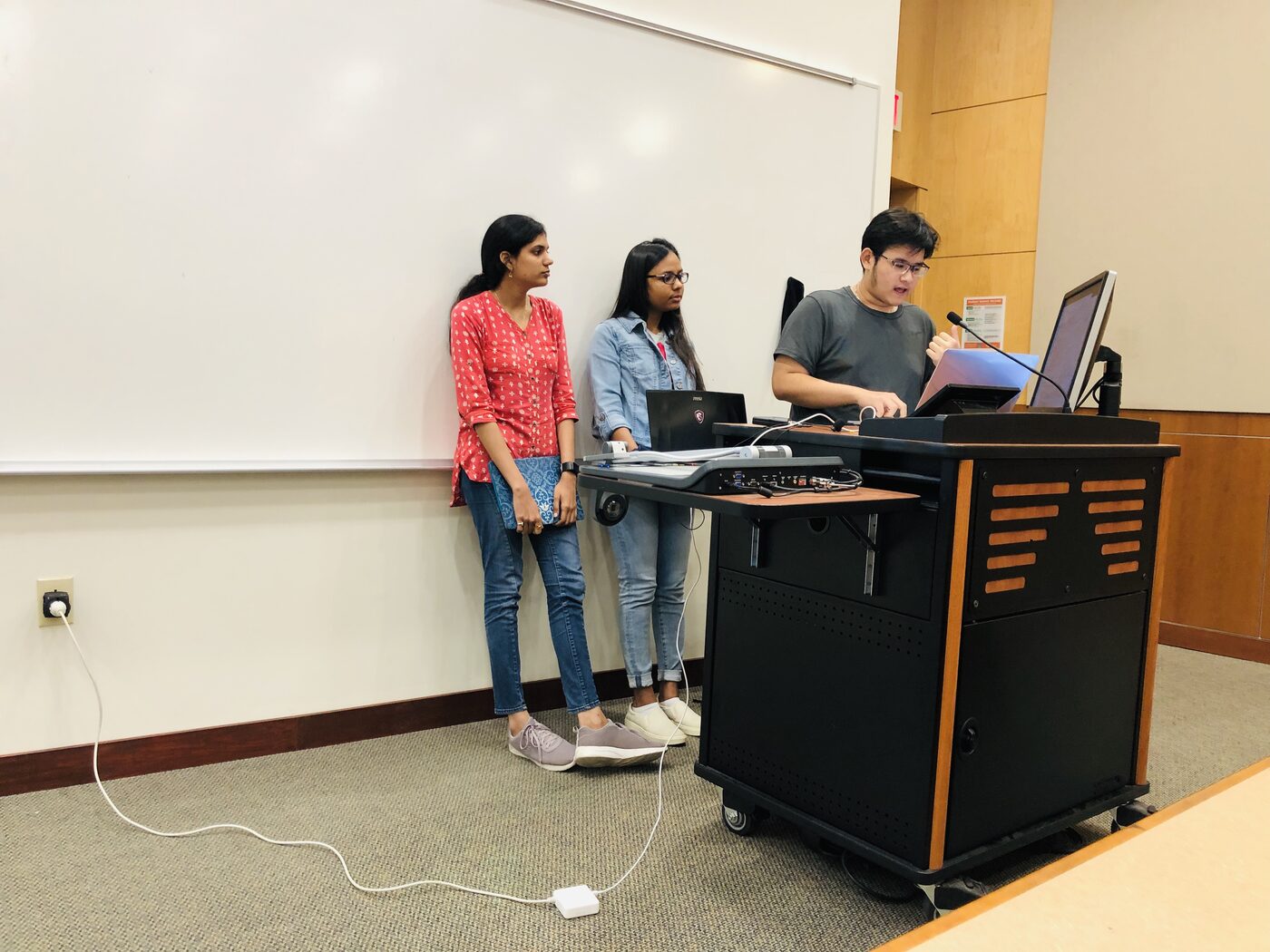
Beside that list, in red, someone had written the scoring criteria for the hackathon. Creativity: how good were you able to hack it. Completeness: was it thorough enough. Practicality: can you write an app, TensorFlow with Django or Flask or anything else. Six teams formed. They worked the ChestX-ray8 set, fine-tuning VGG16 and DenseNet169 against the CheXNet paper, and their training logs hovered just under 89 percent validation accuracy. Teams presented from mid-afternoon on the Sunday, with senior UT Dallas faculty and the deepkapha side set to pick a winner.
One session sat outside the healthcare thread. On 20 September Tarry Singh gave a Neuro DL lecture on a neurobiological basis for deep learning, drawn from a review written with Jie Mei of Charite Universitatsmedizin Berlin and Srikanth Ramaswamy of the Blue Brain Project at EPFL. It asked whether neuromodulators such as acetylcholine and dopamine might be modelled as local, area-specific regulators of the hyperparameters that engineers currently set by hand. A second part dealt with intrathalamic and thalamocortical circuitry, and what an active rather than passive thalamus could mean for early visual processing in artificial networks.