Project Sergio at the IS4SI Summit
deepkapha took a paper on AI maturity in solar photovoltaic SMEs to the IS4SI Summit in September 2021, in an eighteen-minute narrated talk.
The paper is called Artificial Intelligence in the Energy Transition for Solar Photovoltaic Small and Medium-sized Enterprises. Four authors carry it: Malte Schmidt, Stefano Marrone, Dimitris Paraschakis and Tarry Singh, all credited to deepkapha.ai. Inside the lab it ran under a shorter name. The opening card says so in plain type beside the dk mark: Project Sergio, AI in Energy Transition. GreenScan, a climate AI startup, is credited as sponsor on the abstract card and again on the author card.
The venue was Theoretical and Foundational Problems in Information Studies, a track of the IS4SI Summit 2021. The summit ran online and worldwide from 12 to 19 September. Mark Burgin of UCLA chaired it, with an organising committee drawn from Vienna, Sofia, Sendai, Beijing and Gothenburg, and a programme committee spread across Bristol, Auckland, San Francisco, Madrid and Durham. Our slot is dated 13 September on the title slide.
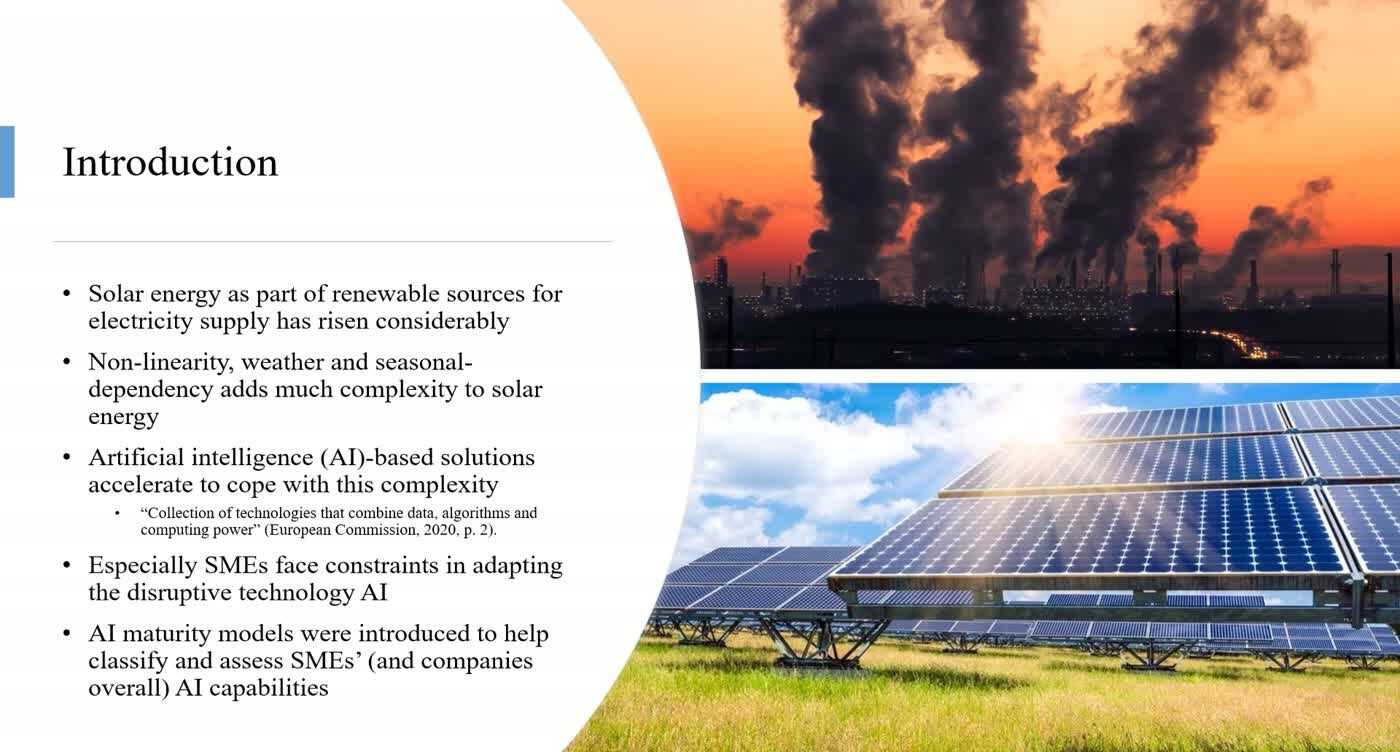
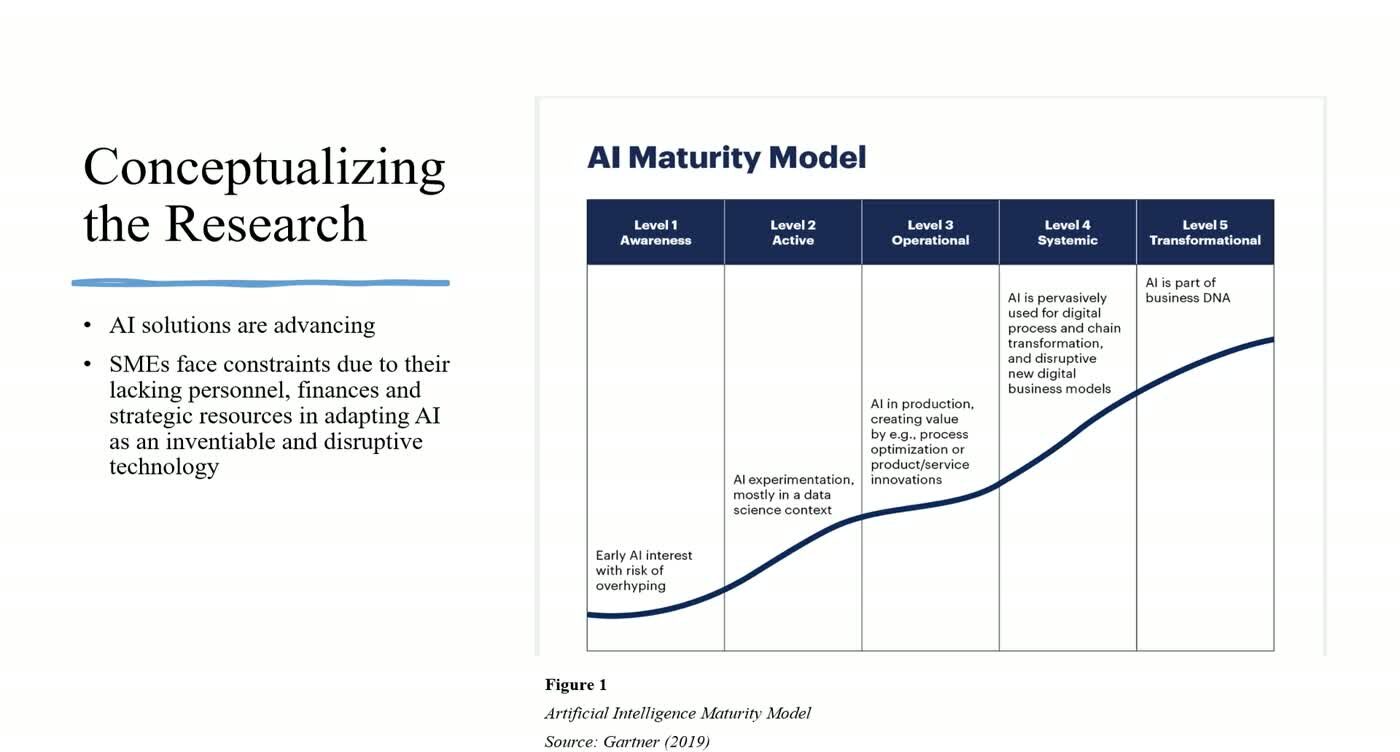
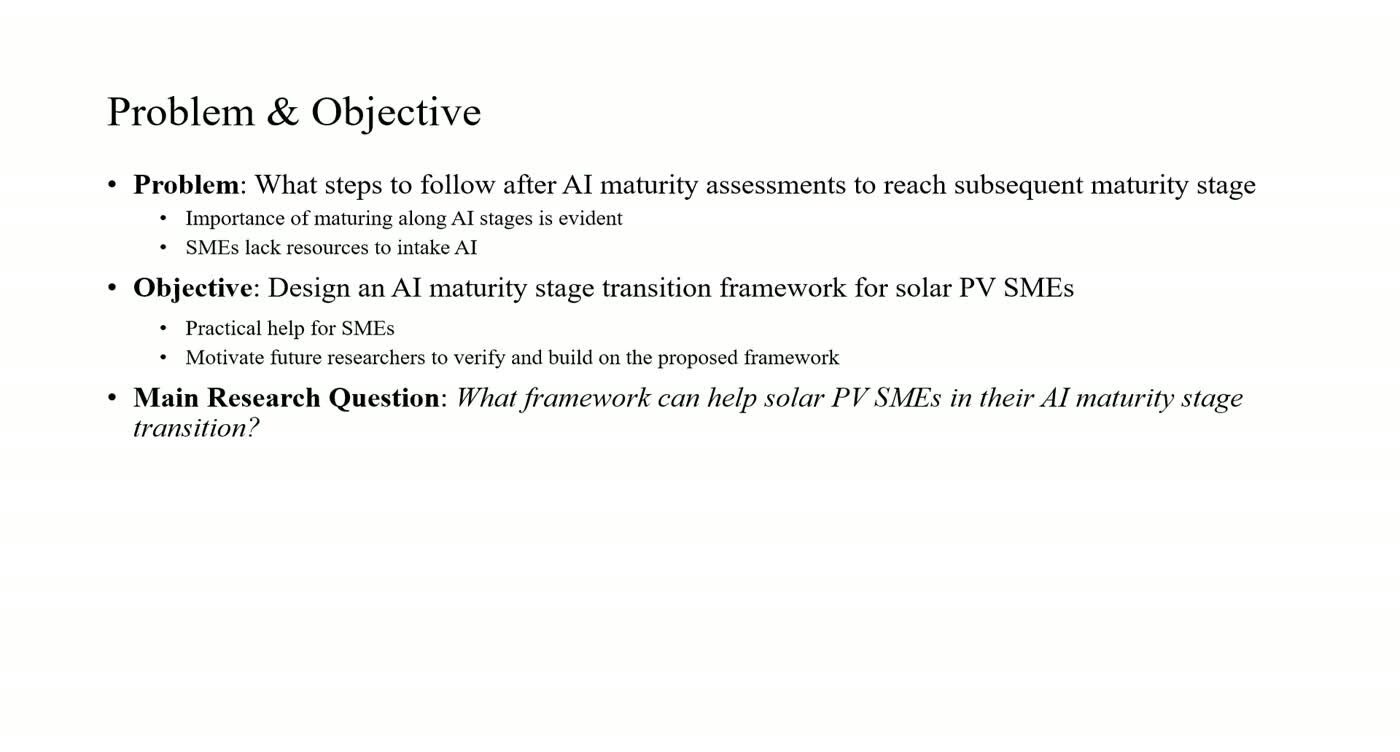
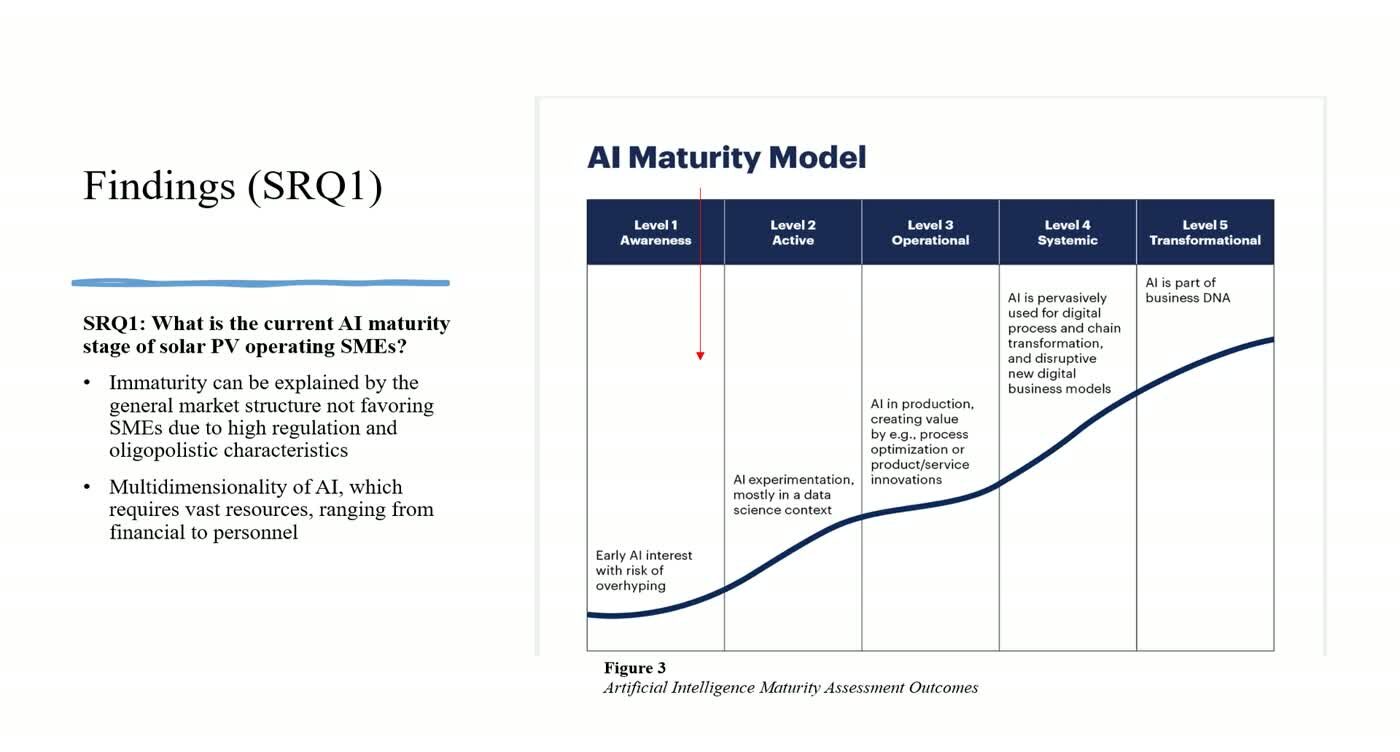
The argument is narrow on purpose. Solar output is non-linear and weather-bound, which is exactly the kind of problem machine learning is good at. Small and medium operators are the ones with the least capacity to buy that capability. Existing AI maturity models, the Gartner five-level model among them, tell a company where it sits and then stop. The paper takes up what comes after the assessment: what a firm at Level 1, Awareness, actually does to reach Level 2, Active.
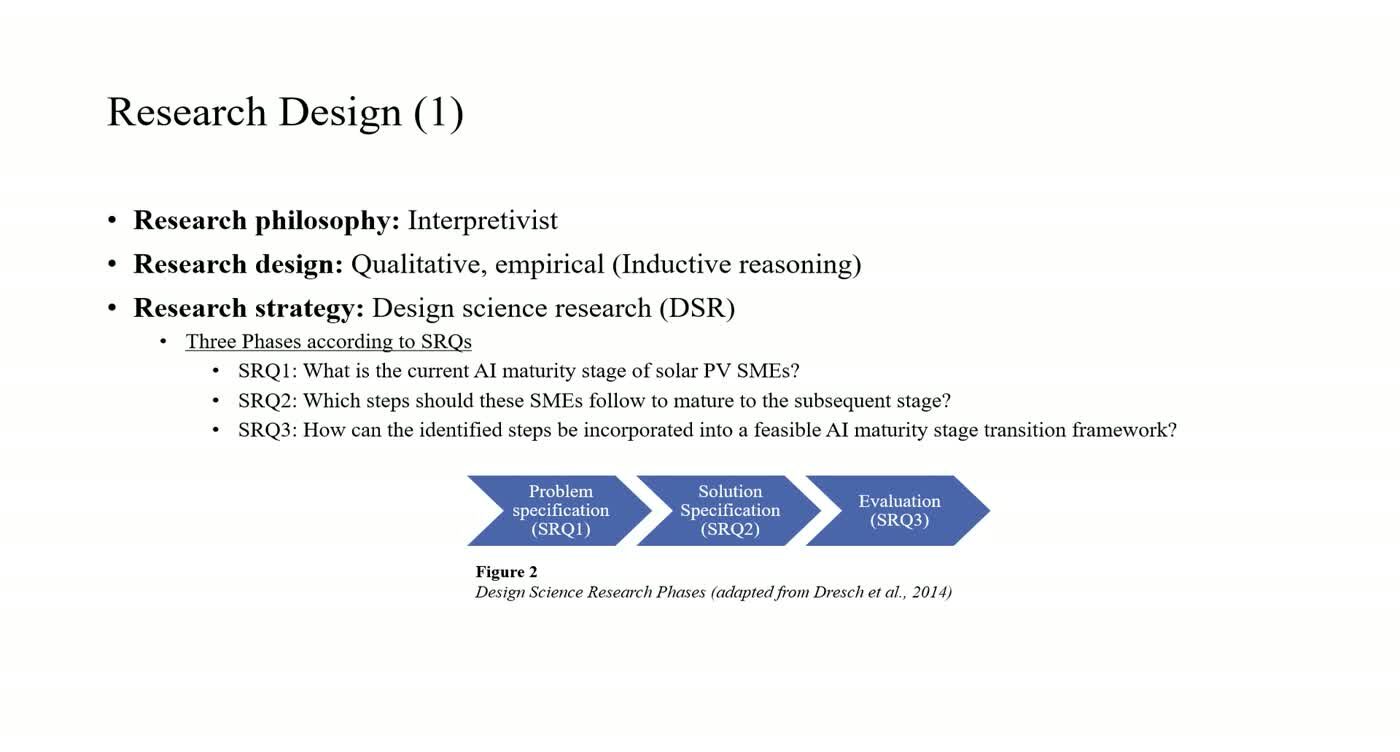
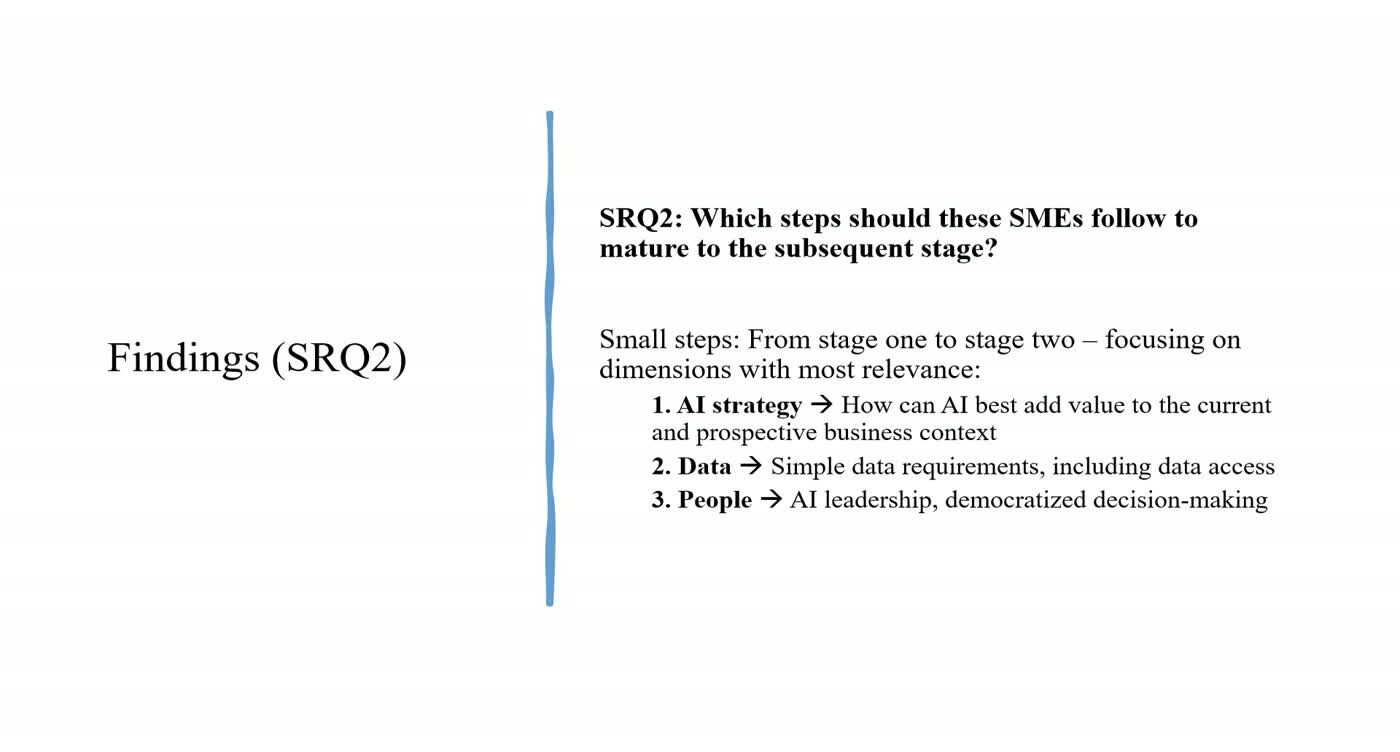
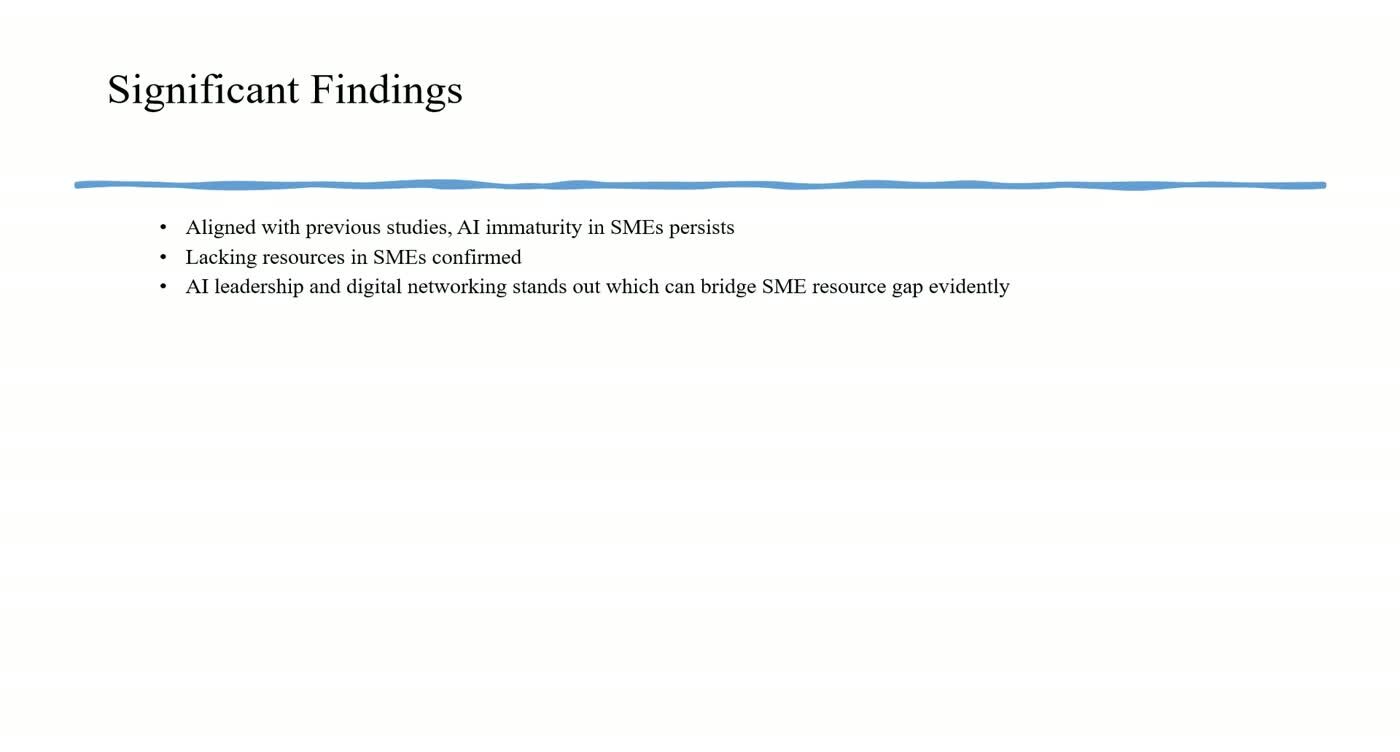
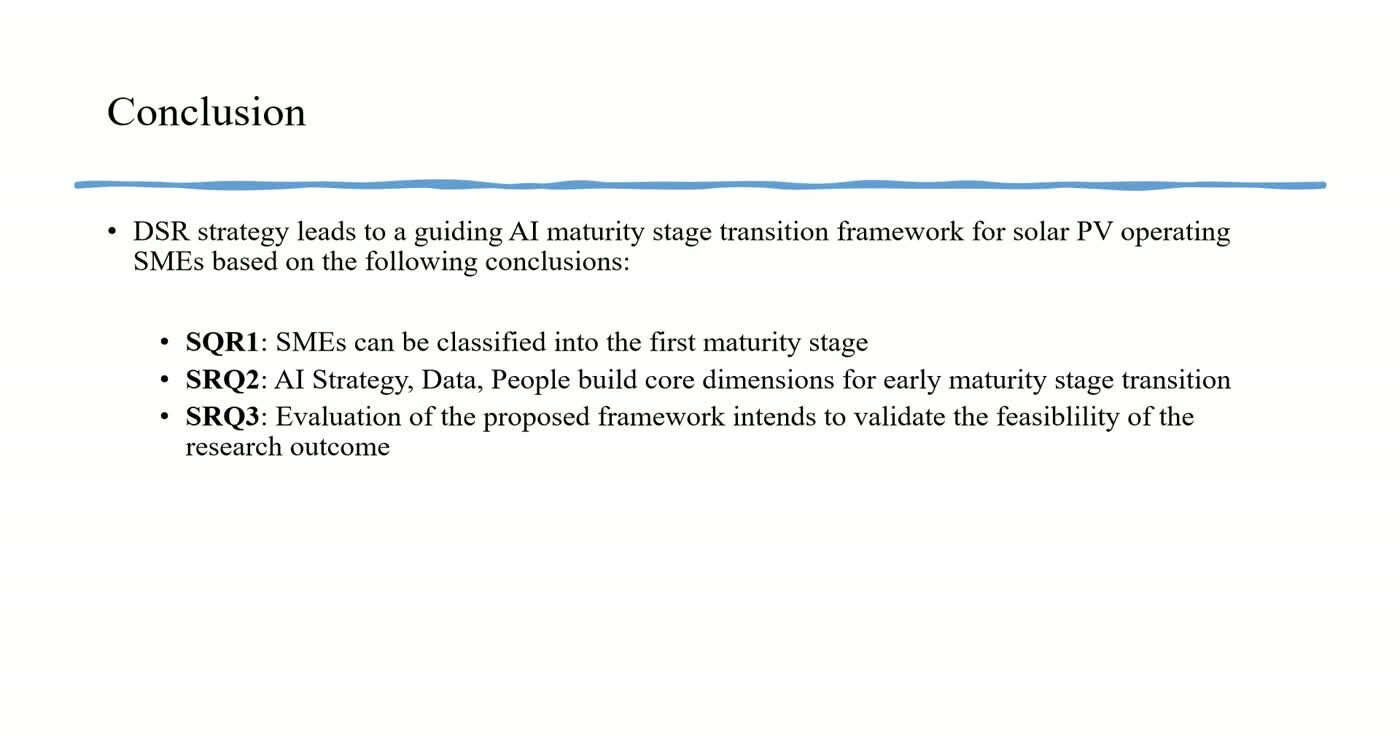
The method is design science research, split across three sub-questions and worked through a semi-structured literature review, semi-structured interviews, AI maturity assessments and expert evaluations. Every solar PV SME assessed landed in the first stage. The route out of it reduced to three dimensions: an AI strategy tied to the business the firm already has, simple data requirements starting with access, and people, meaning AI leadership and decisions pushed down rather than held at the top. Digital networking is what the paper puts forward as the cheapest bridge across an SME resource gap.
The talk was recorded: eighteen minutes, narrated over slides, from a conference card and an author panel of four line-drawn portraits through to a wall of organiser logos and a closing thank-you. The images on this page are taken from that recording.
Eighteen minutes thirty-three seconds of slides with narration.
Artificial Intelligence in the Energy Transition for Solar Photovoltaic Small and Medium-sized Enterprises. Schmidt, Marrone, Paraschakis, Singh. Not reproduced here.
