From MNIST to melanoma at UPC
The first week of September 2018 at UPC in Barcelona, taking a mixed cohort from MNIST to a transfer-learned skin lesion classifier.
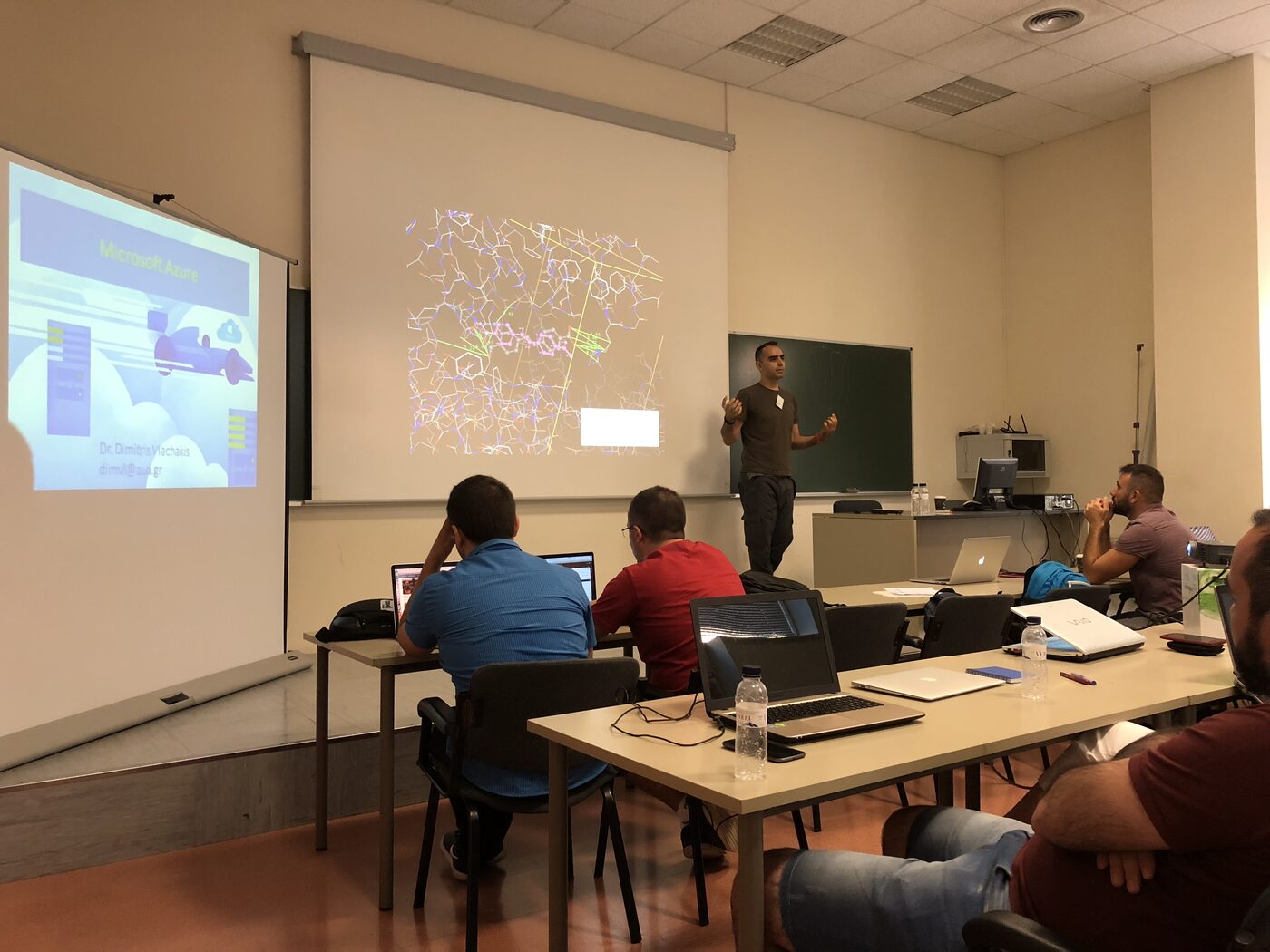
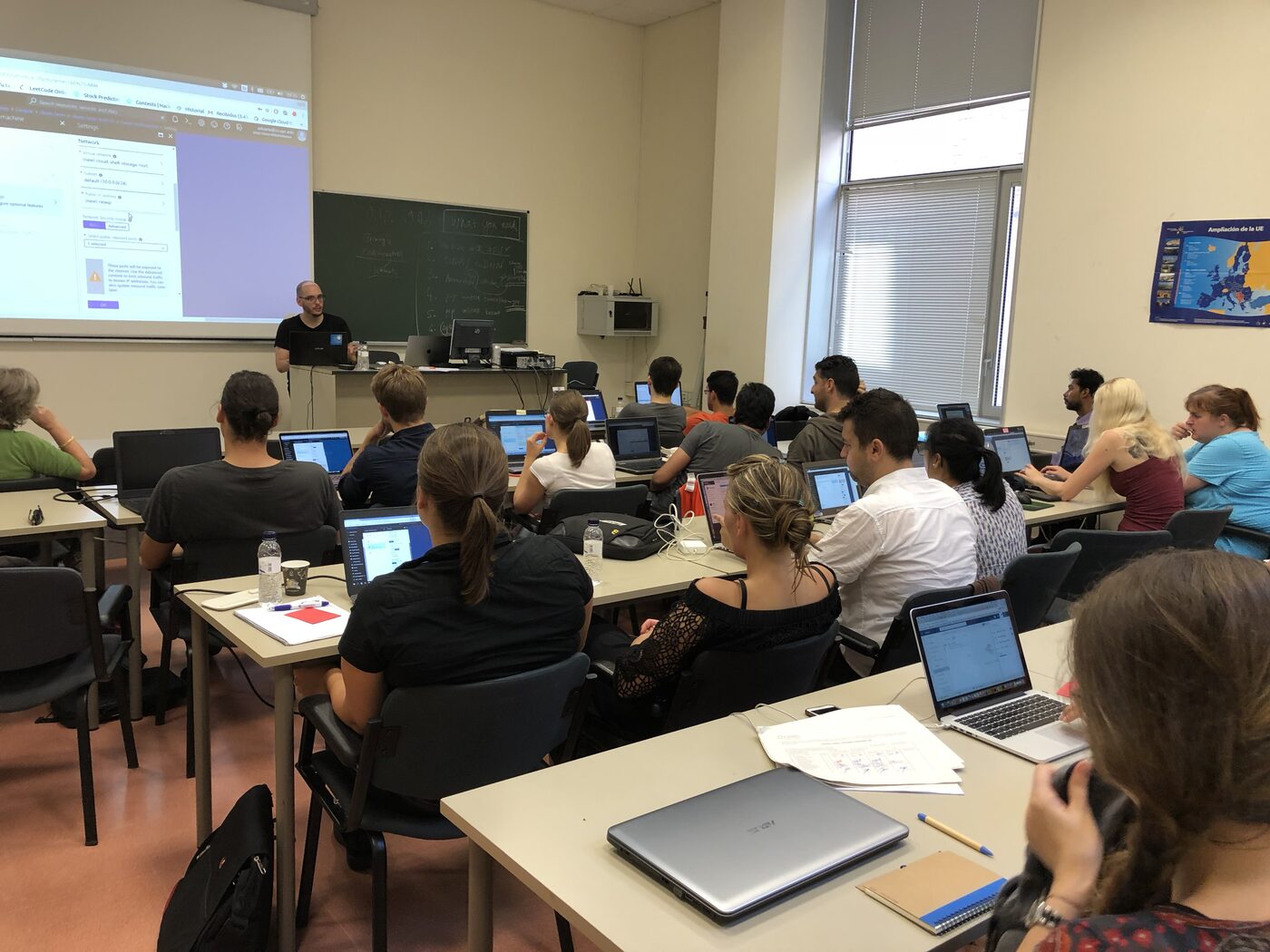
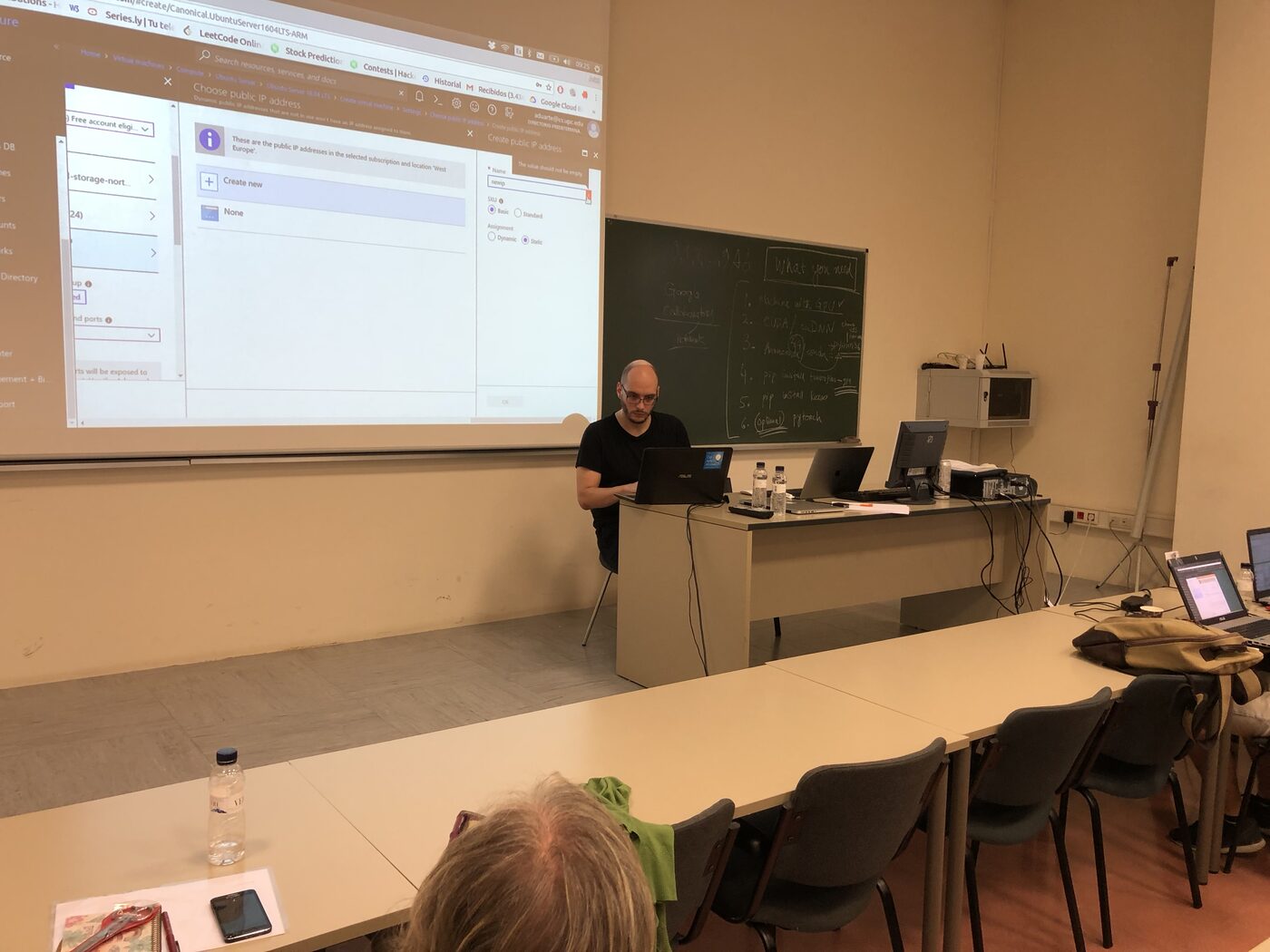
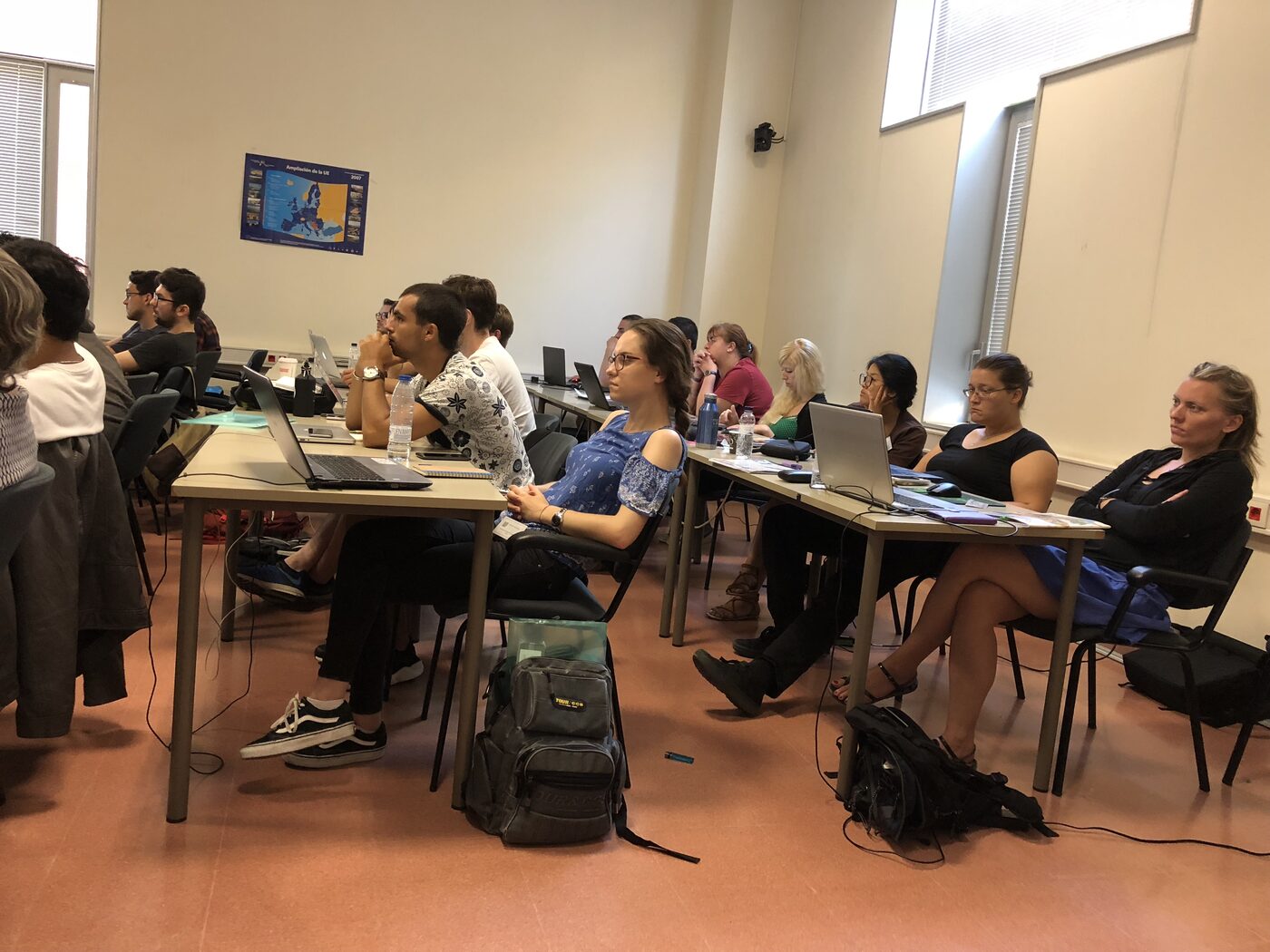
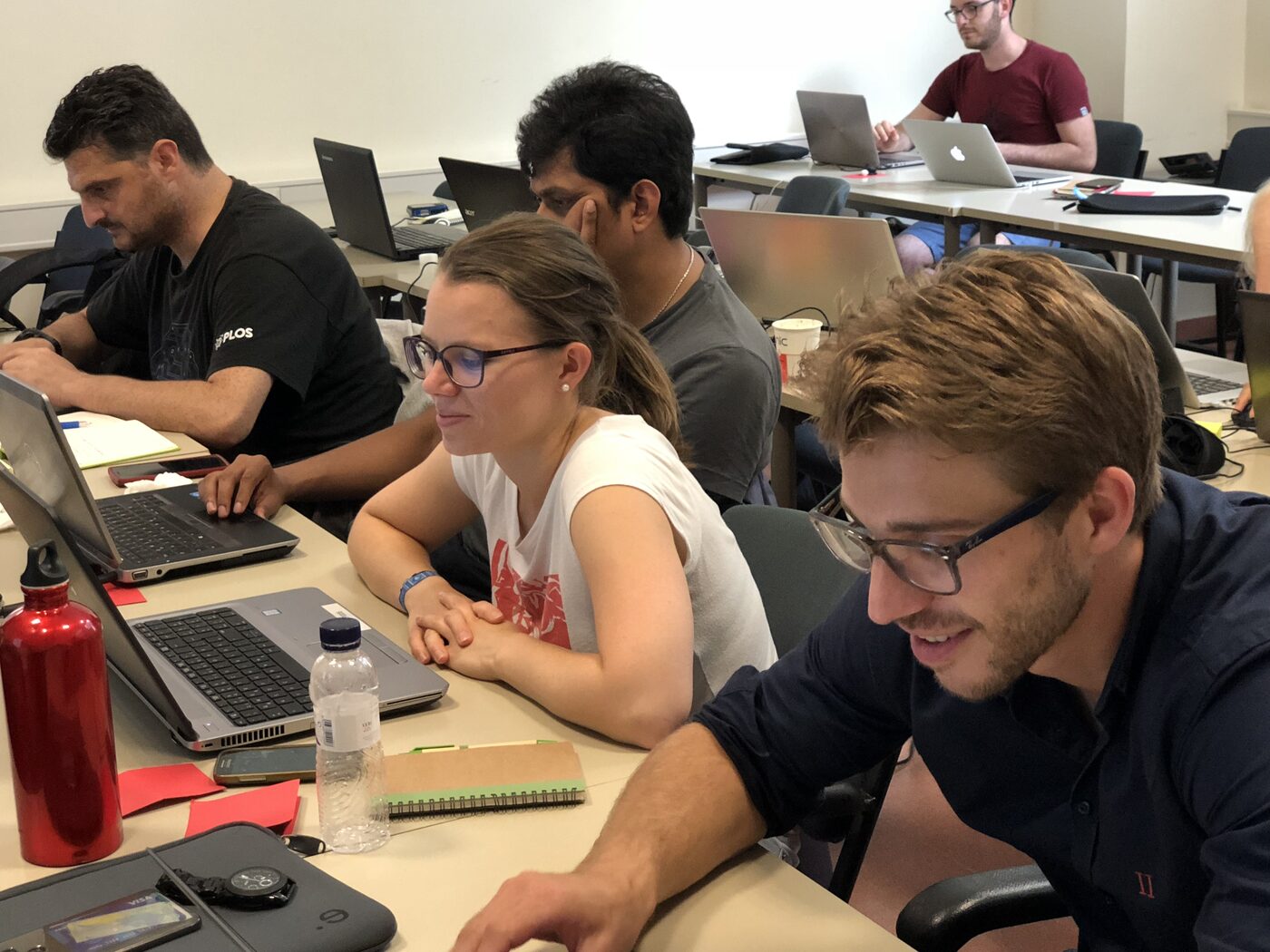
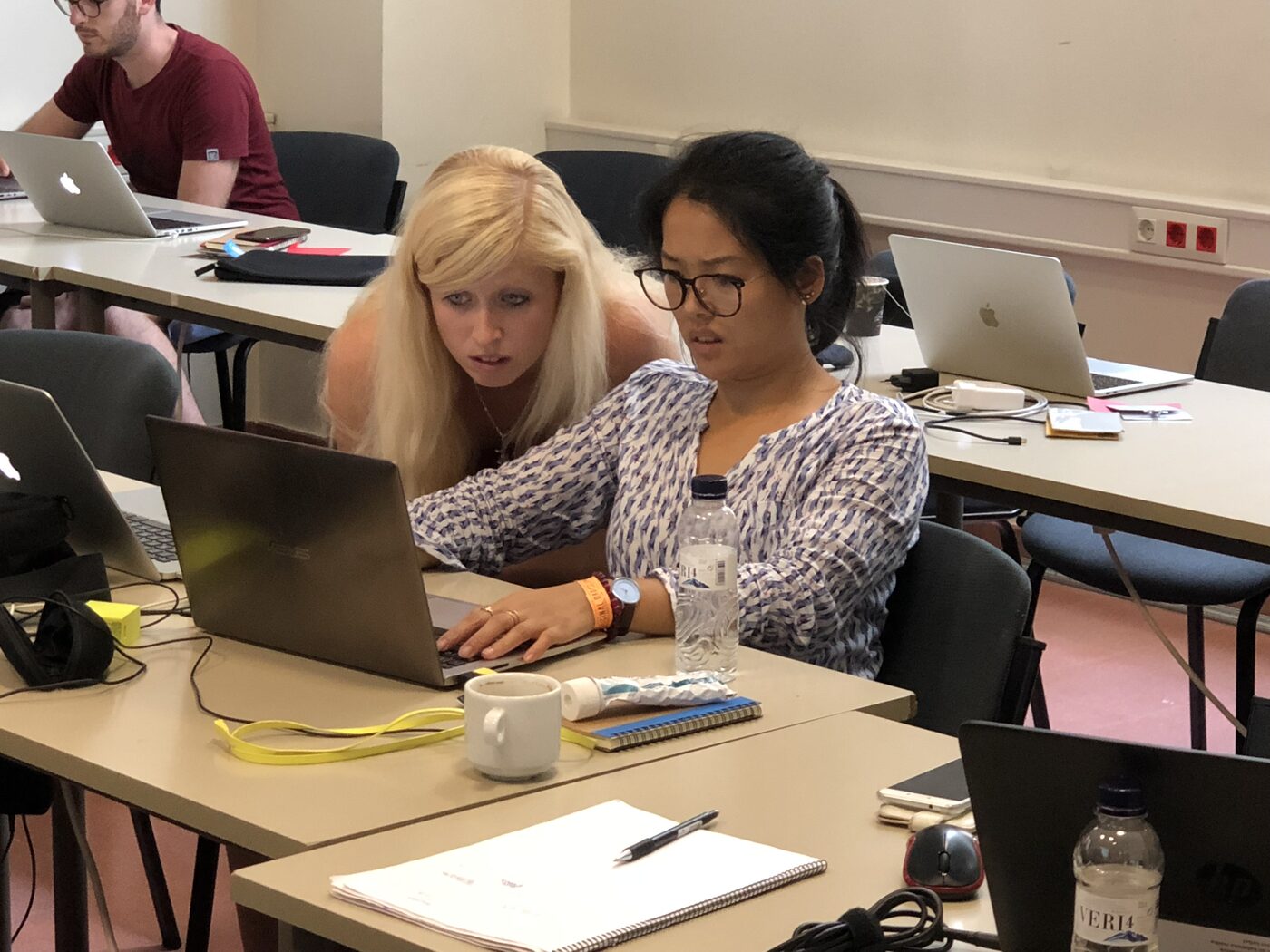
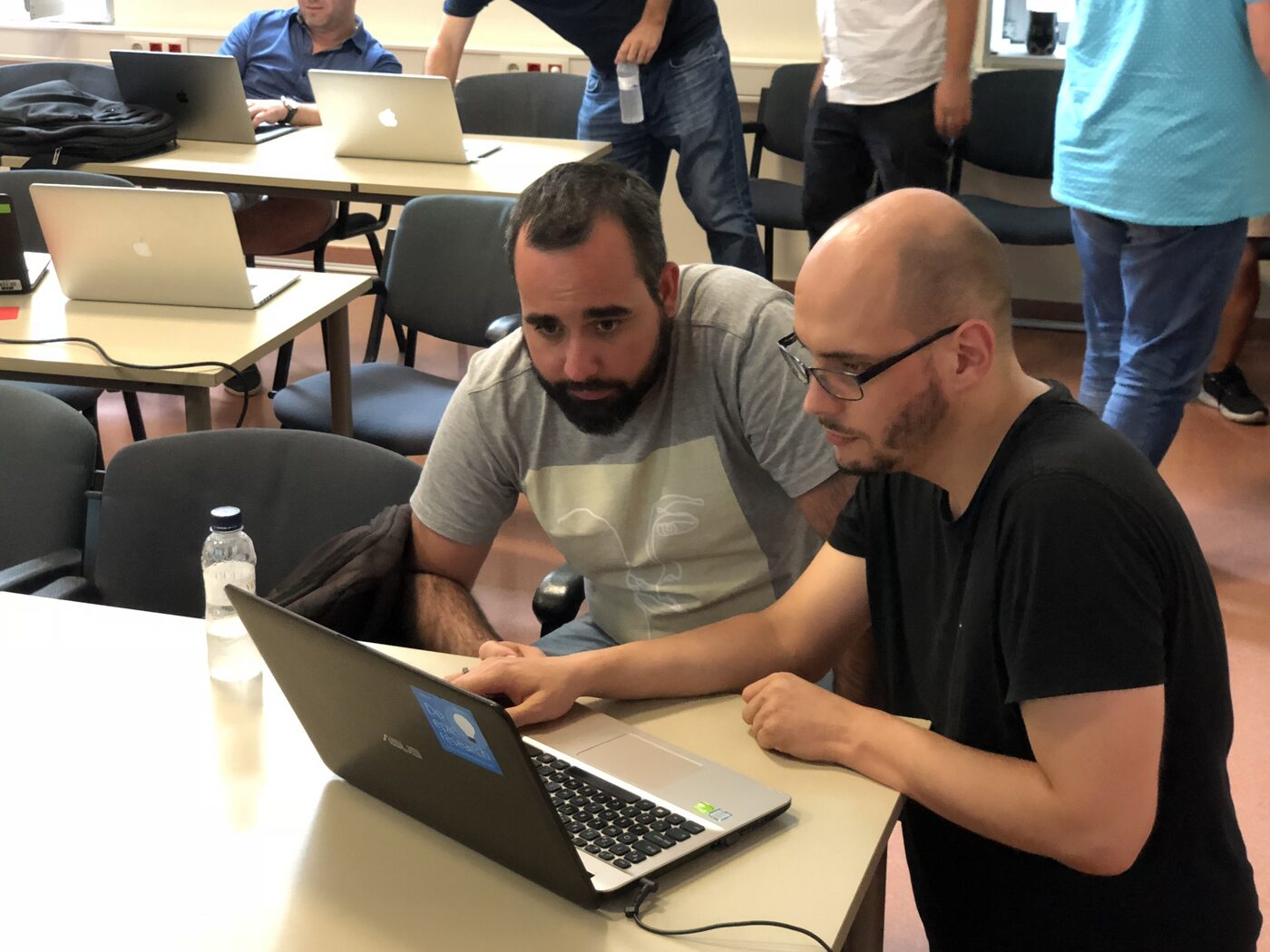
The hotel record for Tarry Singh starts at 10:21 on 3 September 2018, and co-instructor Raik Otto, travelling from Germany, was registered from 3 to 8 September. The teaching happened at the Universitat Politècnica de Catalunya, where the building sign read Edifici C6, and the projector at one point showed a browser window logged in under an upc.edu address. The room was a plain university classroom with a chalkboard, a projector and a poster of EU enlargement on the wall.
Day one began at the chalkboard with a setup list: a machine with a GPU, CUDA and cuDNN, Anaconda, pip install tensorflow-gpu, pip install keras, and pytorch marked optional. Two shell scripts shipped with the class, one for CPU-only laptops and one to wire NVIDIA CUDA into Jupyter. At one point the Azure portal was up on the projector, mid-way through creating a virtual machine. From there the cohort built MNIST twice, first in raw TensorFlow and then again in Keras, before taking on a CIFAR-10 convolutional project.
Day two moved to medicine. The class rebuilt the skin lesion work of Esteva and colleagues, published in Nature in 2017, as a three-class problem: melanoma, nevus, seborrheic keratosis. Images came from the ISIC archive. Participants first trained a small convolutional network from scratch, watched it underperform, then switched to transfer learning on InceptionV3, freezing the feature extractor and retraining only the classification head. Early stopping and model checkpointing followed, then selective unfreezing at a lower learning rate. The homework was to get the finished model onto a phone.
The room kept its own FAQ notebook, written for the whole class rather than by the instructors alone. The first entry asks how to inspect weight distributions after every epoch, and answers it with a Keras callback that prints layer weights on epoch end. The second, credited to a participant named Stefanie, asks how to stack three or more layers into the MNIST CNN, and is still marked Pending. A guest session ran in the same room during the week, with molecular structures on the projector.
The visit ran a week; two teaching days are described here.