Hominis at Federico II: the energy cost of foundation models
On 21 February 2024 the PICUS Lab at Naples Federico II ran a day on Hominis, its project to bring sustainability to foundation models, with RealAI as industrial partner.
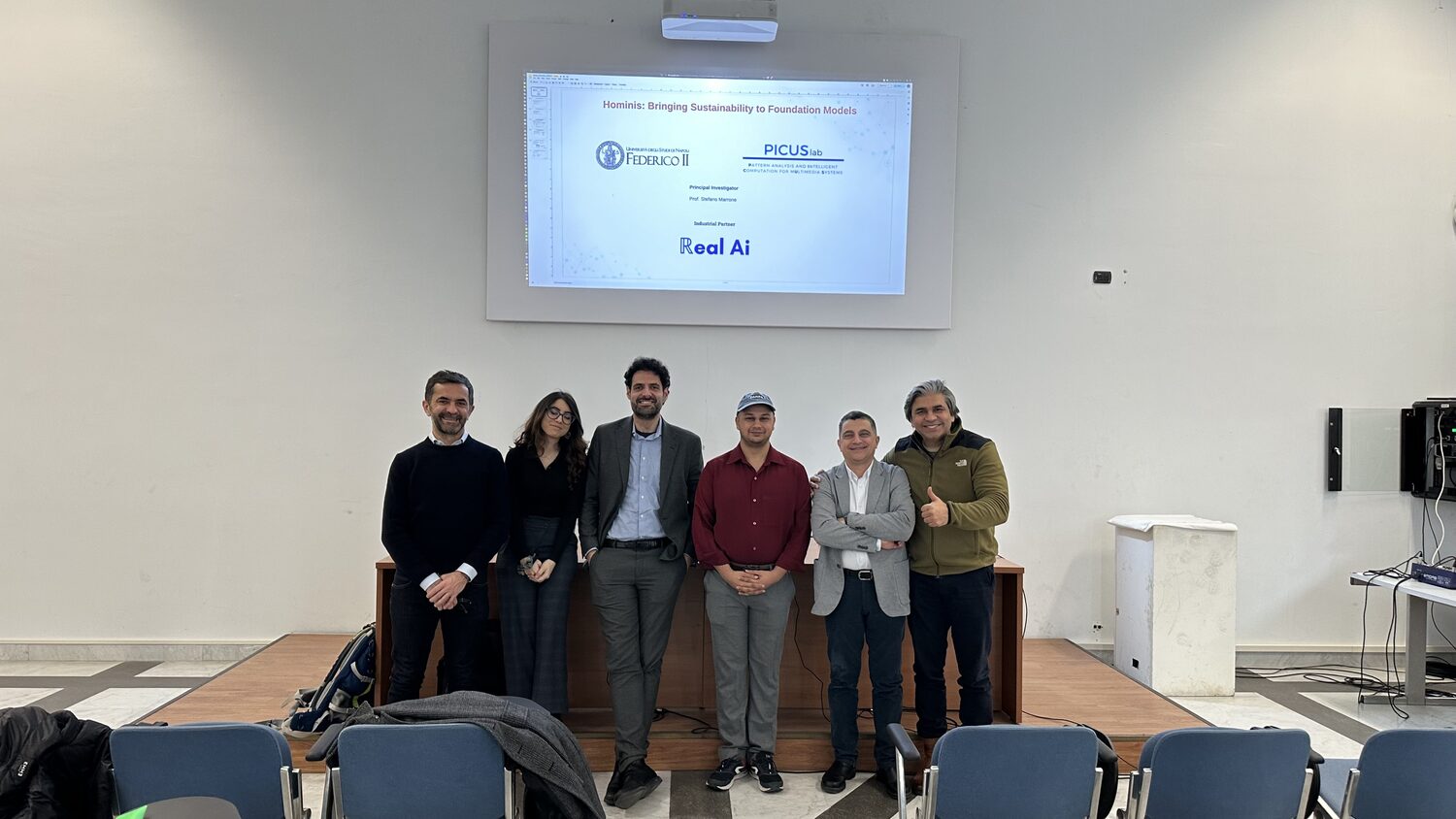
The title slide said it plainly. Hominis: Bringing Sustainability to Foundation Models, a project of the PICUS Lab at the Università degli Studi di Napoli Federico II, principal investigator Prof. Stefano Marrone, industrial partner RealAI. PICUS is the lab for pattern analysis and intelligent computation for multimedia systems. The deck on the projector was saved as Slides_Hominis_210224.
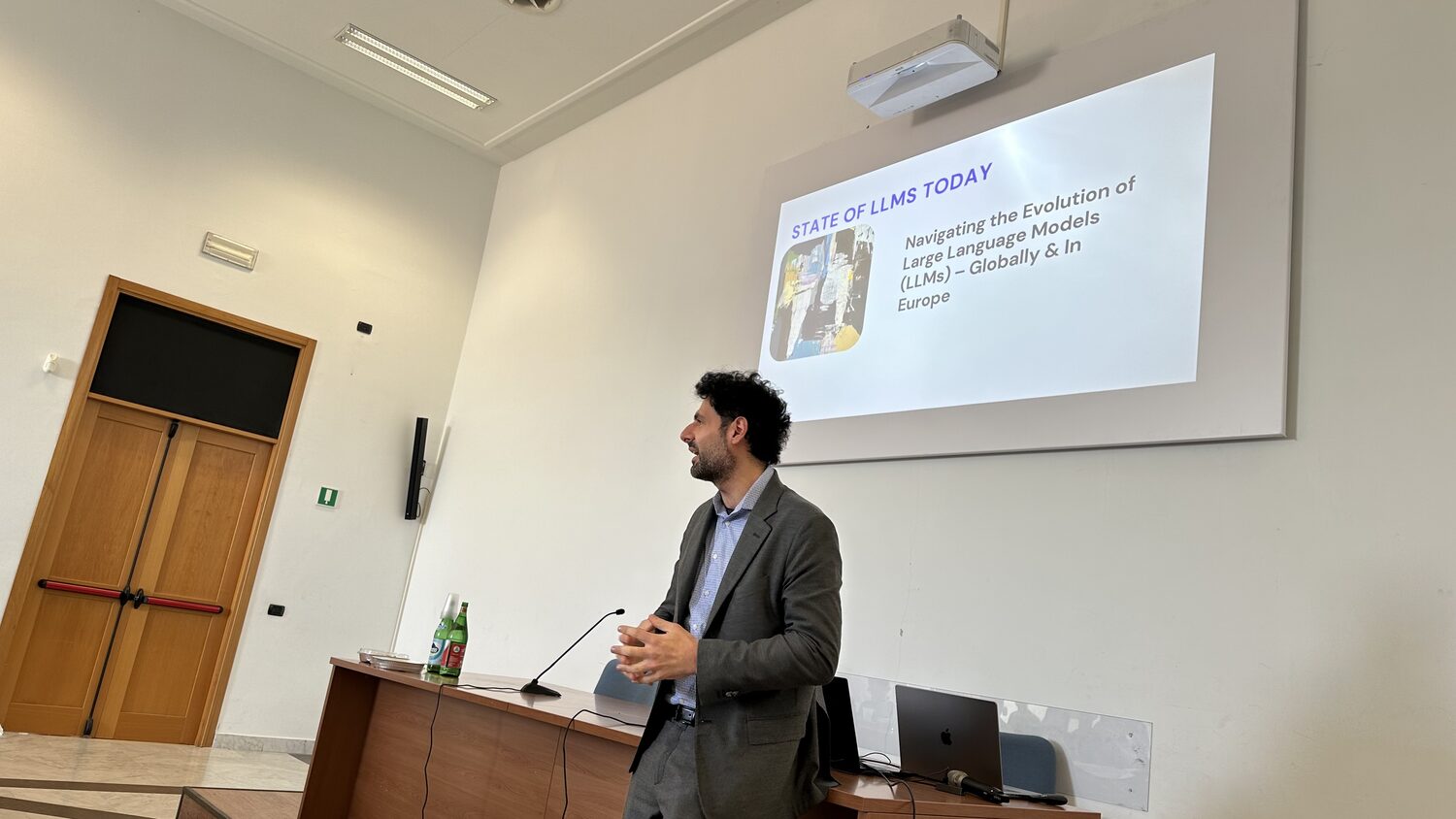
A little after nine the hall was still empty, one man at the lectern and the title slide already up. By half past ten the tiered blue seats were taken, coats over the armrests, latecomers standing at the back. The opening talk was titled State of LLMs Today and covered large language models globally and in Europe.
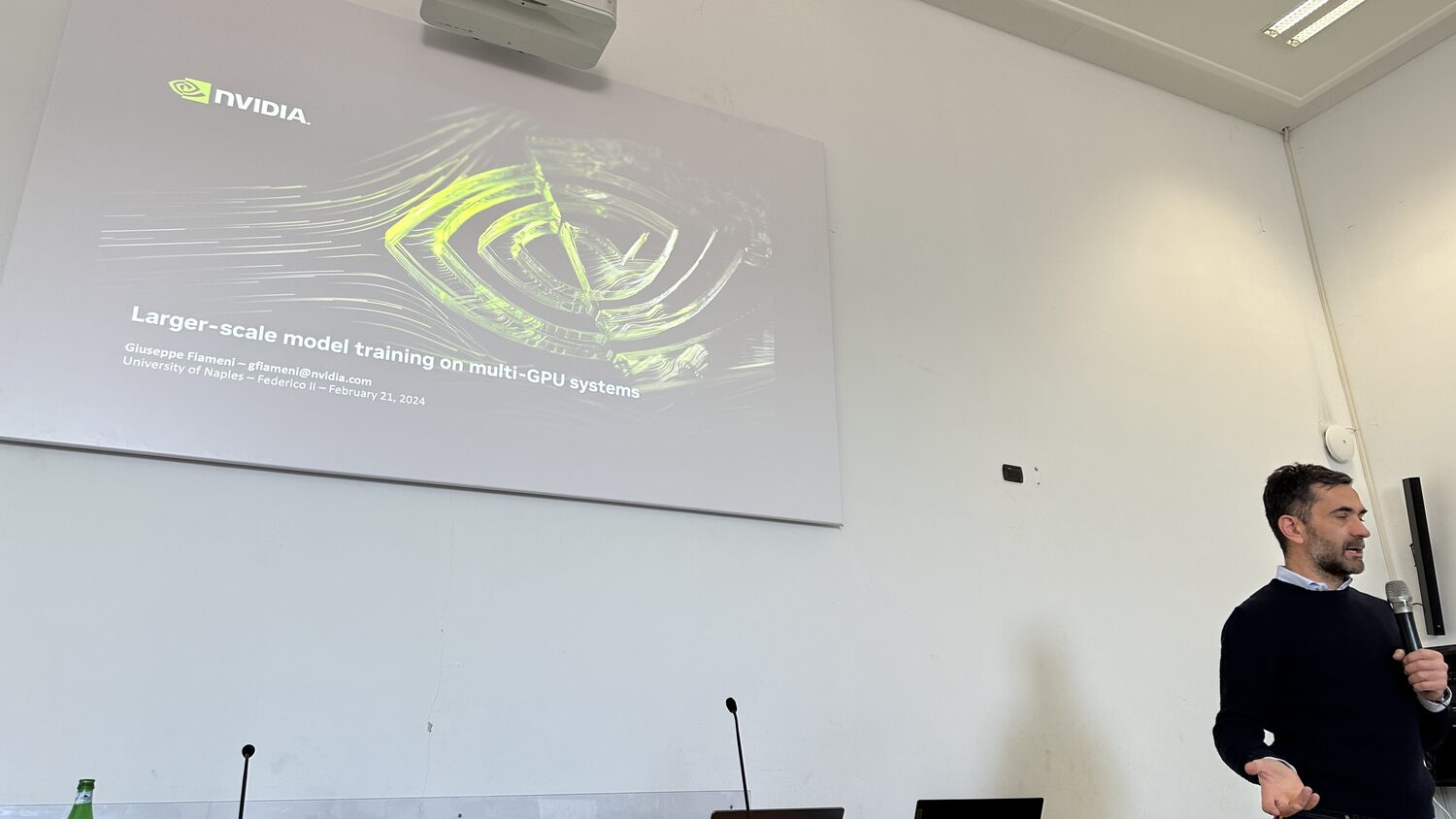
Giuseppe Fiameni came from NVIDIA to speak on larger-scale model training on multi-GPU systems. His chart plotted test loss against compute and marked a ten-thousand-fold increase in compute for the gain it bought, under a heading that asked whether large language models are worth it. He then took the room through the CINECA HPC project classes and left links to the profiling notebooks on GitLab and GitHub.
The afternoon turned legal, then arithmetic. Prof.ssa Giovanna De Minico and dott.ssa Michela Tuozzo presented a constitutional perspective on the present and future of generative artificial intelligence, under the FAIR programme, Future Artificial Intelligence Research. Later a speaker put up CO2 equivalent emissions by model in tonnes: GPT-3, Gopher, OPT and BLOOM, set against a car over its lifetime, an average American life over a year, and one passenger flying New York to San Francisco.
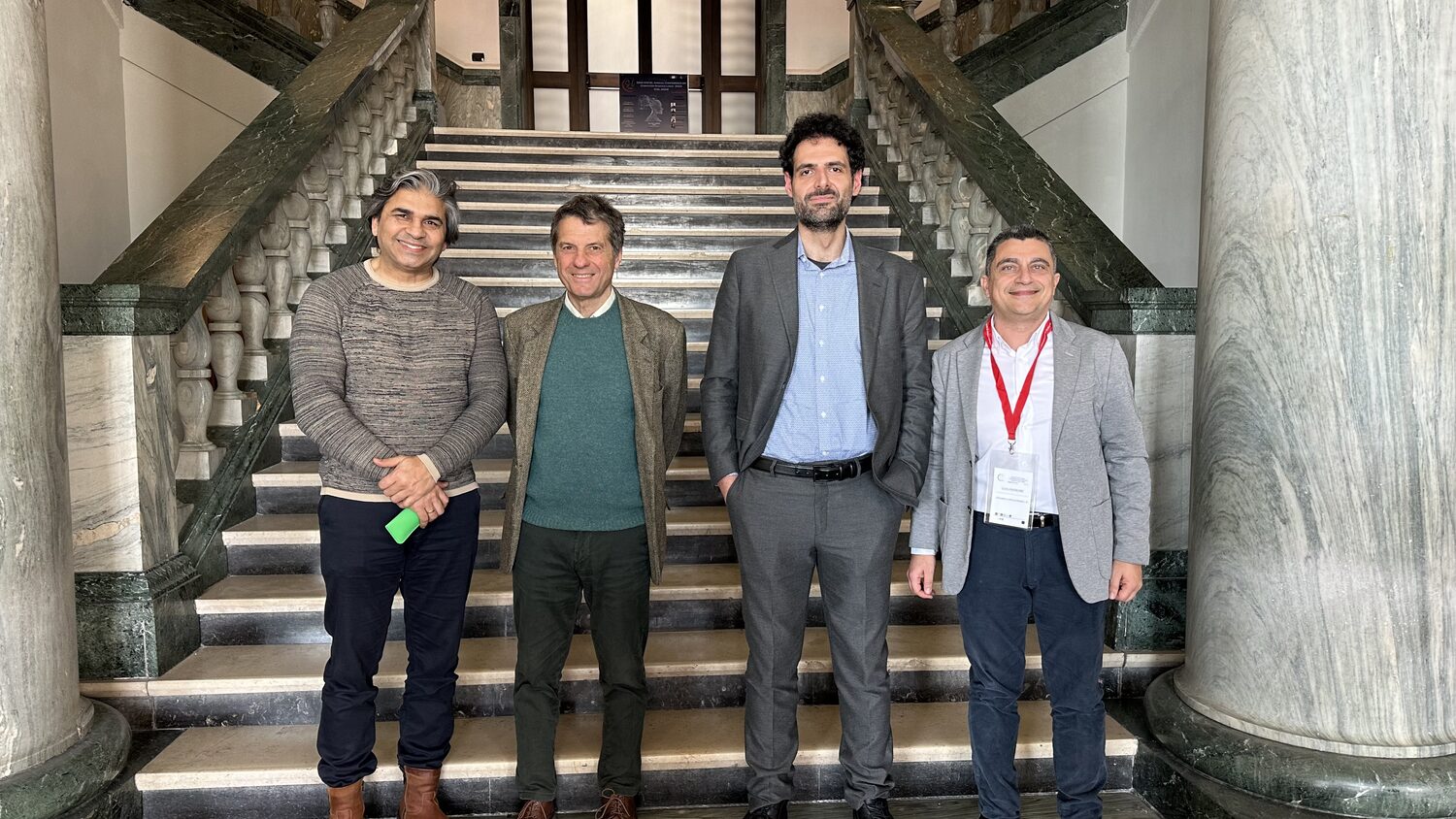
Four of them stood for a photograph on the marble stairs at a quarter to four.
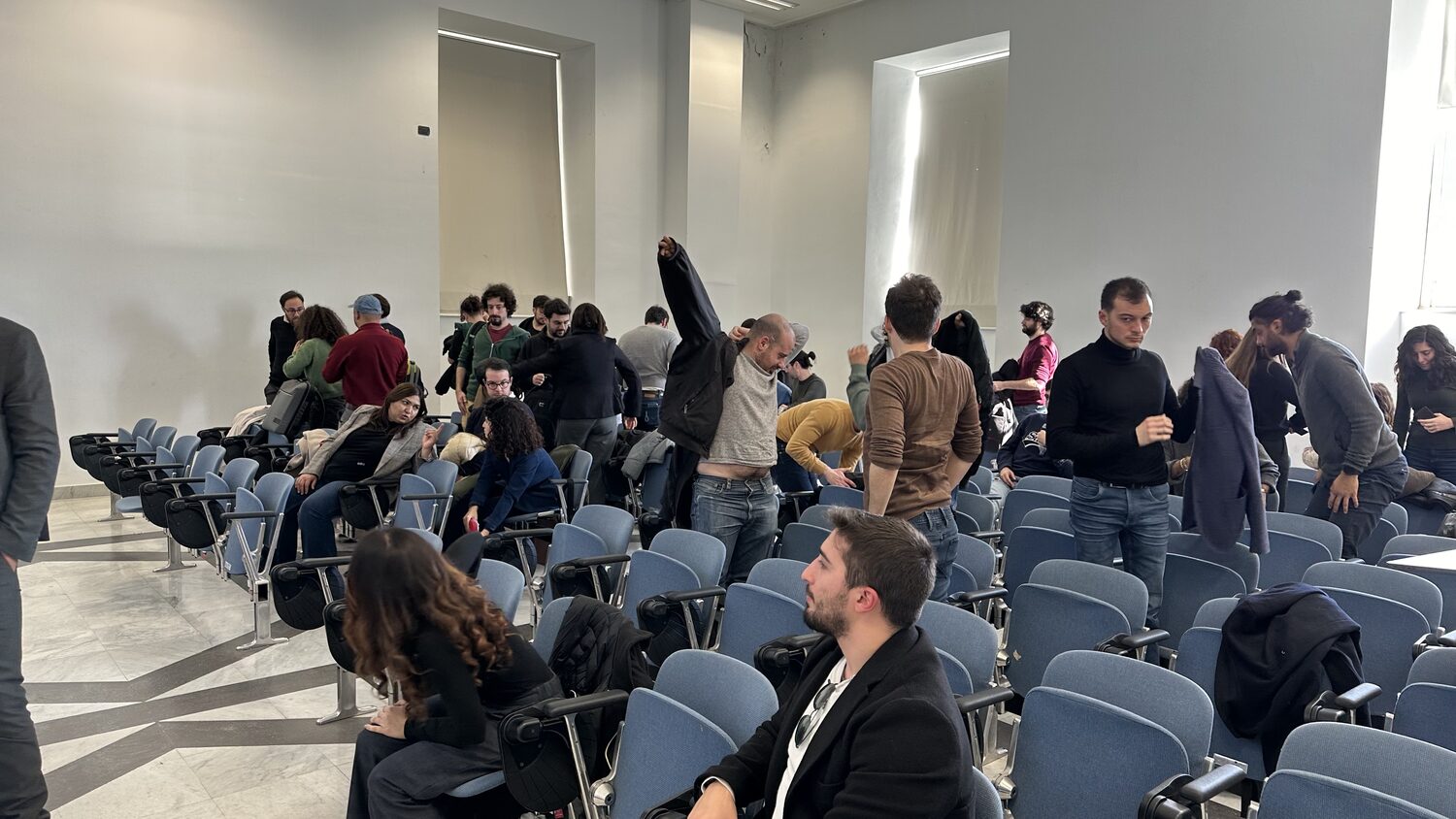
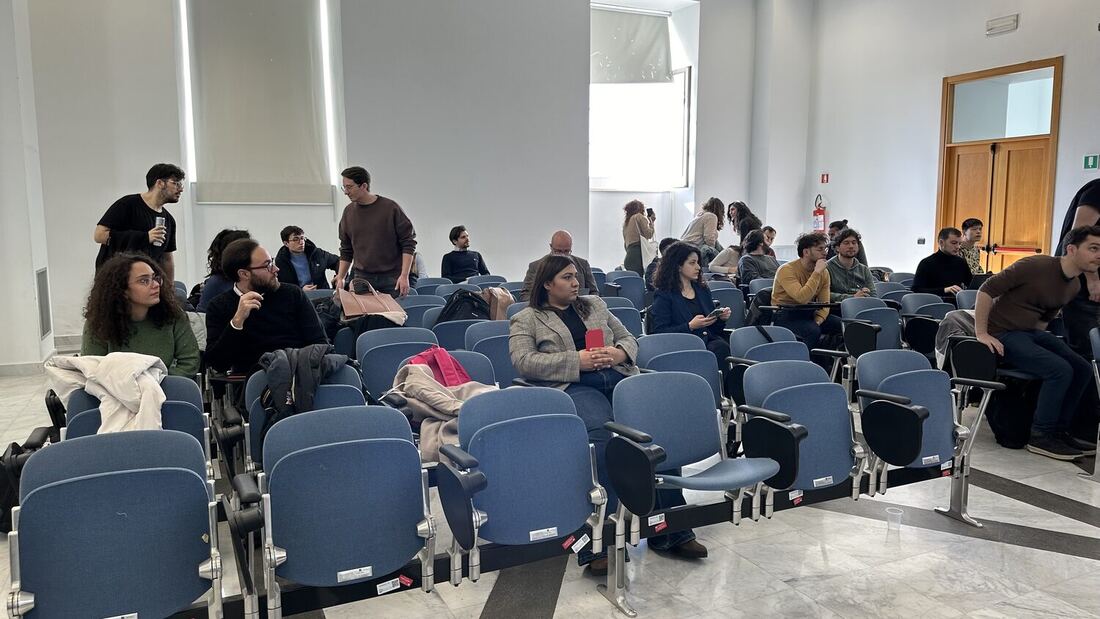
The audience sits in the tiered blue seats before a session, coats and bags over the armrests. 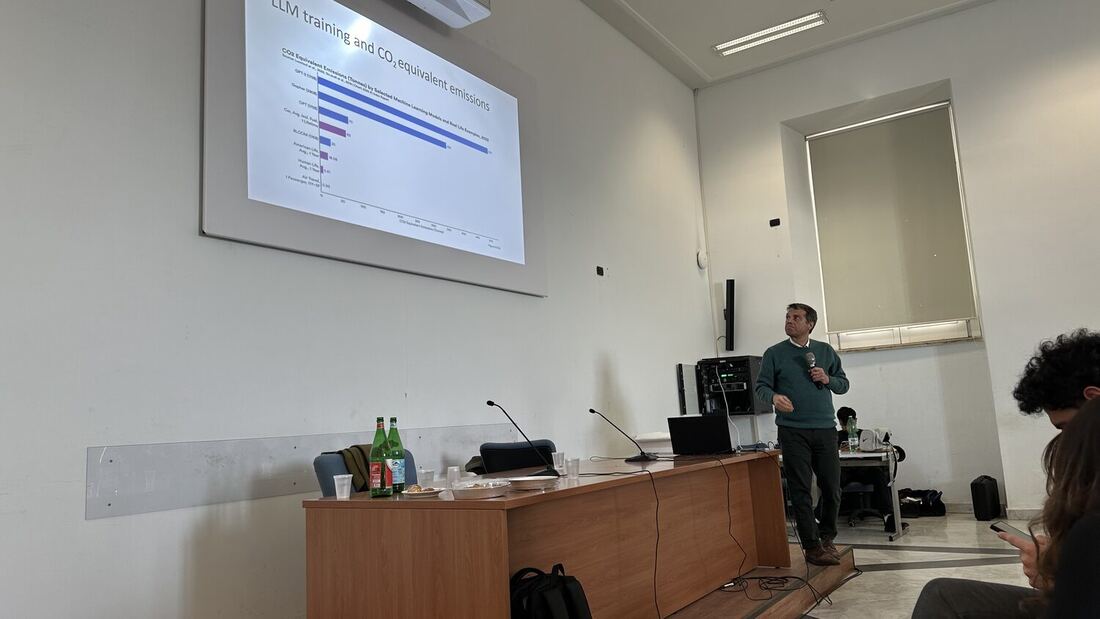
A speaker with a microphone stands beside the dais under a bar chart titled LLM training and CO2 equivalent emissions. 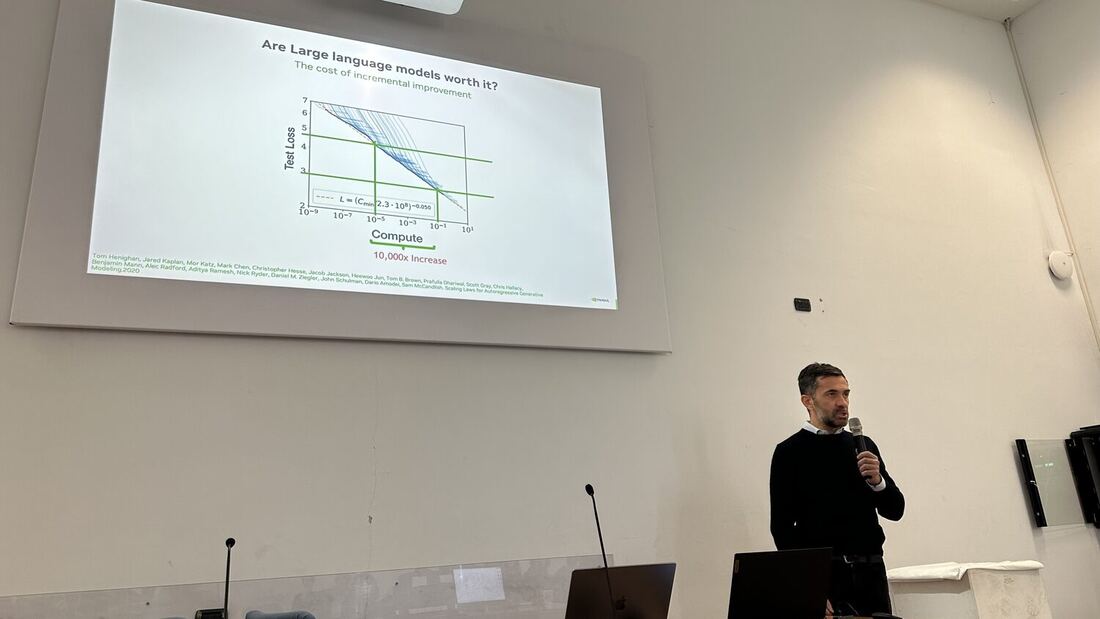
A speaker with a microphone stands under a slide asking whether large language models are worth it, showing test loss plotted against compute. 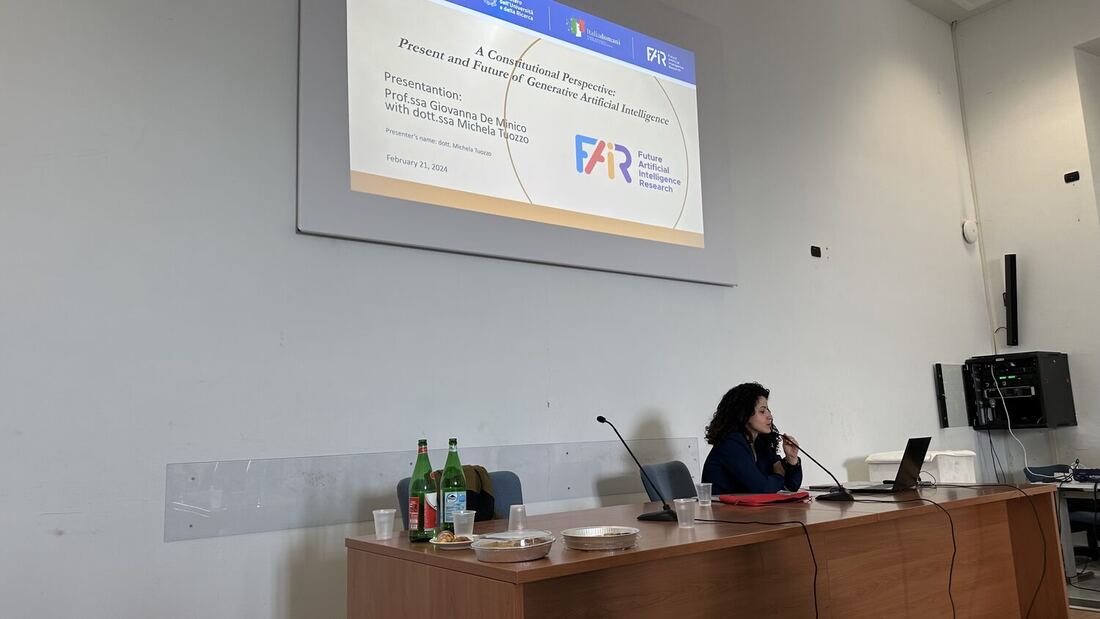
A presenter speaks into a desk microphone under the title slide for a constitutional perspective on generative artificial intelligence, carrying the FAIR programme logo. 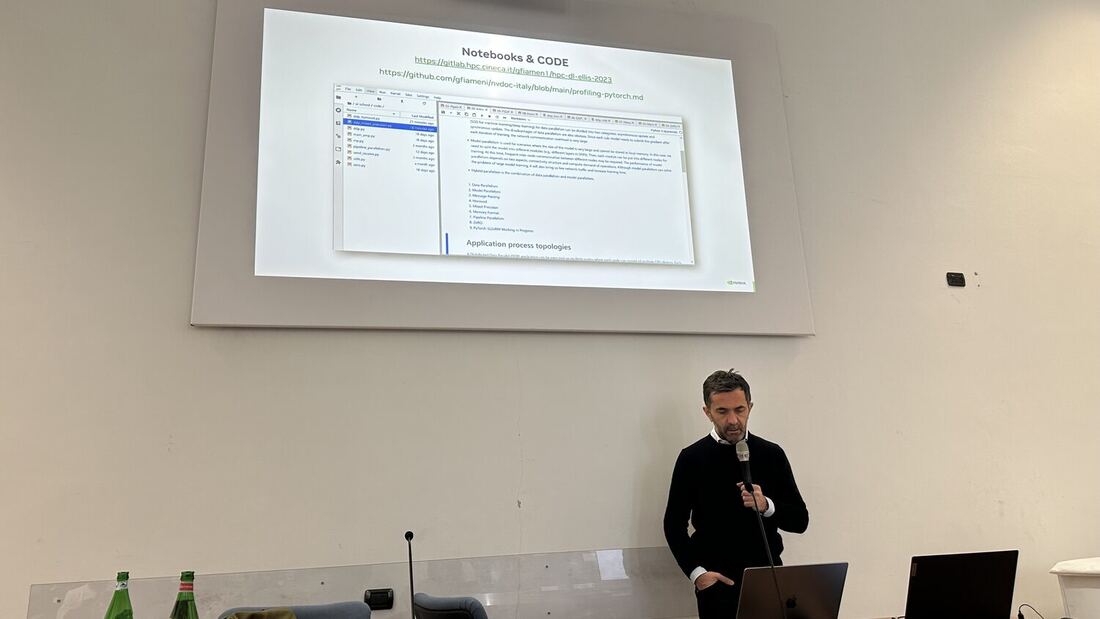
A speaker with a microphone stands under a slide headed Notebooks and CODE listing repository links for the practical session. 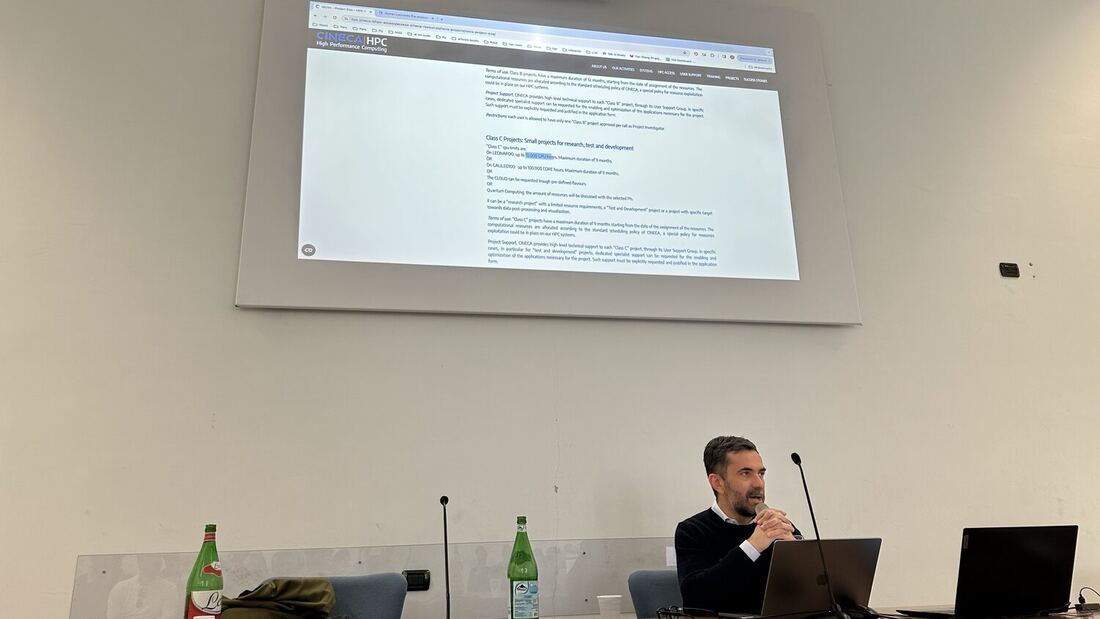
A speaker sits at the presenters' desk with two laptops while the CINECA HPC project classes page is projected behind him. 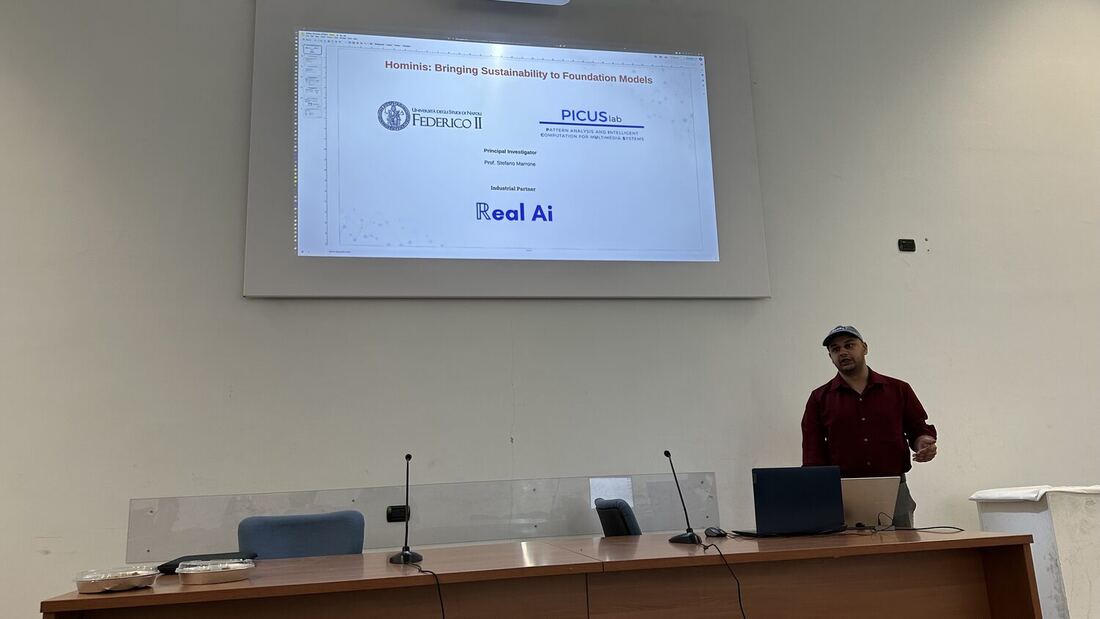
A man stands at the lectern of the lecture hall as the Hominis title slide is projected, the seats still empty.
