HCAIM at Utrecht Science Park: curriculum session and student poster day
The lab helped build this degree and teaches on it. The consortium spent 31 January 2024 working through the curriculum map in a hybrid room at Utrecht Science Park, and on 2 February its students pinned their research to the boards.
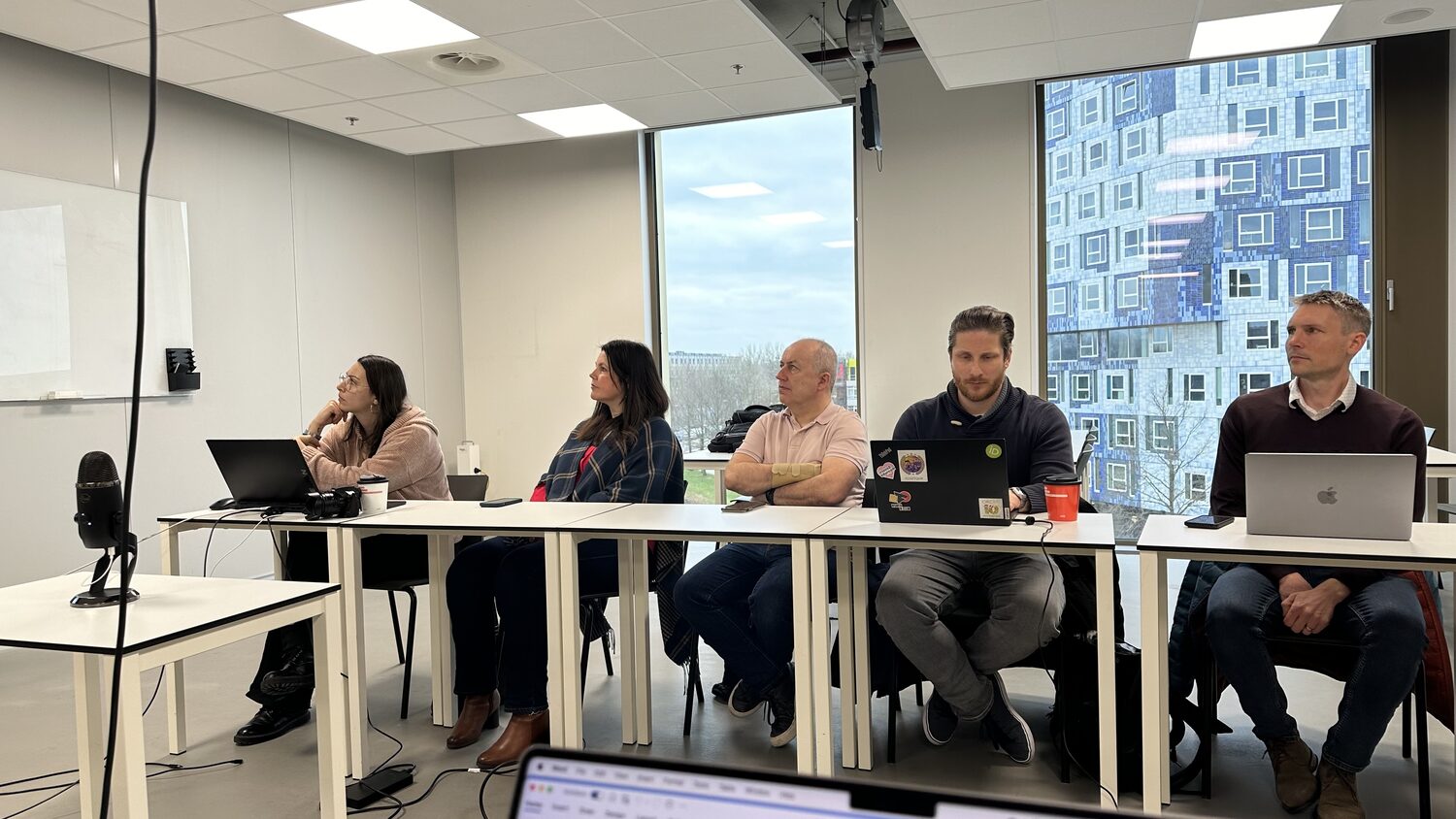
Real AI is a partner in the consortium that built this degree, and Tarry Singh is a co-developer of the programme and a visiting professor on it. So this is not a conference the lab was invited to. It is a curriculum the lab helped write, meeting to argue about what it should teach next.
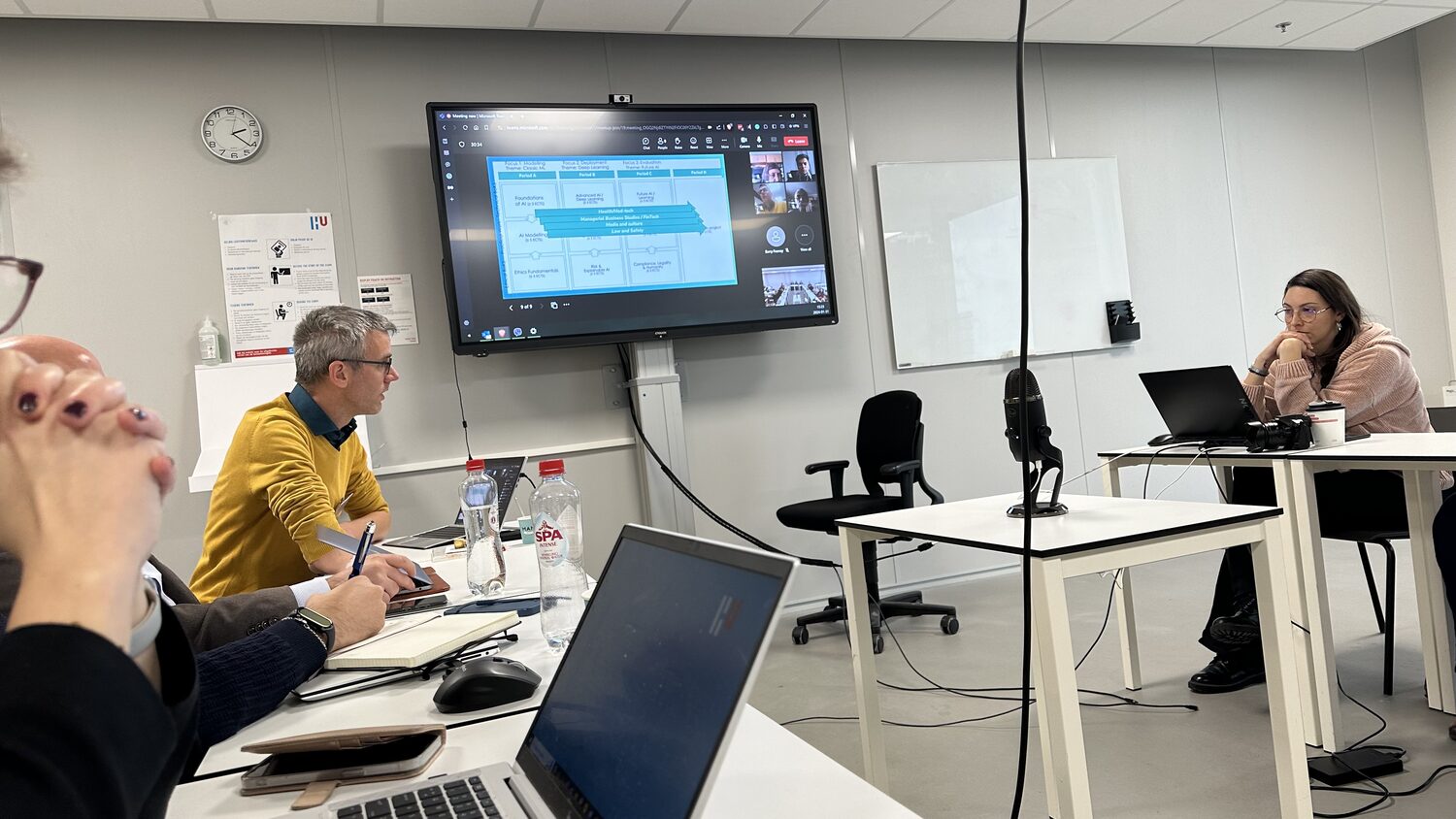
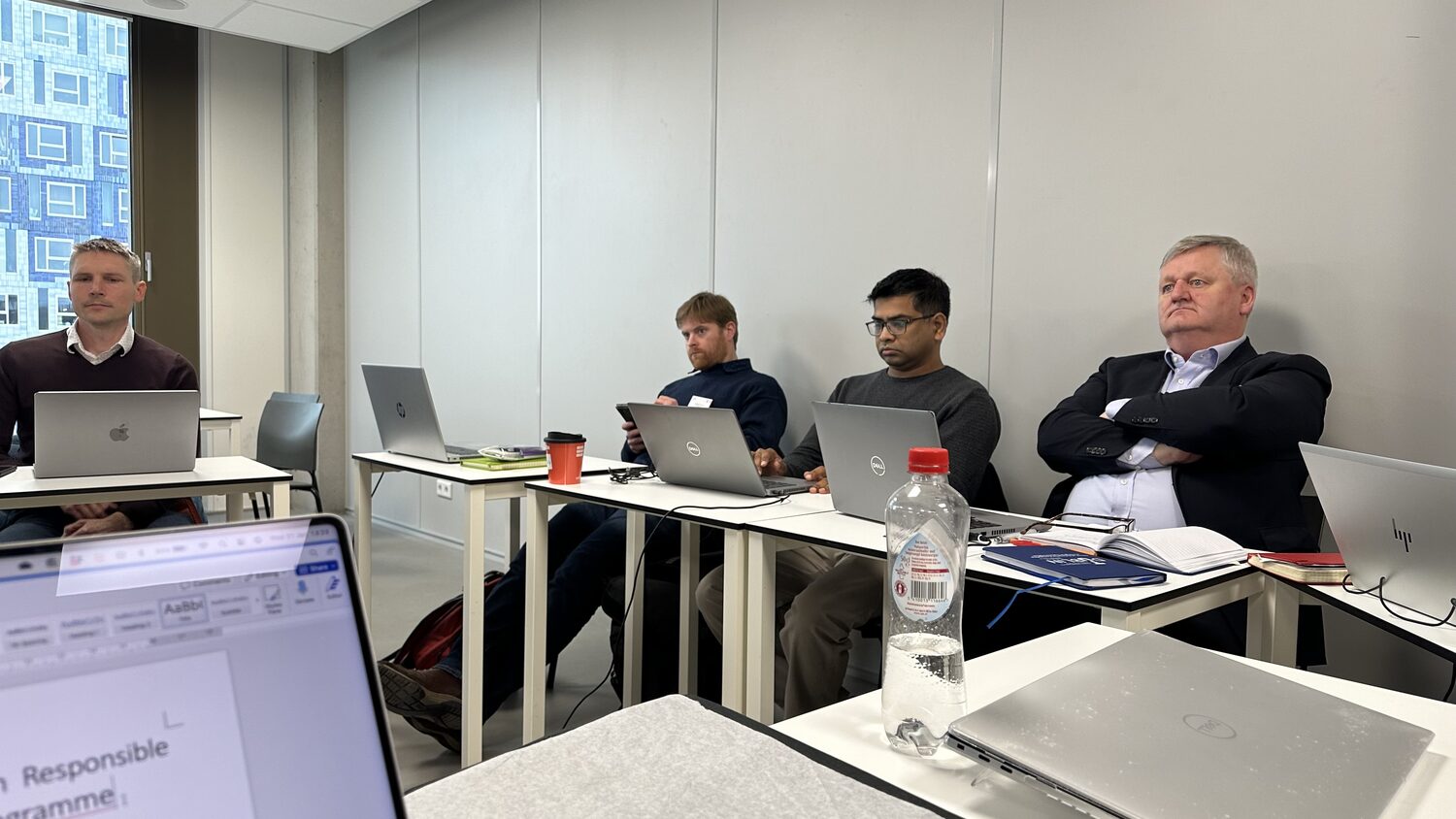
The session ran on 31 January 2024 at HU University of Applied Sciences Utrecht, on Utrecht Science Park, and part of it ran on Microsoft Teams. People sat at white tables with laptops open. A wall screen carried the call grid and the slide under discussion. The slide was the programme map: three focus areas across four teaching periods, classic machine learning for modelling, deep learning for deployment, future AI for evaluation, with five-ECTS modules for Foundations of AI, AI Modelling, Ethics Fundamentals, Risk and Explainable AI, and Compliance, Legality and Humanity. Four application tracks ran across the middle of it: health and med-tech, managerial business studies and fintech, media and culture, law and safety.
HCAIM is the Human-Centred AI Master's Programme, co-financed by the Connecting Europe Facility of the European Union under grant CEF-TC-2020-1, Digital Skills 2020-EU-IA-0068. That acknowledgement line is printed on poster after poster on the boards, and so are the institutions behind it: HU in Utrecht, Technological University Dublin, CeADAR in Ireland, the University of Naples Federico II, ENEA and the Consiglio Nazionale delle Ricerche in Italy, BME, and Nathean in Dublin.
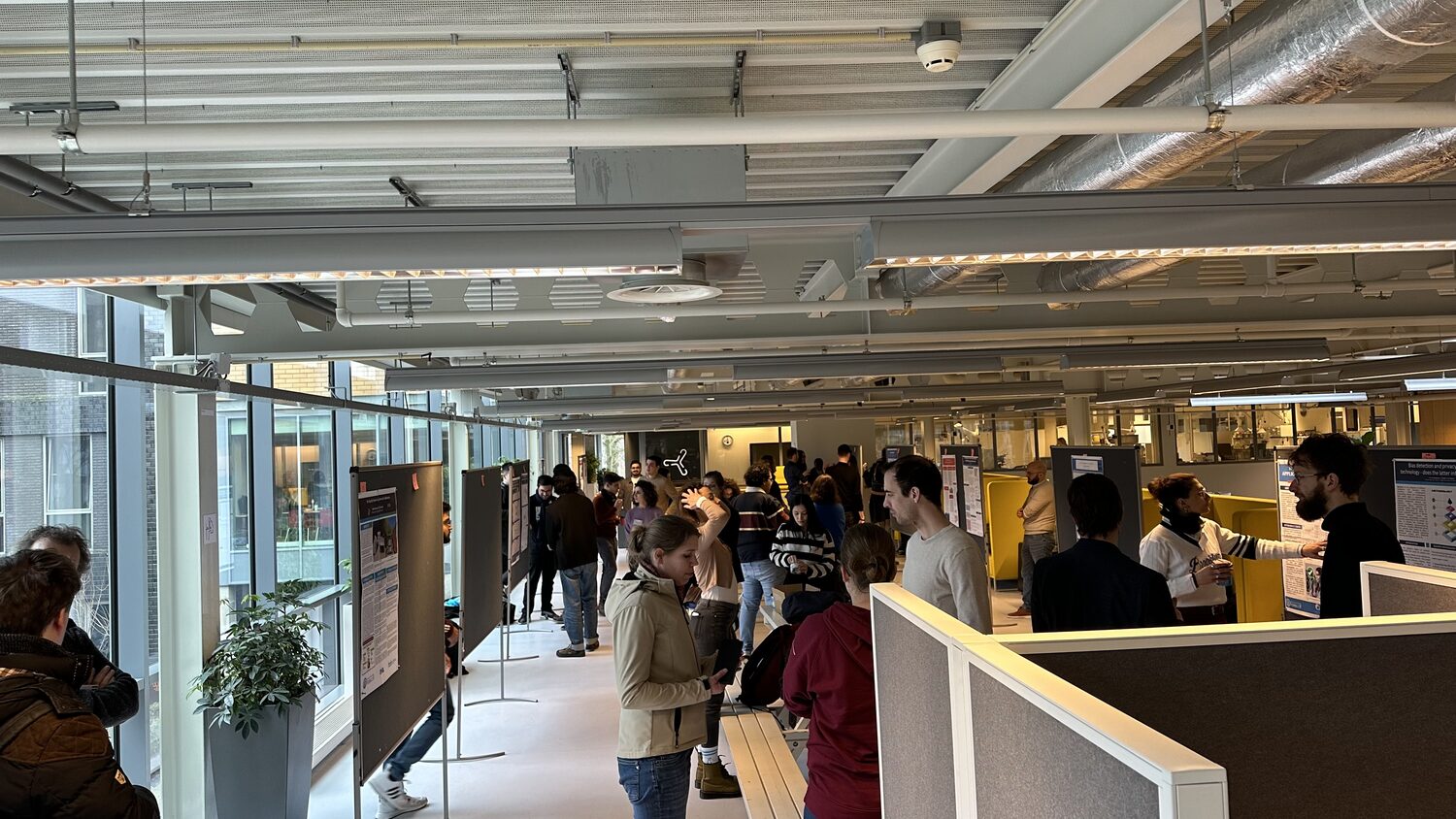
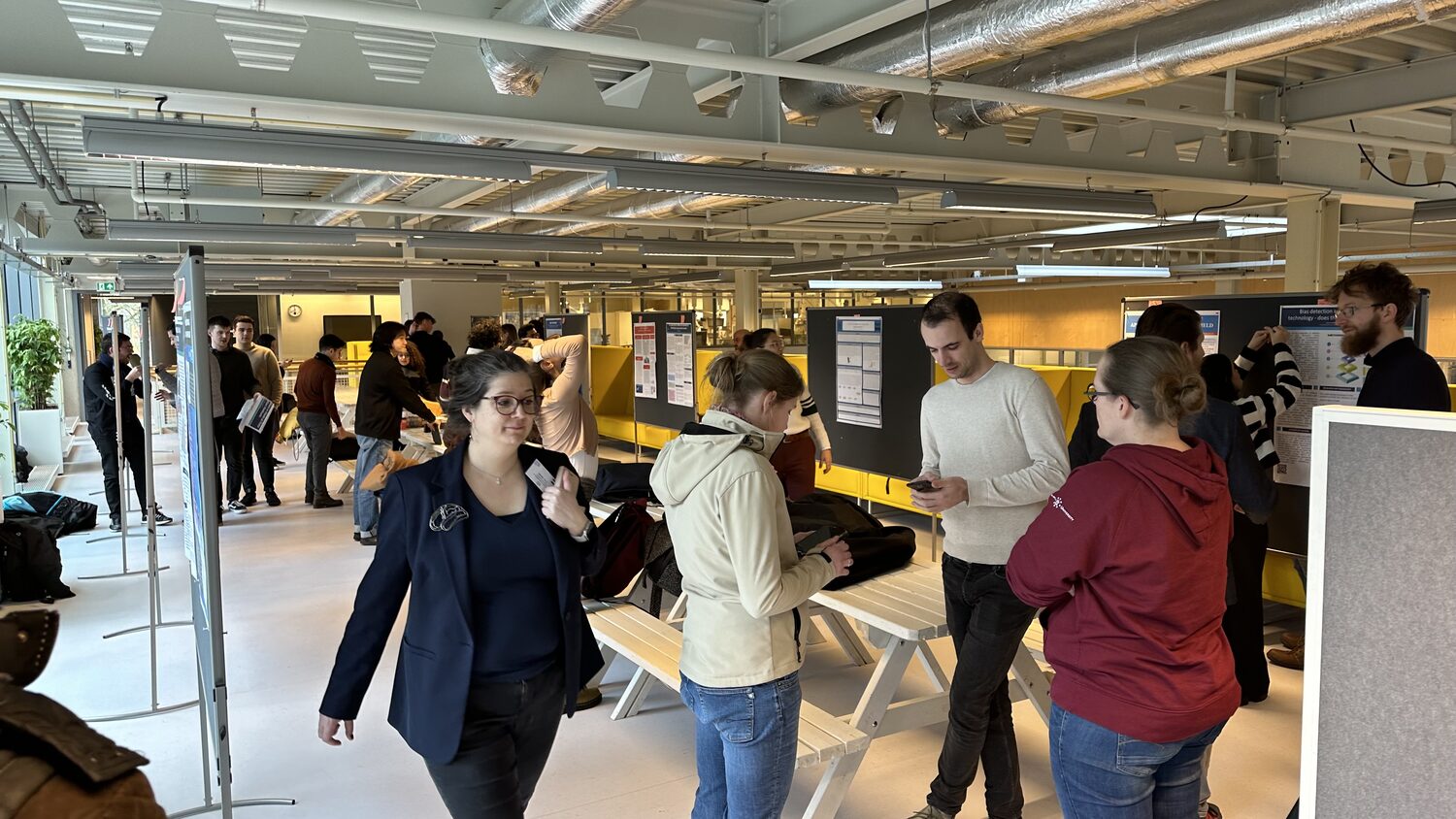
Two days later, on 2 February, the boards went up on an open study floor a couple of hundred metres away in the same science park. Orange sticky notes numbered the running order. Students moved between them from late morning until mid afternoon. Much of the work was about what can go wrong: bias introduced into data re-identification, fairness in facial recognition, vulnerabilities in medical de-identification methods, trust in medical AI models, the European AI Act as it lands on the Rotterdam-Rijnmond fire department. One poster asked whether privacy-enhancing technology gets in the way of bias detection. Another proposed halving the Ekman 60 Faces test used in the social perception test at the Alzheimer Center at Amsterdam UMC, from sixty photographs to thirty, without losing the diagnosis.
The posters were made for a Blended Intensive Programme under Erasmus+, which is why the author lines run from Utrecht to Dublin to Naples. Not all of it was about harm. There was solar nowcasting from Naples, air quality sensor calibration with ENEA, human activity monitoring on a factory floor, signature verification. On the Wednesday the consortium argued about what the degree should teach. On the Friday the students showed what they had done with it.
HCAIM has since been delivered, its 135 learning events published open access in 27 languages. The consortium that made it did not stop there: it grew into PANORAIMA, a Horizon Europe project of fifteen partners, with Real AI among them and most of the HCAIM institutions carried over. The material from that runs from 2025 onward.
The programme's public record: co-funded by the Connecting Europe Facility, built by three excellence centres, three SMEs and four universities, structured around the MLOps lifecycle, open access in 27 languages.
